
Small Bathrooms, Big Possibilities
Think your 5×8 bathroom is too small for a stylish upgrade? Think again. 5×8 bathroom layouts are compact, but with the right design approach, these spaces can be transformed into beautiful, efficient rooms. 5×8 bathroom layouts might be small, but they have big potential. Small bathrooms actually offer big possibilities when you get creative with layout and storage. At MGS Contracting Services, we’ve seen countless 5×8 bathroom layouts in homes across Northern Virginia, especially in the classic mid-century and suburban homes of Loudoun County and Fairfax County, and we know how to make every square inch count.
In this blog, we’ll explore the best ways to maximize space in 5×8 bathroom layouts without sacrificing style or comfort. Our founder and veteran remodeler Chris Chapman will share insider tips gleaned from decades of experience renovating small bathrooms. MGS Contracting Services specializes in space-optimized renovations, and we believe even a snug 5×8 bathroom can feel open, airy, and functional with smart planning. From clever plumbing layouts to optical design tricks, we’ll cover everything you need to know about the best 5×8 bathroom layouts that save space and elevate your bathroom’s look.
(Chris Chapman: “It’s all about layout efficiency and creative storage. We’ve remodeled dozens of these 5×8 bathroom layouts — and every one tells a different story.”)
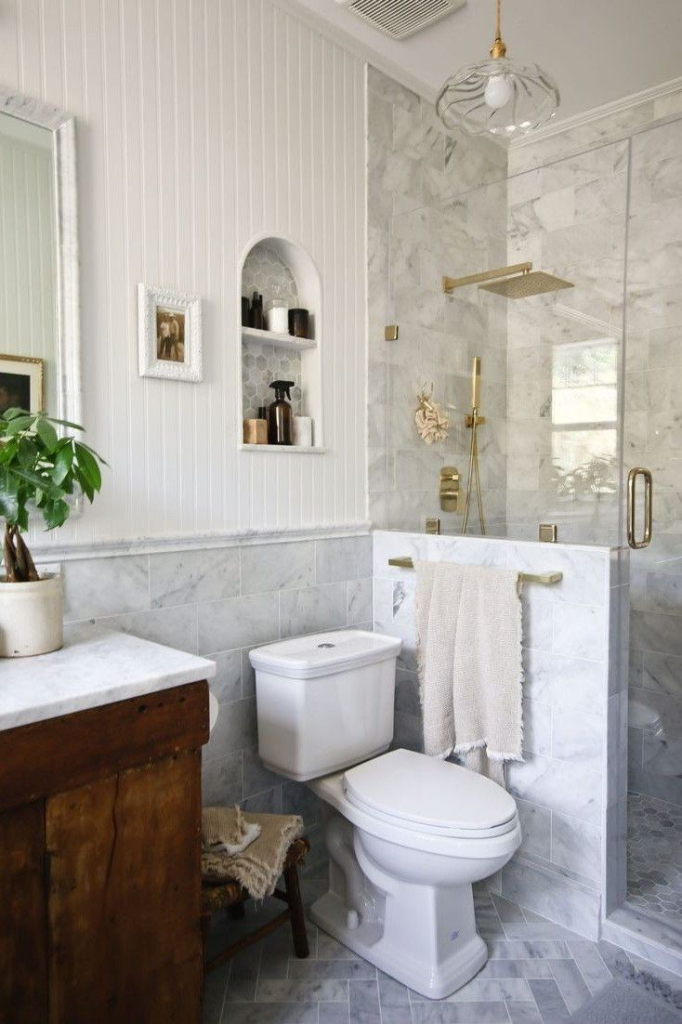
CREDIT: PINTEREST
Why the 5×8 Bathroom Layout Is a Remodeler’s Sweet Spot
First, what exactly is a 5×8 bathroom layout? Simply put, it’s a bathroom measuring about 5 feet by 8 feet, roughly 40 square feet of area. This modest size is one of the most common bathroom footprints in American homes. In Northern Virginia, many mid-century houses and suburban developments were built with standard 5×8 bathroom layouts for hall or guest bathrooms. These bathrooms pack in a sink, a toilet, and a tub/shower combo (or shower) within a cozy rectangle. It’s just enough space for the essentials, but it requires smart design to avoid feeling cramped.
Why do remodelers like Chris Chapman consider 5×8 bathroom layouts a “sweet spot”? Because with skilled planning, that 5-by-8 space can be incredibly efficient. For many homeowners, a 5×8 bathroom layout can feel like a puzzle: “How do I make it functional and beautiful?”, and that’s where expert remodelers shine. A smaller footprint means every decision matters, from where you run the plumbing to how you plan storage. Chris explains that success comes from making each inch serve a purpose: minimizing wasted space while adding personal style.
When done right, a 5×8 bathroom remodel can significantly improve a home’s comfort and value without a huge footprint or budget. It’s often one of the best returns on investment in remodeling. For families in Loudoun and Fairfax counties dealing with dated small bathrooms, a refresh can make the space feel brand new. And because these dimensions are common, 5×8 bathroom layouts are something we encounter frequently, giving us a wealth of experience to draw from.
(Expert Tip from Chris: “In a 5×8 bathroom, every inch counts. It might be a small footprint, but with the right layout and storage solutions, it can absolutely be both functional and beautiful.”)
Best Layout Blueprint: Plumbing on One Wall
One of the golden rules for the best 5×8 bathroom layouts is to keep the plumbing clustered on one wall. In other words, line up the major fixtures, typically the sink, toilet, and tub or shower, along the same long wall of the bathroom. This simple layout trick offers multiple benefits. First, it’s space-efficient: by arranging fixtures in a row, you open up more unobstructed floor area for movement. Second, it reduces visual clutter and creates a natural flow from one fixture to the next. And third, it’s cost-effective, keeping all the plumbing (water lines and drain lines) on one wall means less complex plumbing work behind the scenes, which can save on renovation costs and reduce the chance of plumbing issues.
Imagine walking into your 5×8 bathroom layout and seeing, from left to right, a vanity, then the toilet, and then at the far end the bathtub or shower. This arrangement is often called the “plumbing wall” layout, and it’s popular because it just works. In an 8-foot span, for example, you might have a 30–36 inch vanity (about 2.5 to 3 feet), a toilet taking roughly 2 feet of width, and then a tub or shower using the remaining 3 feet or so. Everything fits snugly along one side, totaling close to 8 feet. This leaves the opposite wall free of obstructions, a perfect place for towel bars, hooks, or a slim storage cabinet if needed, without bumping into fixtures.
(Chris says: “Lining fixtures up along one wall lets us use every inch smartly, and it means fewer headaches behind the walls when it comes to plumbing.”)
Besides efficiency, aligning fixtures on one wall also tends to position the toilet out of immediate view when you open the door (depending on door placement). Many people prefer not to have the toilet be the first thing guests see. With a vanity closest to the door, you get a nicer visual focal point. Meanwhile, the tub or shower at the far end often fits naturally across the 5-foot width of the room. This classic 5×8 bathroom layout usually has the bathtub against the short wall at the back, and by keeping its plumbing on the same side as the sink and toilet, everything stays streamlined. In short, this one-wall approach is often the most efficient of 5×8 bathroom layouts for using space wisely and keeping costs down.
Of course, not every bathroom will have the door and window (if any) in ideal spots to use this exact blueprint, but it’s a great starting point. If your current layout has fixtures scattered on different walls, one consideration during a remodel is whether you can relocate things to create that single-wall plumbing lineup. In our experience remodeling 5×8 bathroom layouts, making that change can dramatically improve the openness and cost-efficiency of the space.
Shower or Tub? It Depends on Your Lifestyle
Every homeowner with a 5×8 bathroom layout (or any small bathroom) eventually faces the big question: bathtub, shower, or both? In 5×8 bathroom layouts, you often have to choose between a traditional tub/shower combo or a dedicated walk-in shower, simply due to space constraints. The right answer really depends on your household’s needs and lifestyle.
Ask yourself who will use this bathroom and how. If it’s a family bathroom and young children or pets need a place for baths, then a tub (likely a tub-shower combo) is a must. Many home buyers also like to see at least one bathtub in the home for resale purposes, especially families with kids. In this case, a 5-foot tub against the back wall of the bathroom with a showerhead above it can fit perfectly in a 5×8 layout. You get the flexibility of quick showers or soaking toddlers at bath time.
On the other hand, if the bathroom will primarily be used by adults, say it’s a guest bathroom or a master en-suite for a couple, you might not need a tub at all. Removing the tub and opting for a walk-in shower can make 5×8 bathroom layouts feel much more open and modern. Without the tub’s high walls, the sightlines in the room improve, and it can be easier to step in and out safely (important for older homeowners). A shower also offers a chance to introduce spa-like features: think rainfall showerheads, body jets, or a bench seat (if space allows, more on that later).
What about resale value if you remove the tub? It’s worth considering the context of your home. If you have another bathroom in the house with a tub, converting a 5×8 hall bath to a walk-in shower is usually fine and often appealing to buyers looking for an updated look. If this 5×8 bathroom layout is the only full bath in the home, you’ll want to carefully weigh the decision, many experts suggest keeping at least one tub in a home. Chris often guides homeowners through this choice by discussing how they use their bathroom daily versus long-term plans for the home.
A compromise option in many 5×8 bathroom layouts is the tub-shower combo with a twist: use a frameless glass panel or door instead of a traditional shower curtain or sliding door. A clear glass shower door (or a fixed glass panel that covers part of the tub opening) helps make the room feel larger by eliminating visual barriers. You can see straight to the back-wall tile, which extends the sightline. Pro Tip: “Adding a glass panel instead of a swinging shower door can free up space and make a small bathroom feel more open,” Chris notes. Unlike a hinged door that needs space to swing or a bulky track for sliding doors, a simple glass panel keeps water in but doesn’t crowd the room.
In short, choose the bathing option that fits your life: tub for flexibility (especially if you have kids or frequently take baths) or a sleek shower for easy access and a modern vibe. Both can work in a 5×8 space, even the smallest 5×8 bathroom layouts can be tailored to your lifestyle with the right design.
Vanity & Sink Selection: Small Doesn’t Mean Skimpy
When dealing with 5×8 bathroom layouts, some homeowners assume they have to settle for the tiniest sink and vanity available. While it’s true you need a compact vanity or alternative sink style, “small” doesn’t mean you have to skimp on usability or storage. The key is choosing the right type of vanity and placing it smartly.
First, consider the various options:
- Floating vanities: These are wall-mounted vanities that don’t extend all the way to the floor. In a 5×8 bathroom layout, a floating vanity can make a big difference visually. By exposing floor space underneath, it creates an illusion of a larger floor area and gives a modern, airy look. You could have a 24- to 30-inch wide floating vanity that offers storage in a couple of drawers, but still keeps things feeling light.
- Pedestal or console sinks: A pedestal sink has a small footprint and can be a classic choice for traditional-style bathrooms. It will certainly open up floor space around it, but remember that you lose all cabinet storage. A console sink (which is like a sink basin on legs or a stand) similarly provides an open feel. These are great for 5×8 bathroom layouts where you plan to use a medicine cabinet or wall shelves for storage.
- Corner sink or vanity: If the door swing and layout allow, tucking a small sink into a corner can sometimes free up movement space. There are corner vanity units on the market that have a triangular shape to nestle into a corner. This isn’t a common layout in a 5×8 (since usually one side is taken up by the tub or shower), but it can be a solution in some tight half-bath configurations or unusual layouts.
- Standard vanity with reduced depth: Another popular choice is using a standard-style vanity cabinet but in a reduced depth (say 18” instead of 21” or 24”). Many manufacturers make shallow-depth vanities that still offer a sink and some storage but don’t protrude as far into the room. In narrow 5×8 bathroom layouts, those few saved inches can be crucial for comfort.
When deciding how big of a vanity you can fit, consider the clearances: The bathroom door needs to open (unless you switch to a pocket door as we’ll discuss), and you should have at least 21 inches of clearance in front of the toilet per code (24 inches or more for comfort). If your vanity is too wide or deep, it might crowd the toilet or make the entrance feel tight. Sometimes shifting the orientation or location of a door can allow a bigger vanity. For instance, if your door currently swings in and brushes up against the vanity, you might gain space by rehanging it to swing outward or by installing a pocket door (see Section 7).
Also, pay attention to where the sink plumbing is coming from. In most 5×8 bathroom layouts, the sink will be on the same plumbing wall as the toilet and tub. This typically makes for an easy installation. If you were eyeing a layout that puts the sink on an opposite wall or in a corner away from other fixtures, just remember that will involve additional plumbing work (which is doable, but something to plan and budget for).
Chris’s advice: “Sometimes a few extra inches on a vanity can make the difference between cramped and comfortable.” In practice, this means if you can squeeze a 30-inch vanity instead of a 24-inch, that added countertop and storage space will be noticeable in daily use. However, it’s a balancing act, you don’t want to overwhelm the room. That’s why at MGS we often custom-fit vanities to the space or seek out specialty sizes. Small bathrooms benefit from cabinetry that might not be off-the-shelf standard, and going custom can maximize every bit of available room (for example, building a vanity that is slightly less deep on one side to accommodate a particular nook).
Bottom line: Even in compact 5×8 bathroom layouts, you can have a functional sink area. Choose a vanity or sink style that suits your needs (storage vs. openness) and give yourself as much surface area as you reasonably can. A little extra counter space for your soap dispenser and toothbrush, plus a little extra cabinet space for toiletries, will make the bathroom feel truly usable, not just like a half-step above a powder room.
Space-Saving Storage: Built-In Brilliance
Storage is often the trickiest part of small bathroom design. Where do you put all the “stuff” (towels, shampoos, toilet paper, medicine, etc.) without cluttering up the limited space? The answer for many 5×8 bathroom layouts is to go vertical and built-in with storage. Built-in storage solutions take advantage of wall cavities and otherwise unused areas so you gain storage without using precious floor space.
One of the most popular built-in features is a recessed shower niche (aka shampoo niche). Instead of hanging a caddy or balancing bottles on the edge of the tub, a recessed niche is a cut-out in the shower wall between the studs. It provides a neat shelf (or multiple shelves) for your shampoo, soap, and accessories. We always try to include a tiled niche in our small bathroom remodels, it keeps items handy but out of the way, and it looks high-end. It’s a simple addition during the framing stage that makes a 5×8 bathroom more functional.
Another prime spot for built-in storage is over the toilet. The wall space above the toilet is often empty. You can install a cabinet or shelving there to use that void. A shallow cabinet over the toilet can hold a lot of your toiletries or extra toilet paper. Just be sure it’s not too deep that you bump your head when using the toilet! Even a couple of open shelves with baskets can utilize that space nicely. In 5×8 bathroom layouts, an over-the-toilet shelf is practically standard for adding storage.
Consider also a recessed medicine cabinet above the vanity. Instead of a flat mirror, use a mirrored cabinet that sets into the wall. This gives you a place for small items like medications, skincare products, and toothbrushes, yet it looks sleek because the cabinet is hidden in the wall. Modern medicine cabinets can be almost flush with the wall and still provide 3–4 inches of depth for storage. You get the mirror and the storage in one, without a bulky box sticking out.
One of our signature moves at MGS is thinking ahead during demolition and framing. “We often frame in custom cubbies during rough-in — it’s cleaner than adding clunky cabinets later,” says Chris. For example, beyond the shower niche, if there’s a bit of hollow space next to a vent stack or between wall studs in a 5×8 bath, we might create a small built-in shelf or cubby and finish it with trim or a cabinet door. These little recesses can hold folded towels or toiletries while only protruding as much as the wall studs allow (about 4 inches), so they don’t encroach into the room.
Apart from built-ins, use a mix of open and closed storage to keep the space feeling open but functional. What does that mean? Perhaps have a couple of open shelves for display or easy-access items (like daily-use toiletries in nice containers, or a plant for decor), combined with closed storage (like a vanity cabinet or a medicine cabinet) to hide the clutter like cleaning supplies, extra soaps, and not-so-pretty necessities. This combination prevents the small bathroom from feeling overstuffed with furniture.
One thing to avoid in a 5×8 bathroom is large, freestanding storage units that sit on the floor. A bulky floor cabinet or a tallboy drawer unit can eat up floor space and make the room feel cramped. Whenever possible, go for wall-mounted storage solutions (like towel bars, hooks, and wall cabinets) or recessed options as described. Every square foot of floor you keep clear helps maintain an open feel in a small bathroom. In fact, for truly space-efficient design in 5×8 bathroom layouts, built-in niches and wall-mounted storage are your best friends.
Door Drama: Why Pocket Doors Rock in Tight Spaces
A often overlooked space hog in any small bathroom is the door swing. In typical 5×8 bathroom layouts, a standard hinged door that swings inward can be a real annoyance. When that door is open, it likely blocks off a significant portion of the already limited floor area, and it might even hit or come uncomfortably close to the vanity or toilet. So, what’s the solution? Rethink the door entirely.
Pocket doors are a game-changer for tight spaces like 5×8 bathroom layouts. A pocket door slides right into the wall instead of swinging out. This means when the door is “open,” it’s completely out of the way, no floor space taken at all. Suddenly, you’ve gained the clearance that was once reserved for a door arc. We’ve had clients in small bathroom remodels absolutely amazed at the difference this one change can make. “Clients are shocked at how much breathing room a pocket door gives them,” Chris says. With a pocket door, you can stand in front of the sink or toilet without a door crowding you, and you have more flexibility in placing fixtures or towel bars on walls that would otherwise be obstructed by a swinging door.
Now, pocket doors do require a bit of construction work: you need to have a wall that can accommodate the door sliding inside. This means that wall can’t be loaded with plumbing or electrical wiring that can’t be moved. In most 5×8 bathroom layouts, the wall opposite the plumbing wall (behind the vanity/toilet) or the wall adjacent to the vanity might be a candidate for a pocket door cavity. If a pocket door isn’t structurally feasible, there are other door tricks:
- Consider a barn door style (a sliding door on the outside of the wall). This keeps the door out of the bathroom floor area entirely, though you’ll need wall space on the outside for the door to slide when open. Barn doors can add a rustic or modern stylistic touch, but remember they don’t seal as tightly for sound and privacy as a normal door.
- If sliding isn’t an option, simply reversing the door swing to open outward into the hallway (or bedroom) can help immensely. You have to ensure it won’t hit someone coming down the hall, of course, but an outward swing immediately frees up bathroom interior space.
We recently redesigned a small bathroom in a Fairfax townhouse where the inward-swinging door made it almost like doing a shuffle every time you entered, you had to slip in, then close the door to actually get to the vanity behind it. By switching to a pocket door, that awkward dance was eliminated. The floor plan of the bathroom went from choppy to smooth. In many 5×8 bathroom layouts, a pocket door or sliding door is one of the highest-impact changes you can make for better flow.
Finally, aside from space, think about what a different door style can do for your walls. An open swing door usually sits against one of the bathroom walls when open, making that wall off-limits for hanging hooks, racks, or art. Remove that swing, and voila, you have a full blank wall to use for storage or décor. You could mount towel hooks or a heated towel rack, or hang some lovely artwork to give the small bathroom personality. All in all, changing the door style is a relatively straightforward tweak that can yield outsized benefits in a small bathroom remodel. Simply put, it’s a simple change with big benefits for 5×8 bathroom layouts in particular.
Optical Illusions: Tricks to Make It Feel Bigger
Design isn’t just about what you see, it’s also about what you feel. In a snug 5×8 bathroom layout, a few visual tricks can go a long way to make the space feel larger than it really is. Even if you can’t literally add square footage, these design choices create a sense of openness and airiness. Here are some tried-and-true strategies we use when remodeling 5×8 bathroom layouts to maximize the perception of space:
- Light, Bright Colors: It’s no secret that lighter color schemes can make a room feel bigger. In a small bathroom, consider whites, soft grays, light beiges, or pastels for your wall color or large surfaces. Light colors reflect more light and create an expansive feeling. That doesn’t mean everything has to be stark white, you can certainly add pops of color or darker accents, but the overall palette should lean bright. The ceiling, especially, is best kept white or very light to avoid it feeling like it’s closing down on you. Plenty of our clients with 5×8 bathroom layouts are surprised at how a formerly dingy bathroom feels twice the size after we repaint it in a fresh, light tone and add good lighting (often, just swapping out an old light fixture for a brighter LED one can make a world of difference).
- Big Mirrors: A large mirror can visually double the space. Consider stretching a mirror across the wall above the vanity (and even above the toilet if the vanity and toilet share the same wall). Mirrors reflect both light and the view of the room, tricking the eye into perceiving more space. In a 5×8 bathroom layout, a broad mirror or even multiple mirrors (for example, a mirrored medicine cabinet plus a second mirror) can really amplify the sense of depth. We’ve even done a design with mirror panels on the upper half of one wall, it almost felt like the room continued beyond its actual boundaries.
- Floor-to-Ceiling Tile or Continuous Lines: Visually elongating the room upward can help. If you tile your shower all the way to the ceiling, it draws the eye up and removes the horizontal line that would otherwise cut off your sight. Similarly, using the same wall tile from the shower across the bathroom (like behind the vanity) can create a continuous look that isn’t broken up, the bathroom reads as one larger unified space instead of separate sections. Vertical patterns or stripes can make the ceiling feel taller. Even something like using a tall, narrow tile layout (e.g., vertically stacked subway tiles) can add to the effect of height. It avoids chopping the wall height, a great technique to make 5×8 bathroom layouts appear taller.
- Floating Elements: Earlier we mentioned a floating vanity as a great option. Floating vanities and even wall-mounted toilets (where the tank is hidden in the wall) expose more floor area, which makes the room feel less crowded. Anytime the floor is visible under a piece of furniture, the brain perceives more open space. In 5×8 bathroom layouts, swapping a standard vanity for a wall-mounted one or a traditional toilet for a wall-hung model can visually lighten the floor plan. (Wall-hung toilets also save a few inches of floor space since the tank is in the wall, great for renovations where maximizing every inch is critical, and they give a modern look.) This can make even tight 5×8 bathroom layouts feel less crowded.
- Layered Lighting: Good lighting can make or break a small bathroom’s feel. We always say, height and light are your best friends in a small bathroom. To avoid a cave-like atmosphere, make sure you have layered lighting: an overhead light (or pot lights) to wash the whole room, task lighting at the vanity (like sconces or a lighted mirror), and even accent lighting if possible (like LED strips under the vanity or above a shower niche for a modern touch). And of course, maximize natural light, which leads us to…
All these elements combined can transform how a 5×8 space feels. A well-lit, light-colored, reflective-surfaced bathroom with continuous design lines can feel surprisingly roomy. People often step back into their newly remodeled small bathroom and say, “I can’t believe it’s still the same size!” That’s the power of design tricks, you’re not actually gaining square footage, but it can sure feel like you did. For any 5×8 bathroom layout, combining height (vertical elements) and ample light will visually expand the space.
Shower Hacks for a Seamless Look
Since the shower (or tub/shower) is likely the largest item in a 5×8 bathroom layout, making smart design moves in this area can have a big impact on the overall sense of space. Our goal with 5×8 bathroom layouts is often to make the shower area feel as “seamless” with the rest of the room as possible, so the whole bathroom reads as one continuous space rather than a chopped-up one. Here are some shower design hacks we recommend:
- Go Curbless (Zero-Threshold): If feasible, design the shower without a raised curb at the entry. A curbless shower means the bathroom floor flows straight into the shower with no step up or ledge to trip over. It creates a very open, accessible feel, the floor tile just continues into the shower area. This requires some planning (the shower floor must be properly sloped to a drain and the substrate recessed a bit to contain water), but it’s gold for both accessibility and visuals. Even a low-profile curb (just a couple of inches high) is better than a standard 4–6 inch curb if curbless isn’t possible. The idea is to minimize the physical and visual barrier at the shower entry.
- Frameless Glass Enclosure: We touched on this earlier, but it bears repeating as a shower-specific tip. Use clear, frameless glass for any shower enclosure. In a 5×8 bathroom, a frosted glass or tiled wall for the shower might make the shower feel like a separate tiny room and cut off the line of sight. Clear glass keeps the shower visible as part of the whole bathroom, making the entire space feel larger. Frameless (or minimal frame) designs avoid chunky metal tracks and frames, which again helps maintain an open look.
- Continuous Flooring: If you can use the same floor tile in the shower as in the rest of the bathroom, it will make the floor space look unified. Often, for slip resistance, people choose smaller tiles for the shower floor (like mosaics) even if they have larger tiles outside. But you can find ways to coordinate, for example, maybe you use the same color tile but in a smaller hex or penny round pattern on the shower pan, which blends with larger tiles in the main area. At least keep the color tone continuous. When you look in, it should feel like one floor area. Some designs even eliminate a shower door entirely (using a single fixed panel or a wet-room style design), further blending the spaces.
- Shower Niches and Built-ins: Just as we advocate built-in niches for storage in the rest of the bathroom, using these in the shower is doubly important in a small bathroom. Protruding shelves or hanging caddies in the shower will catch the eye and make the area feel cluttered. A recessed niche in the shower keeps everything tidy and doesn’t intrude into the shower space visually or physically.
- Shower Bench Placement: A bench can be wonderful in a shower for shaving or sitting, but in a 5×8 layout, you have to be strategic. If you do include a built-in bench, place it at the far end of the shower or along a wall where it won’t block your entrance. Important: Chris advises, “Never block your entry with a bench. It should serve you, not get in the way.” In many cases, a corner bench or a floating fold-down seat is a smart choice to save space. If the shower is the full width of the room (5 feet wide), consider a narrow ledge-style bench along the back wall instead of a big 90-degree bench that juts into the floor area.
With these hacks, the shower can enhance rather than shrink the perceived space. A flush floor, clear glass, and integrated storage all make the shower feel like an extension of the room. When you step in, you don’t feel cut off or closed in, and that’s the key to successful 5×8 bathroom layouts that feel roomy.
The Toilet Talk: Round vs. Elongated
It may not be the most glamorous part of a bathroom design, but choosing the right toilet is crucial, especially in 5×8 bathroom layouts where inches matter. One decision many people overlook is the shape and size of the toilet itself. The two common bowl shapes are round and elongated. How does this factor into a small bathroom layout? It’s all about space.
An elongated toilet has an oval-shaped bowl that sticks out a bit farther (front-to-back) compared to a round toilet, which has a more circular bowl. Elongated bowls are often considered more comfortable for adults, as they offer a bit more surface area to sit on. However, they typically measure about 2 to 4 inches longer than round bowls. In a tight bathroom, those few inches can be significant. In some tight 5×8 bathroom layouts, that extra length could turn a functional clearance into a tight squeeze. If the toilet is opposite a wall or next to a vanity, an elongated bowl might feel cramped or actually violate the recommended clearances.
Most building codes recommend (or require) around 21 inches of clearance in front of the toilet for knees/feet, and 15 inches from the center of the toilet to any side wall or obstacle (like a vanity edge). In an ideal world, you’d have even a bit more space than the minimum. In a 5×8 bathroom, if you’re tight on legroom, a round bowl toilet can save those critical inches. Chris points out: “Understand that there is a three to four-inch length difference between round toilets and elongated toilets. Round toilets will provide a more spacious feel in the floor area.” So if you’re bumping up against a space restriction, opt for round.
Another consideration is the toilet tank design. Some toilets have slimmer tanks or are two-piece vs. one-piece designs that can alter dimensions slightly. There are also wall-hung toilets (with the tank inside the wall) that can save space by not jutting out as far and by clearing floor space. These are great options for 5×8 bathroom layouts, as they conceal the tank in the wall and give a more modern look, though they do require a bit more installation work.
We also think about comfort height vs. standard height toilets for accessibility (comfort height models sit a bit taller, which many people prefer, but in a small bathroom if you have tall family members, ensure head clearance under any shelves!). And if you’re environmentally conscious or looking to add some modern luxury, consider dual-flush or smart toilets. A dual-flush toilet can save water (good for the environment and your utility bill) and often comes in compact designs as well.
(Chris’s Consideration: “We help clients pick models that balance comfort, code, and clearance.”) This means we’ll measure and tape out the projection of a potential toilet during the planning stage to see how it fits into the 5×8 bathroom layout. Sometimes we even set a cardboard mockup in place. The goal is to ensure that you can walk past the toilet, sit down and stand up comfortably, and not feel squeezed by other fixtures. It’s a small detail, but nothing’s worse than a beautiful new bathroom where you constantly bang your knee on something because of a poor toilet placement.
In summary, don’t sleep on toilet selection. For a small bathroom, lean towards a round bowl if space is tight. Check the dimensions (spec sheets will list the depth from wall to front of bowl). And make sure whatever model you choose is positioned to give adequate room. After all, comfort isn’t just about how soft the seat is, it’s also about not feeling like you’re wedged in a closet. When redesigning 5×8 bathroom layouts, we always keep toilet placement and size in mind to ensure comfort.
Lighting & Windows: Natural Light Matters
Lighting can make a huge difference in how welcoming and open 5×8 bathroom layouts feel. If you’re lucky enough to have a window in your small bathroom, you already have a head start on making the room feel larger. Natural light not only brightens up the space, but also gives your eyes a view to the outside, which psychologically expands a room. For 5×8 bathroom layouts, we always try to maximize any available natural light and supplement with excellent artificial lighting.
Windows: If your 5×8 bathroom layout has an exterior wall, consider keeping or even adding a window. Privacy is a concern, of course, but there are solutions: use frosted or textured glass, or install blinds/shades that still allow light while obscuring direct views. A transom window (a short window up high on the wall) is another great option if you want light without sacrificing privacy, it can be placed near the ceiling to let sunshine in. In some cases, we’ve installed a small operable awning window high up in the shower wall (opposite the showerhead so water doesn’t hit it directly), which provides natural light and a bit of ventilation. Any glimpse of sky or greenery through a window can make the bathroom feel less claustrophobic.
If a traditional window isn’t possible (say your bathroom is in the middle of the house), one cool alternative is a solar tube or skylight tube. These are reflective tubes that channel sunlight from the roof down into your bathroom, basically a mini skylight. They can flood a small bathroom with daylight, no electricity required.
Artificial Lighting: On the flip side, when it’s night or if no window is available, your lighting scheme should banish shadows. A combination of overhead lighting and task lighting works best. For overhead, a flush-mount ceiling light or a couple of recessed lights will provide general illumination. In the shower, as mentioned, it’s important to have a waterproof recessed light or a vapor-rated light fixture so that the shower isn’t a dark cave compared to the rest of the room. We often install a dedicated recessed light in the shower area of 5×8 bathrooms, since one central ceiling light can leave the shower dim due to the curtain or glass blocking some light.
At the vanity, wall sconces or a light above the mirror are key for eliminating shadows on your face and making everyday tasks (makeup, shaving) easier. In a small bathroom, placing sconces on either side of the mirror at eye level gives the best, even illumination. If side sconces aren’t possible, a light above the mirror (like a bath bar or a row of vanity lights) will do the trick. LED mirrors with built-in lights are also a sleek option in modern designs, they distribute light across the mirror evenly and take up minimal space.
Don’t forget about the color temperature of lights. Using a bright, cool-white (around 3000–4000K) LED will mimic daylight and keep the bathroom feeling fresh and clean. Avoid very warm (yellowish) or very cool (bluish) extremes in such a small space; you want a natural, flattering glow.
Between natural light and thoughtful artificial lighting, your 5×8 bathroom layout will go from feeling like a cave to feeling like a welcoming, open spa. It’s all about banishing dark corners and giving the eye a sense that the space is airy. When MGS designs a small bathroom, we treat lighting as a priority, not an afterthought, it truly can make that 5×8 feel like a 5×10. In any remodel, good lighting ensures even 5×8 bathroom layouts feel open and welcoming.
Real-Life Remodel Example
To see how all these principles come together, let’s look at a real-life example from our portfolio. Recently, MGS Contracting Services remodeled a bathroom with a standard 5×8 bathroom layout for a homeowner in Leesburg, VA. It was a typical hall bathroom in a 1980s home, about 40 square feet, with an old fiberglass tub-shower combo, a dated oak vanity, and a linoleum floor. The layout was actually the classic one: tub across the back wall, toilet and vanity along one side, door on the other side. Even though the basic layout was sound, the bathroom felt dark, cramped, and uninspiring.
Challenges: The clients wanted a more open, modern feel, but still needed it to function for both their overnight guests and their own daily use. Storage was minimal (just the vanity cabinet and a small medicine cabinet) and the door swing cut into the space awkwardly. They also had concerns about their aging parents using the tub safely when visiting.
Solutions & Upgrades:
- We decided to remove the old tub and replace it with a tiled walk-in shower. Since the family had another tub in the master bathroom, they felt comfortable letting this hall bath be a shower-only space. The new shower spans the width of the room (5 feet across) and about 3 feet deep, enclosed with a clear frameless glass sliding door. Instantly the room felt larger, because you could see the full shower area from the doorway without a bulky tub front blocking the view.
- We built a corner shower bench in the back of the shower, on the same side as the showerhead and controls. This way, the bench doesn’t interfere with stepping in. It provides a seat and a nice spa-like touch. We also included two recessed niches for toiletries, one in the shower and another cleverly placed above the toilet for additional storage and decor (it has glass shelves and accent lighting).
- The old vanity was 30 inches wide. We upgraded to a custom 36-inch floating vanity. We managed to squeeze a slightly bigger vanity in by using some of the space saved by eliminating the tub’s apron. Because it’s wall-hung, it still makes the floor area feel open, and we installed motion-activated LED lighting under it which gives a nice glow at night (and makes it look like it’s floating above a pool of light). The extra six inches of vanity width, plus better organization with drawers, gave the homeowners a lot more storage.
- We addressed the door issue by installing a pocket door. Where the old hinged door used to bang into the vanity, the new pocket door now slides neatly into the wall. This allowed us to put a couple of robe hooks on the wall behind where the door used to swing, increasing functionality.
- For aesthetics and that sense of openness, we used a light color scheme: white subway tiles with a vertical layout up to the ceiling in the shower, a light gray paint on the walls, and a large-format porcelain tile on the floor in a soft gray-beige tone. A big mirror above the vanity (spanning the full 36-inch width and reaching up to the light fixture) reflects all that brightness. The result is a 5×8 bathroom that feels much larger than before.
- Lighting was upgraded with a brighter ceiling light and vanity sconces, and we added a small frosted glass window on the exterior wall. (The bathroom had one exterior wall, so we coordinated with a window installer to put in a 12”x24” awning-style window high on that wall for privacy. It brings in natural light and even a bit of sky view.)
Outcome: The transformation was dramatic. Our clients couldn’t believe how spacious their small bathroom felt. No longer do they dread guests using it, in fact, they’re proud to show it off. All the key elements we discussed (smart layout, glass, light colors, built-ins, improved lighting, and a better door) played a role in turning a tight space into a jewel-box bathroom. And importantly, it remains fully functional for their needs. This project proved that with the right approach, 5×8 bathroom layouts can be both space-efficient and stylish.
Small Space, Big Impact
A 5×8 bathroom might be small in size, but as we’ve seen, the best 5×8 bathroom layouts can deliver a big impact with the right design choices. Whether it’s your primary bathroom or a guest hall bath, investing time and thought into the layout will pay off in daily comfort and long-term home value. The best 5×8 bathroom layouts are all about smart use of space: keeping things streamlined (like aligning plumbing and using built-ins), making visual tweaks to enlarge the feel (like light colors and glass), and choosing fixtures that fit just right (from vanities to toilets).
If you’re looking at your own 5×8 bathroom layout and feeling uninspired, remember that there’s plenty of hope. We’ve helped many homeowners in Loudoun and Fairfax County turn their “small, boring bathroom” into a highlight of their home. The key is in the planning. Every decision, from where the towel bar goes to what type of door you use, contributes to the overall success of a small bathroom remodel.
And you don’t have to figure it all out alone, working with experienced professionals (like our team at MGS Contracting Services) can help you see possibilities you might have missed. Sometimes just rearranging the layout or picking a different vanity shape can completely change the game. We love the challenge of 5×8 bathroom layouts because when you finally see that perfect blend of form and function in a tiny space, it’s incredibly rewarding.
So, if you’re dreaming of a better bathroom, one that proves small spaces can be stunning, it might be time to take the next step.
Ready to reimagine your 5×8 bathroom layout? Let’s talk. MGS Contracting Services is here to bring your vision to life, without wasting a single square foot. We love transforming 5×8 bathroom layouts into stunning, efficient spaces.
FAQs
Q: Is 5×8 too small for a bathroom?
A: A 5×8 bathroom is certainly compact, but it’s not too small to be functional. In fact, 5×8 bathroom layouts are among the most common floor plans, and they can accommodate all essential fixtures—a bathtub (or shower), sink, and toilet. It’s not spacious, but it’s enough room for everything you need. With a smart design that optimizes layout and storage, even a 5×8 bathroom can feel comfortable and efficient. In short, 5×8 bathroom layouts may be small, but they are common and completely adequate with smart design.
Q: What’s the most efficient 5×8 bathroom layout?
A: The most efficient 5×8 bathroom layout generally places all the fixtures along one wall in a row. Typically, this means having the vanity first when you walk in, then the toilet, and then the bathtub or shower at the back. This one-wall or “plumbing wall” layout minimizes the space taken up by plumbing and creates a clear pathway through the room. By clustering the sink, toilet, and tub/shower, you reduce wasted circulation area and keep the rest of the floor open. It also helps avoid having the toilet as the first thing in sight when the door opens, which many prefer.
In our experience, this configuration consistently creates the most practical 5×8 bathroom layouts. Of course, every bathroom is slightly different, doors and windows might shift the ideal arrangement, but as a rule, lining fixtures up and sharing plumbing lines is a winning approach for efficiency in a 5×8 space.
Q: How can I make a small bathroom feel bigger?
A: Even without changing the footprint, there are several ways to make a small bathroom (like a 5×8 bathroom layout) feel larger. Here are a few tips:
- Use light colors on walls and fixtures to reflect light and open up the space (especially important in a 5×8 bathroom layout).
- Install a large mirror or multiple mirrors to visually double the room and bounce light around.
- Choose a glass shower door or panel instead of an opaque curtain or partition, so the shower area remains visible and part of the room, keeping the whole space open in a 5×8 bathroom layout.
- Consider a floating vanity or wall-mounted toilet to show more floor area and reduce bulky visual elements, a change that can make even tight 5×8 bathroom layouts feel less crowded.
- Take tile up to the ceiling in the shower and even across the walls, this creates vertical lines that draw the eye up and avoids chopping the wall height, a great technique to make 5×8 bathroom layouts appear taller.
- Ensure great lighting, including plenty of ambient and task lighting, so there are no dark corners. A bright, well-lit bathroom always feels more spacious than a dim one. (In short, strategic design choices can make 5×8 bathroom layouts feel airy. It’s about tricking the eye: continuous lines, reflective surfaces, and eliminating clutter will all help your small bath feel bigger.)
Q: Is a tub necessary in a guest bath?
A: Not necessarily. The decision to include a tub in a guest bathroom (often 5×8 in size) depends on how you expect the bathroom to be used. If your guest bath might also serve as a child’s bathroom or the only bathroom in the house, having a tub can be a good idea for flexibility (bathing children, resale appeal to families, etc.). However, if the guest bath is primarily going to be used by adult visitors or as a secondary bathroom, you might opt to forgo the tub in favor of a larger, luxurious shower. In many 5×8 bathroom layouts, removing the tub opens up possibilities like a spacious walk-in shower with a bench or extra storage niches.
From a real estate perspective, it’s generally wise to have at least one tub in the home, but it doesn’t have to be in the guest bath if you have another elsewhere. So, if a tub isn’t serving your needs in a small guest bathroom, don’t feel obligated to keep it, a well-designed shower can be a great use of the space. For small guest bathrooms, especially those with 5×8 bathroom layouts, it often makes sense to maximize shower space instead of including an unused tub.