Why Code-Compliant Bathrooms Matter Bathroom Codes
Think bathrooms are all about pretty tiles and fancy vanities? Think again. When it comes to bathroom remodeling, the stakes are high. You’re dealing with a dense tangle of plumbing lines, electrical wiring, moisture-prone surfaces, and safety concerns, all confined in a tight space. In other words, a bathroom isn’t just a pretty room; it’s a technical space where bathroom codes and regulations play a starring role in every design decision. Bathroom Codes
Building codes exist to keep you safe and your home sound. Neglecting bathroom codes during a remodel can lead to costly mistakes or even dangerous situations. (Imagine a light switch so close to the shower you could touch it with wet hands, yikes!) That’s why at MGS Contracting Services, we are sticklers for code-compliant, safety-first bathroom remodeling. Our team’s approach is backed by military-grade precision and professionalism, meaning we leave no detail to chance. As a veteran-owned company, we bring a discipline and commitment to excellence that ensures your new bathroom isn’t just beautiful, but built to code and built to last. Bathroom Codes
You might be thinking: “Do I really need to worry about all these rules while planning my dream bathroom?” The answer is yes, but don’t worry. Many bathroom codes overlap with smart design principles that make your space more comfortable and functional. In fact, the National Kitchen and Bath Association (NKBA) provides design guidelines that complement building codes, serving as homeowner-friendly guides rather than hurdles. These guidelines and codes ensure every fixture is placed for optimal use, every electrical element is safe around water, and every addition works in harmony. They’re not there to stifle your creativity; they’re there to guide it. Bathroom Codes
In this comprehensive guide, we’ll walk through the must-know bathroom codes and design practices for sinks, toilets, showers, lighting, ventilation, and more. By the end, you’ll see how code compliance can go hand-in-hand with stunning design. Let’s demystify those “scary” bathroom building codes and turn them into an actionable plan for your remodel. After all, a truly successful bathroom renovation isn’t just about looks, it’s about safety, comfort, and peace of mind in the years to come. Bathroom Codes
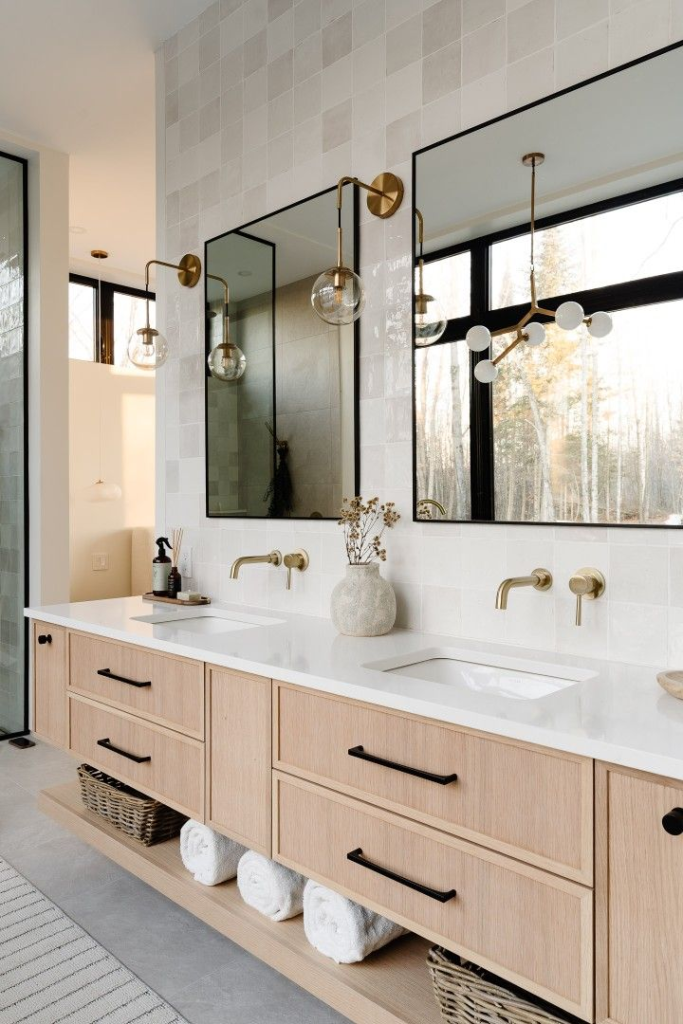
CREDIT: PINTEREST
Sink Smarts: Placement, Clearance, and Comfort Bathroom Codes
When remodeling a bathroom, one of the first areas to consider is the sink (or sinks). Where you place your sink and how you configure the vanity area can make a big difference in how comfortable and safe the space feels. Proper sink placement isn’t just design fluff, it’s part of bathroom codes and standard design guidelines meant to ensure usability. Here are some sink spacing “code and comfort” rules every homeowner should know: Bathroom Codes
- Distance from walls: Keep the edge of a sink at least 4 inches away from any side wall or tall vertical surface. Why? Sinks splashing water too close to drywall can lead to moisture damage. That 4-inch gap isn’t just about bathroom codes, it also leaves room for plumbing hookups and prevents your knuckles from scraping the wall when you’re washing your hands. Bathroom Codes
Bathroom Codes - Front clearance: Plan for a minimum of 21 inches of clear floor space in front of the sink. This clearance is mandated by many bathroom codes to give users enough room to comfortably bend over the sink without bumping their hips or head. Think of it as personal elbow room for your morning and bedtime routines. (No more toothbrush jousts with the wall or medicine cabinet!) More space is even better; if you can provide closer to 30 inches in front of your vanity, you’ll really minimize those awkward elbow bumps and make the bathroom feel more luxurious. Bathroom Codes
Bathroom Codes - Double-sink separation: Dreaming of a double vanity? Make sure to space your two sinks at least 4 inches apart (edge to edge). Squeezing sinks too close can make for awkward bump-ins when two people use the vanity at once. Giving each sink some breathing room isn’t specifically a hard-and-fast code in many areas, but it’s a recommended practice (and an MGS rule of thumb) to ensure each user has their own comfortable zone. Bathroom Codes
Bathroom Codes - Sink-to-tub spacing: If your vanity or sink is next to a bathtub or shower, try to maintain at least 4 inches of space between the sink and the tub/shower edge. This little buffer zone prevents water splash-over between fixtures and creates a visual separation that just looks and feels right. It’s a small detail that contributes to both bathroom codes compliance and good design. Plus, that extra few inches make it easier to clean around the tub and vanity. Bathroom Codes
Bathroom Codes
Design Tip: Want to save space and add a splash of luxury? Consider a recessed medicine cabinet or a floating vanity. A recessed cabinet sits inside the wall, freeing up those precious extra inches in front of your sink (and keeping within that 21-inch clearance more easily). A floating vanity mounts to the wall and leaves the floor clear, which can make a small bathroom feel more open and airy. These choices don’t directly relate to bathroom codes, but they do enhance the sense of spaciousness while still respecting the required clearances. In a code-compliant bathroom, even a small powder room can feel like a polished sanctuary with the right design moves.
“Your bathroom should feel like a sanctuary, not a sardine can.” , Chris Chapman, MGS Owner
By following sink placement guidelines, we ensure your bathroom doesn’t feel like a cramped can of sardines. Proper spacing, as required by bathroom codes, means you won’t knock your funny bone every time you brush your teeth. It’s these small comfort details, combined with code-compliant design, that transform a bathroom from merely okay to truly outstanding.
Toilet Tactics: Spacing for Sanity and Sanitation
Let’s talk about the throne 🧻 – arguably the most essential seat in the house. Proper toilet placement is crucial for both comfort and hygiene. Nothing ruins a beautiful new bathroom faster than realizing the toilet is jammed too close to a wall or vanity. That’s why bathroom codes lay out clear minimums for toilet spacing. Here’s what you need to know to give your toilet (and yourself) the royal treatment:
- Front clearance: Building codes typically require at least 21 inches of open space in front of the toilet. This means from the front edge of the toilet bowl to whatever might be facing it (wall, door, or vanity), you should have at least 21 inches clear. Why? So you’re not literally stuck in a tight spot. Have you ever used a restroom where your knees nearly hit the wall? Not fun. bathroom codes set 21 inches as a bare minimum to avoid that claustrophobic squeeze. If you have the room, aim for 30 inches or more in front of the toilet. That extra legroom feels luxurious and is closer to current design best practices. It’s the difference between feeling like a king on a throne versus feeling like… well, a contortionist on a tiny stool.
- Side clearance: The toilet shouldn’t be too tightly tucked between walls or other fixtures. Code calls for a minimum of 15 inches from the centerline of the toilet to any side wall or obstacle (like a sink cabinet). In plain English, that’s at least 15 inches from the toilet’s middle to the wall on each side. This adds up to a 30-inch wide space at minimum for the toilet area. However, 18 inches from centerline to side wall (36 inches total width) is often recommended for a more comfortable, up-to-date bathroom design. Giving a bit more side-to-side breathing room means your shoulders and knees won’t feel squished. Plus, it leaves space if someone needs assistive devices or a handrail now or in the future, keeping the bathroom adaptable.
Those are the key clearance rules from the bathroom codes – but don’t stop there. Let’s talk about a few extras that can make your toilet area even better:
- Comfort height & accessibility: Consider installing a comfort-height toilet (sometimes called chair-height). These models sit 2-3 inches taller than a standard toilet (which is usually around 15 inches high at the seat). The extra height (about 17-19 inches at the seat) makes it easier for older adults or anyone with knee/back issues to sit down and stand up. It’s a simple upgrade that meets ADA guidelines for accessibility, and while not required by code in a typical home, it does make your bathroom more user-friendly for all ages. At MGS, we often recommend comfort-height toilets as part of “aging-in-place” design – planning ahead to ensure your bathroom will be convenient for you or guests for years to come.
- Soft-close seats: Ever been startled by the bang of a toilet seat slamming shut? A soft-close seat fixes that. It’s a small luxury (and blissfully quiet), and it also prevents wear and tear on the toilet bowl. While not a code issue, it’s a quality-of-life improvement we love to include in bathroom remodels. After all, who says meeting bathroom codes and having a bit of bathroom bliss can’t go hand in hand?
- Water efficiency: Modern toilets can be stylish and smart. We encourage homeowners to choose WaterSense-certified toilets, which use around 1.28 gallons per flush or less, compared to older 1.6+ GPF models. These eco-friendly toilets save water (good for your utility bill and the planet) without sacrificing performance. In fact, many municipalities now require high-efficiency fixtures as part of their own bathroom codes or conservation bylaws. Even if not mandated, a water-saving toilet is a wise choice in any remodel. It’s nice to know your new “throne” is not only comfortable but also kind to the environment.
“A well-placed toilet is a throne worth sitting on.” This cheeky adage rings true: when your toilet has adequate space and modern features, it genuinely feels like a throne. By respecting the spacing guidelines from bathroom codes and adding thoughtful upgrades, we ensure that personal time in your new bathroom is comfortable, safe, and fit for royalty.
Shower and Tub Safety: More Than Just Hot Water
Hot showers and bubble baths are the relaxing luxuries of a great bathroom, but behind the scenes, there’s a lot of planning to make sure your shower or tub is safe, accessible, and up to code. From the size of the shower floor to the temperature of the water, bathroom codes cover various aspects of tub and shower design. Let’s dive into the key safety and design points for showers and tubs:
- Minimum shower size: Ever felt claustrophobic in a tiny shower stall? Building codes help by requiring a minimum internal shower size of about 30 inches by 30 inches (or 900 square inches). In practice, this means the shower must be big enough to comfortably stand and move a bit, no brushing up against cold tile with every turn. While bathroom codes set 30″ x 30″ as the legal minimum, bigger is better. We typically recommend showers be at least 36″ x 36″ if possible, especially for master baths or if you’re planning to age in place. A larger shower not only feels more luxurious, it can accommodate a built-in bench or assistive devices down the line.
- Shower door clearance: For showers with hinged doors (usually glass doors), code mandates at least a 24-inch wide opening. This clearance is crucial for safe entry and exit. A glass shower door needs room to swing outwards, and you need enough space to step in without turning sideways. If the opening is too narrow, it becomes a squeeze that can actually be dangerous, nobody wants to contort through a gap while floors are wet. The bathroom codes requirement of 24 inches minimum is really about preventing accidents. (Fun fact: some older codes allowed slightly smaller openings, but most modern standards stick to 24” for safety.) When planning your remodel, ensure that any shower door won’t hit any obstructions and can open fully. Pro tip: opt for a door that swings outward (as required by code) or a sliding shower door to maximize usable space.
- Anti-scald valves: One of the most important safety features in today’s bathrooms is something you don’t see – the anti-scald (pressure-balancing or thermostatic) valve. Building codes now require anti-scald devices on all new shower and tub faucets. These valves regulate sudden changes in water temperature, so if someone flushes a toilet or runs a dishwasher while you’re showering, you won’t get scalded by a blast of hot water or shocked by cold. If your home is older and still has an original shower valve, it might not have this feature. Upgrading to a modern anti-scald mixing valve is usually part of a bathroom remodel and is absolutely essential for safety (especially for kids or elderly family members who might not react fast enough to temperature swings). At MGS, we never cut corners here, your new shower will definitely include up-to-code anti-scald protection, because safety isn’t optional.
- Water-saving fixtures: Showers can use a lot of water, so it’s wise (and sometimes required) to choose low-flow fixtures. Many bathroom codes or local ordinances encourage the use of WaterSense-labeled showerheads, which typically use no more than 2.0 gallons per minute of water. Don’t worry, “low-flow” no longer means a wimpy trickle; today’s efficient showerheads are engineered to feel just as refreshing as old 2.5 GPM models. By installing a WaterSense showerhead, you’ll conserve water and lower your utility bills without sacrificing comfort. It’s a win-win that we incorporate into our bathroom designs whenever possible.
Beyond these code points, consider some forward-thinking design choices for your tub and shower area:
- Curbless (zero-threshold) showers: A curbless shower eliminates the step-over of a traditional shower curb. While not mandated by code in standard bathrooms, it’s a hallmark of universal design and makes the shower accessible for everyone, young kids, people with mobility issues, or anyone who wants a sleek, easy entry. We often design curbless showers for a contemporary look and because they’re great for aging in place (no tripping hazard). Just keep in mind, going curbless requires careful planning for proper slope and drainage to meet bathroom codes (you don’t want water flooding the rest of the bathroom!).
- Grab bars and support: Including grab bars or at least backing for future grab bars in the shower/tub area is an excellent safety investment. Even if you don’t think you need them now, installing blocking inside the walls during a remodel will allow you to add grab bars later without opening up walls. Many clients opt for stylish grab bars that double as towel racks or have a design that blends right in. They provide extra security when stepping in or out of the tub, and they’re a must if anyone in your household has limited mobility. While residential bathroom codes don’t require grab bars unless you’re designing a dedicated accessible bathroom, we view them as a wise addition for any long-term bathroom design. They can prevent slips and give peace of mind, safety features aren’t just for hospitals or hotels; they belong in your home too.
- Slip-resistant surfaces: Choose flooring and shower tiles with a good slip-resistance rating (look for a higher COF – coefficient of friction – on tile specs). This isn’t a code requirement in typical homes, but it’s common-sense design. Bathrooms are wet environments, and slip-and-fall accidents are a real risk. Many beautiful tile options also come with textured or matte finishes that are less slippery underfoot. We’ll help you find a tile that looks great and keeps you steady on your feet, especially in the shower pan. Remember, bathroom codes address a lot of safety issues, but it’s also up to us as designers and homeowners to go above the minimum where it makes sense.
“Safety isn’t an add-on; it’s a design essential.” This mantra guides our approach to every tub and shower we build. By following bathroom codes for size, door clearance, and anti-scald technology, and then adding thoughtful touches like curbless entries or grab bars, we ensure your new bathroom is not only beautiful but safe for all who use it. After all, the best kind of bathroom is one where you can relax fully, knowing it’s designed for both indulgence and safety.
Bright Ideas: Lighting & Electrical Must-Knows
A well-lit bathroom can make the difference between a groggy morning and a great start to your day. But lighting a bathroom isn’t just about vanity bulbs and fancy fixtures, it’s also about safety with electricity in a wet environment. Here, bathroom codes and good design converge to create a space that’s bright, beautiful, and safe. Let’s shed some light (pun intended!) on the key electrical and lighting codes and how to make your bathroom shine:
- GFCI outlets: All bathroom outlets must be GFCI-protected – no exceptions here. GFCI stands for Ground Fault Circuit Interrupter, and it’s a special outlet (or circuit) that cuts power in a fraction of a second if there’s a current leak (like when an appliance contacts water). This is a critical bathroom code requirement because it prevents deadly shocks. In practical terms, any outlet near your sink, shower, or tub will be a GFCI by code (usually they all are, since bathrooms are considered wet zones). If your home is older and the outlets by your vanity aren’t GFCIs, we’ll be updating them during the remodel. Safety first! And don’t worry, GFCI outlets look almost the same as regular ones (just those little “test” and “reset” buttons), so it won’t affect your decor.
- Light fixtures over tubs/showers: If you plan to have a light above your shower or bathtub area (like a recessed can light or a fancy chandelier over a freestanding tub), it must be rated for damp or wet locations. Essentially, bathroom codes dictate that any fixture in these wet zones should be vapor-proof (sometimes called “shower trim” for recessed lights). You’ll recognize these fixtures by the sealed covers over the bulbs. This keeps water (or steam) from infiltrating the electrical parts. It’s both a safety measure and a durability thing, fixtures not rated for moisture can short out or corrode quickly in a bathroom. When selecting lighting, we’ll guide you toward fixtures that not only look amazing but also carry the proper UL damp/wet rating to satisfy code. That way, you can have that stylish pendant or downlight exactly where you want it without any safety worries.
- Switch placement: Ever notice that the light switches are usually just outside the bathroom or by the door? There’s a reason. Electrical code requires switches to be a safe distance from tubs and showers, generally at least 60 inches (5 feet) away from the shower or tub edge. This is to prevent a scenario where someone might be in the bath, dripping wet, and able to touch a switch (electricity + water = bad news). So, we won’t be putting that towel-warmer switch within arm’s reach of the soaking tub, even if it seems convenient. In smaller bathrooms, this rule can affect where we place your switches and outlets, but a good electrician (like the ones on our team) will ensure everything is laid out to meet bathroom codes and still be handy for you. Usually, the solution is simple: put the switch by the entry door, which is both convenient and code-compliant.
- Adequate lighting levels: There’s no specific bathroom code that says “thou shalt have a bright vanity light,” but having sufficient illumination is important for safety and daily tasks. We recommend using a combination of lighting types to cover all the bases.
Design Tip: Use layered lighting to make your bathroom both functional and fabulous. This means mixing ambient lighting (overall light, like a ceiling fixture or recessed lights) with task lighting (focused light, like vanity sconces or a lighted mirror for putting on makeup/shaving) and accent lighting (decorative or highlighting features, like LED strips under a floating vanity or a spotlight on art). Layered lighting not only elevates the look of your bathroom – giving it that high-end, magazine-worthy glow – but it also ensures there are no dark corners or harsh shadows. And here’s the best part: a well-lit bathroom feels larger and more inviting. Even a small bathroom can shine (literally) with the right lighting plan. As long as each fixture is chosen and placed with bathroom codes in mind, you can get as creative as you want. Think chic wall sconces, a dramatic pendant light, or even color-changing LED accent lights for a spa vibe – just make sure wet-rated fixtures are used where needed, and everything is installed by a licensed pro.
“Smart lighting makes your bathroom feel high-end, and keeps it code-legal.” In other words, blending beautiful design with electrical safety is a bright idea (yes, we love our puns). When we remodel a bathroom, our electricians work hand-in-hand with our designers to ensure that every light switch, outlet, and fixture is in the perfect spot and 100% up to bathroom codes standards. The result? You can flick on the lights, enjoy your stunning new space, and rest easy knowing it’s safe and sound behind the scenes.
Breathe Easy: Ventilation Tips for Health and Longevity
Ever walk into a bathroom that feels like a swamp after a shower, with mirrors fogged up and a musty smell lingering? That’s a sign of poor ventilation. A great bathroom isn’t just about fixtures and finishes, it also breathes well. Proper ventilation is not only crucial for comfort and air quality; it’s actually required by bathroom codes to protect your home’s structure and your health. Let’s clear the air on this topic:
Code Requirements: Every bathroom needs adequate ventilation, either via a window or an exhaust fan. Building codes typically say you must have one of the following:
- A window with at least 3 square feet of area, half of which must be openable (so, an opening of 1.5 sq. ft. minimum to the outdoors). This is the old-school solution: an operable window that can let out steam and bring in fresh air. It works fine in theory, open the window after a hot shower and voila, moisture escapes. But not everyone wants to open a window in January, or maybe your bathroom doesn’t even have an exterior wall for a window.
- An exhaust fan vented to the outside capable of at least 50 CFM (cubic feet per minute) airflow. In modern practice, this is the go-to solution. A Bathroom Exhaust Fan sucks out humid air and sends it outside (important note: outside meaning it should vent to your home’s exterior, not just into an attic or crawlspace, that would just move the moisture problem elsewhere!). The bathroom codes specify 50 CFM as a baseline for intermittent ventilation, which is suitable for most small- to medium-sized bathrooms.
Here’s our advice: even if you have a big window, install a good bathroom fan. A fan doesn’t mind if it’s snowing or raining outside, and you won’t either, you’ll be able to eliminate moisture with the flick of a switch (or automatically, more on that in a second) rather than propping open a window.
Why it matters: Proper ventilation whisks away excess humidity, which in turn prevents mold and mildew growth. Mold loves damp, still air , and a unventilated bathroom after a hot shower is basically a spa day for mold spores. Over time, that can lead to gross stains, musty odors, and even health issues for you and damage to paint, drywall, or woodwork. By following bathroom codes for ventilation, you’re also preserving the longevity of your remodel. That fancy new paint job and cabinetry will thank you for keeping them dry.
Upgrade Tip: Opt for a bathroom fan with a humidity sensor or timer. We often install exhaust fans that automatically kick on when humidity rises or that can be set on a timer to run for 10-15 minutes after a shower. This takes the guesswork out of ventilation, no one forgets to turn it on or off. Some newer fans are ultra-quiet and even come with built-in lights or nightlights (two birds, one stone for functionality). As a bonus, effective ventilation can help meet code even if your bathroom lacks a big window. Local bathroom codes might allow a smaller or no window at all if a proper fan is in place, since the goal of the code, venting moisture, is achieved. We’ll handle all those calculations and installations for you, so your bathroom will be up to code and you can quite literally breathe easier.
“A fresh bathroom is a healthy bathroom. Don’t skip the fan.” It’s advice we hope every homeowner takes to heart. At MGS, we make sure your bathroom has the right ventilation solution built in. That way, every time you step out of a steamy shower, you know the fan is quietly clearing the air, protecting your investment, and keeping the space feeling (and smelling) as fresh as possible. Good airflow is the invisible hero of any successful bathroom remodel, silently doing its job to keep mold at bay and air quality in tip-top shape.
Local Code Disclaimers: Check Before You Demo
By now, we’ve covered a lot of general bathroom codes and best practices. You might wonder, “Do these rules apply exactly the same way in every city or county?” The truth is building codes can vary by state, county, or city. While there are model codes (like the International Residential Code and others) that many places adopt, local jurisdictions often have their own tweaks and additions. For example, what flies in one county might need a slight adjustment in another.
If you live in Virginia like many of our clients, you’ll find that Loudoun County’s bathroom code requirements might differ a bit from Fairfax County’s, or Washington D.C.’s codes, and so on. Differences might include stricter energy/water-saving rules, specific permit requirements, or additional safety measures. It could be as small as a different requirement for how powerful your vent fan must be, or as significant as needing special GFCI outlets of a certain type. Keeping track of these local nuances is a job in itself.
Before you swing that sledgehammer on demo day, make sure you’re aware of the codes for your specific area. This is where hiring a knowledgeable contractor truly pays off. At MGS Contracting Services, we make it our business to stay up-to-date on all the local bathroom codes and permitting processes. Whether your home is in Leesburg, VA, down in Fairfax, or anywhere in between, we’ve navigated those county regulations countless times. We’ll handle the headache of ensuring everything in your bathroom plan checks the right boxes for inspections and approvals.
One thing to remember: pulling permits and following code isn’t just red tape , it’s protection for you as a homeowner. When your remodel is done by the book, you can rest assured that there are no hidden issues that could cause problems later (like an insurance claim denial, or trouble when selling your home). Plus, a permitted, code-approved bathroom remodel is legally required in most locales. We’ve all heard of the neighbor who tried to DIY a bathroom without permits and ended up with a horror story (flooded floor, electrical fire, etc.). That’s a situation we want you to avoid at all costs.
So, in short: check your local codes. Or better yet, let MGS check them and plan accordingly. We’ll get any necessary permits and make sure your project complies with every applicable rule. No surprises, no fines, no do-overs, just a smooth, safe renovation.
Remember, the goal of any building department is to ensure safe construction. They’re not there to make your life harder; they’re there to make sure your new bathroom won’t cause you issues. By working with a pro who respects the inspectors (hey, we often become friends with them, since we’re all on the same team of “build it right”), you’ll sail through the process. Consider this our little local code disclaimer: the specifics may vary, but our commitment to following them does not.
Style Without Compromise: Design That Honors Code
At this point, you might be thinking, “All these rules… will my bathroom end up looking like a hospital or a cookie-cutter design?” Fear not. Code compliance doesn’t mean you have to sacrifice style. In fact, some of the most stunning bathrooms out there manage to be perfectly up to bathroom codes while showcasing tons of personality and luxury. The trick is to weave together form and function, which is exactly what great designers and remodelers do.
Here are a few ways to keep your bathroom stylish and unique without ever breaking code:
- Go big with tile: Larger format tiles (think 12×24 inches, 24×24, or even large slabs) are very popular in high-end bathroom design. Fewer grout lines create a sleek, continuous look that can actually make a space feel larger and more serene. And guess what? Using large, slip-resistant porcelain tiles on the floor and walls doesn’t interfere with any bathroom codes at all. It’s purely a design choice that can elevate the space. Bonus: less grout also means easier cleaning and less maintenance – a win-win for beauty and practicality.
- Floating vanity magic: We’ve mentioned floating vanities before, and we’ll sing their praises again. Mounting a vanity on the wall (securely attached to studs, of course) can immediately modernize a bathroom. It gives the illusion of more space because the floor is visible underneath. This choice doesn’t mess with code requirements (as long as you still mount it at a comfortable height and follow plumbing codes, which we do). You can have under-cabinet lighting as an accent, or use that open space for a stylish basket of towels. It’s form and function – providing storage and style.
- Bold colors & accents: Some people think you have to stick to neutral whites and grays if you’re playing it safe. We say, feel free to add a punch of color or a statement piece. Whether it’s a navy blue vanity, a patterned tile niche in the shower, or matte black fixtures for contrast, these touches make the space yours. bathroom codes certainly don’t regulate color choices or artistic flairs! You can have that bright teal accent wall or that chandelier (if rated for damp areas) over your tub. What’s important is that behind the scenes, the wiring, plumbing, and structure supporting these features are done right. So go ahead and express yourself – we’ll ensure the canvas you’re painting on is code-compliant and sturdy.
- Luxurious extras: Think heated floors, digital shower controls, integrated sound systems – the sky’s the limit with modern bathroom tech. None of these are off-limits due to code. We just ensure, for example, that the heated floor thermostat is GFCI protected and the wiring is to code, or that the built-in bluetooth speaker in your shower head is properly sealed from moisture. You get to enjoy all the comforts and wow-factors, and we handle the technical bathroom codes part quietly in the background.
The bottom line: good design = safety + beauty. When we plan a bathroom remodel, our design team and construction team collaborate closely. We start with your vision – the mood board you’ve been saving on Pinterest, the spa-like shower you’ve been dreaming of – and then we layer in our expertise with bathroom codes to make it real. If something isn’t feasible as initially imagined (say, that gorgeous pendant light you love needs to hang a bit higher to meet code clearance above the tub), we’ll find a creative workaround that preserves the look and keeps things legal and safe.
“Code-compliant” does not equal “boring.” In fact, some codes like those requiring certain clearances can actually improve the aesthetics by preventing overcrowding of fixtures. The result is a bathroom that feels spacious, works flawlessly, and reflects your style. Our mission is to deliver a space that honors both the letter of the law and the spirit of great design. You can absolutely have it all , a bathroom that’s the envy of the neighborhood and one that would pass any inspection with flying colors.
Why Hire a Pro Like MGS?
Tackling a bathroom remodel is a big job, and as we’ve outlined here, there’s a lot to think about. You might be feeling a mix of excitement and overwhelm (totally normal!). This is where bringing in a professional remodeler can make all the difference. A company like MGS Contracting Services lives and breathes bathroom codes, design trends, and construction best practices every day. We’ve got the experience to foresee challenges and the skills to execute your vision properly.
Why choose a pro – and specifically MGS – for your bathroom project? Here’s a quick recap:
- Code expertise: We know the bathroom codes inside and out – from the national standards to the quirks of local regulations. You won’t have to worry about whether that outlet is too close to the sink or if the shower pan slope is sufficient. We plan and build everything to meet or exceed code, so you sail through inspections and enjoy a safe bathroom.
- Vision and design: Our team excels at blending universal design principles (making the space usable for people of all ages and abilities) with your unique style preferences. We’ll suggest features like curbless showers or wider doorways subtly – you get a bathroom that’s future-proof without it screaming “accessible.” And we do it all without compromising on the wow-factor you’re after.
- Quality and efficiency: A professional remodeler coordinates plumbers, electricians, tile setters, and more, so you don’t have to play general contractor. At MGS, we pride ourselves on efficient construction timelines. We know having a bathroom out of commission can be disruptive, so we schedule smartly and work diligently to get your bathroom back up and running as soon as possible, without cutting corners. Our military background instills in us a commitment to timeliness and order. When we say we’ll do something, we do it – and on schedule.
- Your vision, our mission: Perhaps most importantly, we listen. This is your bathroom, and it should reflect your vision. Our job is to take that vision and layer our expertise on top to produce a result that even better than what you imagined. From the initial consultation through the final walk-through, you’ll find that we communicate clearly, respect your home, and truly care about your satisfaction.
When all is said and done, a bathroom remodel is a significant investment in your home’s value and your daily well-being. It pays to have a trusted partner on board. With MGS Contracting Services, you get a team led by a veteran who values integrity, precision, and service. We don’t just aim to meet bathroom codes – we aim to exceed your expectations in craftsmanship and customer care.
“At MGS, we don’t just remodel, we build bathrooms that last, function, and inspire.” That’s our philosophy in a nutshell. Every tile we lay and every wire we connect is done with longevity and excellence in mind. We want you to step into your new bathroom and feel that everything is just right – beautiful to look at, comfortable to use, and solidly built for the long haul.
“Ready to remodel your bathroom the right way?” If you’re feeling inspired to get started on a code-compliant and drop-dead gorgeous bathroom remodel, let’s talk! We invite you to reach out to MGS Contracting Services for a free consultation and estimate. We’ll discuss your ideas, answer any questions about bathroom codes or design options, and explain how we can bring your dream bathroom to life with our signature blend of creativity and precision.
Your perfect bathroom is within reach, and we’re here to make it happen the right way. Give us a call or contact us through our website to take the next step. We’d also love to show you our portfolio of stunning bathroom transformations – seeing is believing, after all.
Don’t settle for anything less than the best for your home. With MGS Contracting Services, you’ll get a stylish bathroom that checks all the boxes for safety, quality, and code compliance. Let’s work together to create a bathroom that not only meets every code, but also exceeds your every expectation.
Ready to get started? Contact Chris Chapman and the MGS team today, and let’s build your dream bathroom – one that’s beautiful, built to code, and entirely yours.