
From Concrete to Cut Stone, What’s Right for Your Outdoor Living Space?
Choosing the Right Patio Material for Your Home
At MGS Contracting Services, we take pride in helping Leesburg, VA homeowners create beautiful outdoor living spaces. As a premium home remodeling partner in Loudoun and Fairfax counties, we know that a well-crafted patio isn’t just an addition, it’s a lifestyle upgrade. The journey to your dream patio starts with picking the best patio materials for your needs. In this guide, we’ll break down the most popular patio materials (from versatile concrete to elegant cut stone), discuss their pros and cons, and help you determine which patio material is right for your home. By the end, you’ll be well-equipped to choose the perfect foundation for outdoor living. Let’s dive in!
CREDIT: PINTEREST
8. Mixed Materials: Creative Combos that Make a Statement
Why choose just one material when you can mix and match? Some of the most striking patio designs use a combination of materials to create visual interest, delineate different zones, or incorporate decorative details. Mixing patio materials allows you to play with contrast, rough vs. smooth, warm vs. cool colors, solid vs. aggregate, and can solve practical issues (like having a solid surface for a dining area but a permeable border for drainage). It’s an approach that requires a bit of design daring, but done well, it yields a custom, magazine-worthy space.
Endless Possibilities: With all the materials we’ve discussed, concrete, brick, stone, pavers, gravel, wood (if we even throw decking into the mix), the combinations are nearly endless. Here are some popular or intriguing mixed-material ideas:
- Brick and Gravel: A classic pairing. For example, you could have a brick dining patio in the center, bordered by a wide gravel perimeter. The brick gives a stable, patterned core, while the surrounding gravel creates a graceful transition to the garden and provides contrast in texture. Another take: a grid of bricks with gravel infill, bricks could form squares or diamonds and the gaps are filled with pea gravel, merging solid and void. In traditional gardens, bricks set in sand with gravel joints was a common method (sometimes called “brick and screenings” patio). It has a charming, old-fashioned feel.
- Concrete and Wood/Decking: This might be used in a contemporary design, imagine a patio that’s partly concrete (or large concrete pavers) and partly a platform deck. This can delineate areas (say a dining space on a raised deck adjoining a sunken concrete fire pit area). The warm wood tone against the cool concrete is a pleasing contrast. Just ensure the design accounts for the different structural needs (deck needs footings, etc.). But visually, it can break up a large outdoor expanse into defined living “rooms.”
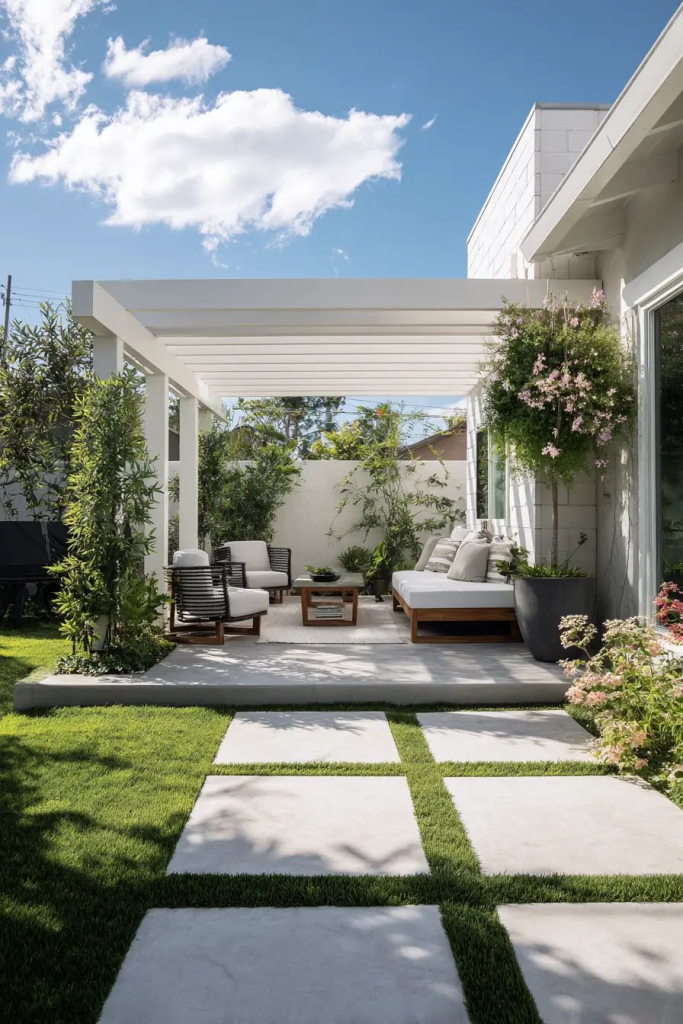
- Pavers and Turf: A trend in modern landscaping is to intermix artificial turf or real grass with pavers. For example, a checkerboard of square pavers with plush green grass in between, very chic and inviting. Or a stepping stone pathway where instead of mortar or gravel joints, you have groundcover growing around each stone. This fusion of greenery with hardscape softens the look greatly. (If using real grass, consider how you’ll mow or trim it in those small gaps, artificial turf can give the look without the maintenance.)
- Tile Insets in Concrete: If you have a poured concrete patio, you can actually embed decorative tiles or stone pieces into certain sections while it’s wet (or cut out sections later). For instance, a band of Mexican Talavera tiles across the middle of a concrete pad, or a mosaic medallion as a focal point. It’s a way to add color and pattern to a plain slab. We’ve seen beautiful examples where a plain gray concrete patio had a “rug” of colorful tiles under a seating area, like an outdoor living room with a permanent tiled rug.
- Flagstone and Brick Edging: You can outline a flagstone (irregular) patio with a course of brick or cut stone to give it a finished look. The brick border can help define the shape and also secure the flagstones. Conversely, you can have a brick patio with random flagstone “stepping stone” accents in the middle for a pop of irregularity. Mixing natural stone with manufactured brick can marry well if colors complement.
- Exposed Aggregate and Bands: Say you do an exposed aggregate concrete for the majority, but you leave some bands smooth or even tiled. Some mid-century designs had exposed aggregate pads with smooth borders, it’s subtle but adds interest. Or a driveway that is aggregate with brick bands, that concept can apply to patios too.
- Different Paver Styles/Colors: Even within pavers, you can mix. You might use one style for the main field and another as a border or to delineate, for example, a circle inset for a fire pit area. Mixing paver colors in a deliberate pattern (like a checker or stripes) can be very eye-catching, though be cautious of going overboard, the design should still feel cohesive.
- Gravel and Pavers or Stone: We touched on this, large pavers set among gravel is a very popular mixed material approach. It saves cost (less pavers needed) and creates a contemporary yet zen feel. It’s also practical for drainage. Another idea is a gravel patio with a stone “path” embedded through it or a few stone slabs as a solid landing for a grill or fire pit. Mixing loose and solid can be both functional and decorative.
- Concrete and Pebble Mosaic: If you’re artistic, creating a pebble mosaic inlay in a concrete or mortar-set patio is stunning. For example, a circle of river stones set on end forming a mandala in the center of a plain patio. This is detailed work (and you must ensure it’s flush and well-sealed) but talk about a conversation piece!
Visual Interest and Zoning: One of the big reasons to mix materials is to define zones within your outdoor space. Maybe you want a dining area to feel distinct from the lounge area. Changing the paving material under each section is an effective way to do that visually (like how open-plan rooms inside often use area rugs or different flooring to separate dining vs. living room). Outside, you could have a raised deck under a dining table (warm wood vibe) adjoining a paver patio with outdoor sofas (cool stone vibe). Your eye sees two purposeful spaces, and each material reinforces the function (the deck may feel more indoor-like for eating, the stone more robust for a fire area). Even without elevation changes, material switches signal transitions: stepping from a stone path onto a brick patio, you feel you’ve arrived at a new “room.”
Also, mixing materials can solve issues: For example, maybe part of your patio is under a tree where roots make digging deep impossible, you could cover that section with gravel (which requires minimal digging) and do pavers in the open part. Or if you have an existing concrete slab that’s too small, you can extend around it with a different material (say, pavers or gravel extension) without the whole thing looking like a patch job, instead it looks intentional.
Balance and Intent: The key to a successful mixed-material patio is making it look intentional and harmonious. You don’t want a chaotic hodgepodge. Typically, one material will be the “primary” and others are accents. Try to find a unifying element, color families that complement, or repeating a shape. For instance, you use gray-toned gravel to complement bluish slate stones. Or the red in your brick border echoes the red flecks in your aggregate concrete. Think of it like designing a room: you coordinate colors and textures. Also, use transitions logically, e.g., a border that clearly demarcates one material from the next. Abrupt changes can work if done boldly (like a sharp line of change), but often a border course or buffer makes it more visually pleasing.
Another tip: consider the scale of materials. Large flagstones might look odd next to small brick unless there’s a bridging element or pattern that ties them. On the other hand, oversized 24” pavers and a fine gravel joint work nicely as one accentuates the other.
Mixed Material Examples:
- A pea gravel courtyard with random flagstone steps and a brick bench pad: gravel is main floor, flagstone provides stable steps to navigate, brick pad indicates a spot for a bench or fireplace.
- A concrete slab patio with a perimeter of pavers: the interior could be smooth concrete for a clean look, but along the edges you lay a row or two of coordinating pavers to frame it (and even expand the footprint with a decorative edge). This can alleviate the monolithic look of a big slab.
- Wood decking strips within a stone patio: imagine a limestone tile patio that has 6-inch cumaru wood “boards” inserted every 5 feet. Very modern and striking, the wood breaks up the stone expanse and ties into wood elements elsewhere (like a wood pergola overhead).
- Mosaic “rug”: a rectangular area in the center of a patio where you arrange differently colored pavers or tiles in a pattern (could mimic a rug pattern or be a simple border outline). It differentiates, say, the seating area visually.
Benefits of Mixing: You can achieve a high-end designer look often without the cost of doing everything in the most expensive material. For example, incorporating some expensive stone as accents within a field of cheaper pavers can elevate the design without breaking the bank. It also allows phasing, you might have a basic concrete patio now and later add stone or tile accents when budget permits.
Maintenance of Mixed: You’ll need to care for each material accordingly (so a little more nuance, e.g., remember to not blow mulch onto your stone which could stain, or re-sand paver joints next to a concrete pad, etc.). Ensure that different materials meet flush to avoid trip hazards (transitions should be level or clearly step up/down). When power washing or sealing, consider the other material (tape off or avoid spraying sealant on the adjacent gravel, for instance). It’s not much more work, just awareness.
Summary: Mixed-material patios demonstrate that you truly own your design. By blending elements, gravel with flagstone, brick with concrete, tile with timber, you create a patio that’s uniquely yours and full of visual appeal. The contrasts, if well-balanced, draw the eye and can highlight the best qualities of each material. This approach turns the patio itself into a conversation piece, not just the furniture on it. If you crave something beyond the standard “one-material” patio and have a bit of creative spark (or a great designer to assist), exploring mixed materials could lead to an outdoor space that’s both functionally and artistically satisfying. Just remember: be intentional with your combinations, aim for complementary textures and tones, and you’ll strike the perfect balance that makes your patio sing.
Choosing the Right Material: Key Considerations
With so many patio materials on the menu, how do you choose the one (or combination) that’s right for you? It ultimately boils down to a blend of practical factors and personal preferences. Here are the key considerations to guide your decision:
- Climate and Weather: Your local climate is a big factor. Do you deal with freeze-thaw cycles in winter? If so, you’ll want materials that can handle it. Concrete can crack with repeated freezing (though proper installation helps), whereas pavers or brick flex and are often better for cold climates. Natural stones like granite, bluestone, and quartzite are very frost-resistant, but something like a low-fired terracotta tile would be a bad idea (it could spall apart). If you live in a hot climate, consider surface temperature, brick, light-colored stone, or travertine stays cooler underfoot than dark slate or black concrete. Also, intense sun can fade some colored concrete or composite materials over years; clay bricks won’t fade, and stones are natural colors so they hold up. Heavy rainfall or humidity might make you favor permeable options or materials that won’t be slippery with algae (flagstone’s roughness is great for rainy areas). For example, in a tropical climate, a textured porcelain or broom-finished concrete will be safer than glossy tile. So, match your patio material to your region’s demands.
- Budget: Let’s be honest, the budget often steers the ship. Loose materials like gravel and sand are cheapest, followed by basic concrete (plain gray concrete is typically very affordable per square foot). Mid-range you’ll find pavers and brick, more than concrete, but still less than natural stone in many cases. On the higher end are cut natural stones and specialty tiles. And if you want elaborate patterns or mosaics, factor in labor costs too. Don’t just consider initial install cost, but also lifespan. A pricier patio that lasts twice as long as a cheaper one could be more cost-effective in the long run (e.g., a well-built paver patio might last 30+ years with minor maintenance, whereas a cheap concrete slab might crack badly in 10 if not done right). That said, you can also phase your project: maybe do a smaller stone seating area within a larger gravel patio, you get some high-end feel without paying for all stone. Or plan for later upgrades. But set a realistic budget up front. Remember to include base preparation, edging, and labor in your comparisons, those can vary by material (e.g., concrete requires formwork and mixing, which is different from the labor of placing pavers piece by piece).
- Style and Aesthetics: Look at your home’s architecture and your landscape design. Is it traditional, modern, rustic, eclectic? Ideally, the patio material complements the style. A ultra-modern home with a pea gravel patio might feel a bit incongruent (though with the right design it could work); sleek porcelain tiles or large format pavers might suit better. Conversely, a historic farmhouse might look most at home with brick or flagstone rather than, say, geometric concrete pavers. Think of the visual language: Brick and cobble evoke history and charm, wood decks feel casual and warm, concrete can either be modern or neutral, natural stone gives an upscale organic vibe. Also consider color, do you want the patio to blend with the surroundings or pop as a feature? Neutral grays and tans often blend; reds or multi-colors stand out more. If your interior has a style you love, you might extend that outside (e.g., if you have Spanish tiles inside, a terracotta patio brings that feel out). On the flip side, you might purposely choose something that sets the patio apart as a distinct outdoor experience. Just have a cohesive vision so it doesn’t feel like a mishmash. Browsing pictures (and maybe laying out some sample materials in your yard) can help you visualize.
- Function and Usage: How will you use the patio? For dining with heavy tables and chairs, you’ll likely want a solid, flat surface like concrete, pavers, or stone, so furniture sits stable (tiny wheels on furniture don’t roll on gravel, for instance). If it’s mainly a casual fire pit area or a garden retreat for reading, gravel or mulch might suffice and feel more relaxing. Do you need wheelchair or stroller accessibility? A continuous hard surface with minimal joints (like concrete or tightly spaced pavers) is best for wheels. If you plan to dance on your patio (hey, it happens at parties!), consider slip-resistance and evenness. For an outdoor kitchen, think about grease spills, sealed concrete or porcelain tile might clean easier than porous stone. If kids will be running around, softer or non-slip materials and avoiding tripping hazards is key (maybe skip the uneven flagstone in that case, or use it with tight joints). Also, consider the size of your space, in a very small patio, using a busy pattern or too many different materials might feel chaotic; simpler might be better. In a huge patio, monotony might be the challenge, so breaking it up with more than one material or pattern could be welcome. Match the material to the mood and activities of the space.
- Maintenance Willingness: Be honest about how much upkeep you’re willing to do. If you want zero maintenance aside from maybe washing, materials like concrete, brick, or pavers are quite low fuss (just occasional cleaning and minor tasks). Wood decking requires regular sealing or staining to keep it up (and watch for splinters). Natural stone might need sealing to prevent stains (e.g., food and drink spills can discolor unsealed limestone or sandstone). Do you mind pulling the odd weed from a gravel patio or re-leveling settled pavers every few years? Are you up for resealing concrete or pavers every few seasons to keep them looking fresh (not strictly necessary, but some do it)? If you’re someone who never wants to think about the patio once it’s built, choose something touted for “low maintenance” and perhaps avoid materials that have ongoing care like wood or certain tiles. Also consider longevity: some materials age gracefully (brick may develop moss and still look quaint), while others just degrade (peeling paint on a painted concrete is not charming). If you like a weathered look (some people love the patina on brick or the way stone gets lichen), factor that in. If you want it to always look like new, you may need to actively maintain or choose more inert materials. Remember: all patios will need some maintenance (even if just sweeping or blowing leaves), but the level varies. For example, a brick patio needs minimal upkeep and never needs staining, whereas a wood deck needs frequent sealing, big difference.
- Drainage and Site Prep: This isn’t as glamorous as other factors, but absolutely crucial. If your site is flat or prone to standing water, you either need a material that can handle water (permeable or won’t be damaged by pooling) and/or you need to incorporate drainage solutions (like building a slight slope or adding a drain). For instance, if you’re set on tile in a rainy area, ensure a good slope and maybe a drain strip so water doesn’t sit (for safety and tile longevity). Permeable materials like gravel shine in wet areas because they let water through. But even with permeable patios, you don’t want water pooling next to your house, grade the patio so water flows away from foundations (usually a 1-2% slope). Some materials basically require a well-prepared base: pavers and stone need compacted gravel bases to not settle; concrete needs proper subgrade and rebar to not crack. If your soil is clay and shifts, a floating wood deck or flexible pavers might tolerate it better than a rigid slab. Also, consider edging and containment, especially for loose materials or bricks/pavers, you’ll need good edging to keep them in place. Plan these “invisible” elements because they will affect how your patio performs. A beautiful material on a poorly prepped base will lead to issues quickly. During planning, perhaps consult a pro on what base depth or techniques your soil needs. It might sway your choice too (e.g., if digging deep for a paver base is not feasible due to tree roots, maybe a surface like concrete that can float on top is chosen, or vice versa). A well-built patio of any material will be safer and last longer, so factor installation quality into the equation. Sometimes it’s better to go with a slightly simpler material but afford professional installation, than a pricey material installed wrong.
- Local Regulations or HOA: Check if there are rules in your area. Some historic districts may require certain materials (maybe even forbidding some, like no concrete in visible front yards, etc.). An HOA might have guidelines on appearance. Usually, backyard patios are fine, but if you’re doing something unconventional (like a front patio of gravel or a bright blue tiled courtyard), ensure it’s allowed. Also, any construction that affects drainage could need a permit or approval. It’s a minor consideration but good to verify.
In making your decision, it often helps to prioritize: What’s most important, aesthetics, cost, or ease? If budget is king, you might start by narrowing to affordable options and then choose the one you like best among those. If look is paramount and you’re willing to maintain it, maybe you splurge on that natural stone you’ve dreamed of. Often, a balance can be struck, a bit of creativity (like mixing materials, or choosing a material that mimics a more expensive one) can get you the look for less. Take your time in the design phase. Lay out sample patches in your yard (literally buy a few bricks or pavers, or lay some gravel and walk on it). That tactile experience might reveal preferences, maybe you find you hate walking on gravel with sandals, or you love it.
Also, consult with professionals if unsure. They might point out something like, “Actually, in your shady yard, moss will grow quickly on these stones making them slick, but these pavers have an algae-resistant surface,” etc. They’ve seen what works and fails locally.
In summary, choosing the right patio material is about matching the material’s strengths to your needs and vision. By considering climate, budget, style, function, maintenance, and site conditions, you’ll steer toward a choice that you’ll be happy with not just on day one, but years down the line. And remember, there’s often no one “perfect” material, many can work if designed and built properly. It’s about what you will enjoy living with. Picture yourself on that patio on a lazy Sunday or a fun evening with friends, what kind of floor are you on, what do you see and feel? That picture will guide you to the material that best fits your outdoor living dream.
Why Work with MGS Contracting Services?
Designing and building the perfect patio is no small feat, it requires thoughtful planning, skilled craftsmanship, and knowledge of how different materials perform. This is where partnering with professionals like MGS Contracting Services can make all the difference. We’re here to ensure your patio not only looks amazing but is built to last. Here’s what sets MGS apart and why homeowners in Loudoun and Fairfax Counties trust us with their outdoor transformations:
- Local Expertise: We’ve been creating beautiful patios and outdoor living areas in the Northern Virginia area for years. That means we understand the local climate, soil conditions, and permit requirements. Our team knows what patio materials stand up to Virginia’s hot, humid summers and chilly winters. We’re familiar with the style of homes in our communities, from historic Leesburg properties to modern builds in Ashburn, and we can recommend materials that complement your home and meet any HOA guidelines. Being local also means we can source quality materials from nearby suppliers, often at better prices. When you work with MGS, you get a patio that’s designed specifically for your location and built with an understanding of local challenges (like that stubborn Virginia clay soil or the need for proper drainage during those summer downpours). We don’t do one-size-fits-all, we tailor the project to your site’s unique needs.
- Veteran-Owned Values: MGS Contracting Services is proud to be a veteran-owned and operated company, founded by Marine Corps veteran Chris Chapman. The values Chris honed in the service, precision, discipline, and commitment, are the foundation of how we do business. We bring a disciplined work ethic and attention to detail to every patio we build. You’ll see it in our thorough planning, our accurate measurements, and our insistence on quality at each step (from properly compacting the base to the final level check). We show up on time, respect your property, and work with integrity, those are non-negotiables for us. Our team operates with the kind of camaraderie and dedication you’d expect from a crew led by a veteran. We don’t cut corners; we don’t settle for “good enough”, we aim for excellence and a patio that exceeds your expectations. In short, we treat your home like our own, with respect and high standards.
- Full-Service Support: Designing a patio involves many decisions and steps. When we say full-service, we mean we’ve got you covered from the initial idea all the way to the final sealing and cleanup. Not sure which material is right? We’ll walk you through the options, show you samples, and provide our expert recommendations based on your goals and budget. We can handle design aspects, from layout shape to suggesting patterns or mixed materials to add that wow factor. Concerned about permits or approvals? We’ll guide you through that, and handle any required drawings or applications. During construction, we take care of everything: excavating, base prep, installation, any required masonry or carpentry, and finishing touches. Our skilled crew includes specialists in various trades, so if your project involves, say, a new pergola, an outdoor kitchen, or lighting as part of the patio plan, we can integrate those seamlessly. We coordinate it all so you don’t have to juggle multiple contractors. When the patio is finished, we’ll also advise you on care, for instance, we’ll recommend the right sealant and apply it for you, and let you know how to maintain the surface for longevity. It’s truly turnkey, you get to watch your dream patio take shape without the stress.
- Client-First Approach: At the end of the day, our business is not just about bricks and pavers, it’s about people. That means you, your satisfaction is our top priority. We believe in clear, frequent communication. From the moment you contact us, we listen carefully to what you want to achieve. We’ll provide a detailed quote and timeline so you know exactly what to expect. During the project, we keep you updated on progress, and if any surprises come up (say we find an old tree root or something unexpected), we discuss solutions with you transparently. Our crew is friendly and respectful, we clean up the jobsite each day, minimize disruption to you and your neighbors, and are always happy to answer your questions. Many of our clients comment on how smoothly the project went and how we truly cared about their input. We also stand by our work: we offer warranties on our craftsmanship, and if something isn’t right, we fix it. Our goal is not just to build a patio, but to build a relationship of trust so you feel comfortable calling us for your future home projects too. We’re not satisfied until you are delighted with your new patio. As our reviews often note, we go the extra mile to deliver “above and beyond” results.
- Quality Craftsmanship: Our team of builders are seasoned pros. Whether it’s ensuring the pavers are perfectly level, cutting stones with precision for a tight fit, or blending mortar color to match, we sweat the details. We use high-quality materials, for example, if we’re doing a paver patio, we source from reputable paver manufacturers with good warranties. For concrete work, we mix to the proper PSI and use rebar reinforcement and expansion joints placed correctly (no random cracks on our watch!). For natural stone, we take time to lay out the puzzle for the best fit and look. It’s this commitment to quality that ensures your patio not only looks fantastic when new, but stays that way year after year. Additionally, we keep up with industry best practices and new products, so if there’s an improved joint sand that inhibits weeds, or a new sealant that lasts longer, we know about it and incorporate it. With MGS, you’re getting top-notch workmanship backed by knowledge and pride.
Building a patio is an investment in your home and your lifestyle. When you work with MGS Contracting Services, you get a partner who cares as much about the outcome as you do. We combine local know-how, veteran-led reliability, full-service capability, and genuine client care to deliver patios that consistently exceed expectations. Our mission is simple: help you create an outdoor space you absolutely love, and make the process enjoyable and stress-free.
We’d be honored to bring your vision to life, whether it’s a cozy flagstone nook or an expansive paver pool deck. Many homeowners in Leesburg and beyond have entrusted us with their remodels (indoors and out) and have become repeat clients and friends. We invite you to join our family of satisfied customers and experience the MGS difference for yourself.
Conclusion: Your Dream Patio Starts with the Right Foundation
Designing your dream patio is an exciting journey, and choosing the right patio materials is the cornerstone of that process. We’ve explored everything from the no-nonsense durability of concrete to the timeless charm of brick, from the rugged beauty of flagstone to the versatility of modern pavers, and beyond. The key takeaway? There is no one-size-fits-all answer, only the material (or mix of materials) that fits your needs and vision best.
Perhaps you’ve discovered that you love the idea of a low-maintenance paver patio with clean lines and easy upkeep, or maybe your heart is set on a flagstone terrace that feels like a natural extension of your garden. You might be dreaming of that red brick pattern that echoes the colonial architecture of your home, or maybe a creative combination, a solid cooking area of textured concrete with a surrounding border of pea gravel for contrast. Whatever clicked for you, you’re now armed with knowledge of the pros and cons, the look and feel, and the care each option involves.
A well-chosen patio material is more than just the ground beneath your feet; it’s the foundation of countless future memories. It’s where you’ll sip your morning coffee while listening to the birds, where your kids might take their first wobbly steps or draw chalk art, where you’ll host BBQs with friends on summer evenings, or relax by a fire pit on a crisp fall night. The patio, in essence, becomes an outdoor extension of your home’s living space, and getting the material right sets the stage for all those moments to unfold comfortably and beautifully.
As you embark on bringing your patio plans to life, remember that professional guidance can be invaluable. We at MGS Contracting Services are here to help translate your ideas into a solid plan and then into a tangible reality. From selecting the ideal materials and designing the layout, to handling permits and expertly installing with care, we love partnering with homeowners to create spaces that enhance their lives. We treat each project as if it were at our own home, ensuring quality at every step. Our goal is to not only meet your expectations but to knock them out of the park.
So, are you ready to design the perfect patio tailored to you? Let’s take that next step together. We’ll gladly provide a free consultation to discuss your ideas, offer suggestions, and give you a clear picture of what’s possible within your budget. Whether you have a complete vision or just a vague notion (“I know I want something nice out back!”), we’ll work with you to craft a patio that checks all your boxes.
Your dream patio truly does start with the right foundation, both the physical foundation under the pavers and the foundational decisions in planning. You’ve got a solid knowledge base now on patio materials; combine that with our expertise and you have a recipe for success.
Imagine next spring, stepping out onto a gorgeous new patio that feels just right, the texture, the color, the layout, all exactly as you hoped. That space is waiting to be created, and we’re excited to build it for you.
Contact us today to schedule your consultation, and let’s build something beautiful together. The outdoor oasis you’ve been dreaming of is within reach, and we can’t wait to make it a reality, so you can enjoy it for years and years to come. Here’s to great times ahead, out on the patio!
Thank you for reading our comprehensive guide. We hope it’s been educational and inspiring. When you’re ready to take the plunge, MGS Contracting Services is here to be your trusted partner in crafting the patio of your dreams. Let’s get started on creating your perfect outdoor living space!