
Bathrooms are notorious as one of the toughest environments in a home, second only to kitchens. Hot showers and baths create constant steam, humidity, and condensation, and surfaces get wiped down regularly. Yet many homeowners treat bathroom paint exactly the same way they would paint a living room or bedroom. That mistake can be costly. Bathroom paint isn’t just about color – it’s a chemical barrier against moisture. The wrong primer or finish can quickly lead to peeling paint, bubbling surfaces, mildew growth, yellowing trim, and patchy touch-ups. In short, paint failure in a bathroom isn’t about fashion; it’s about chemistry. Paint for Bathroom
At MGS Contracting Services, we believe paint is a protective layer that preserves your investment. Chris Chapman, a Marine veteran and founder of MGS, looks at bathroom painting as part of an entire system. We don’t just pick a color off the shelf; we “build a system” around it – proper surface prep, the right primer, a carefully selected paint base and sheen, plus good ventilation. This careful approach is what gives our clients peace of mind that their bathroom will stand up to daily use. Paint for Bathroom
Choosing the right paint for bathroom surfaces is not a one-size-fits-all decision. In this guide, we’ll walk through each step – from primers to finishes – with a conversational, detailed style. You’ll learn why each decision matters, common pitfalls, and how to think like the pros. Ready to turn your bathroom paint project from a headache into a success? Let’s dive in. Paint for Bathroom
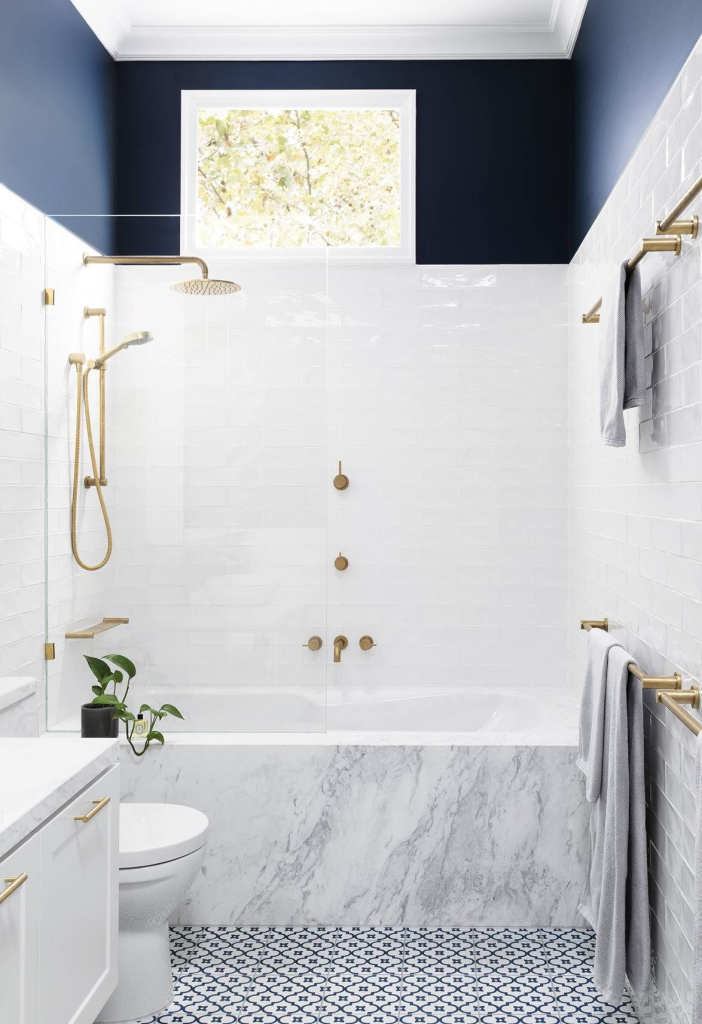
CREDIT: PINTEREST
Why Bathroom Paint Is a Bigger Deal Than You Think
Think of your bathroom like a steamy sauna that runs daily. Warm, humid air lingers long after every shower. Water droplets cling to walls, ceilings, and fixtures. Now imagine slapping on a bedroom paint and expecting it to last. That would be a recipe for disaster. Paint for Bathroom
In bathrooms, moisture is paint’s worst enemy. Water vapor can seep behind ordinary paints, breaking the bond with your wall. Even in newly painted bathrooms, if the surface was damp or the paint not formulated for moisture, the finish can quickly peel or blister. Worse yet, trapped moisture encourages mold and mildew under the paint film. We often say: “Never paint over active mildew”. It’s better to scrub and remediate first than hide it under new paint. Paint for Bathroom
Imagine two identical bathrooms. One uses a standard interior paint and the other uses a moisture-resistant system with quality primer and a semi-gloss finish. Within a few months, the first might already show bubbles at the ceiling corners and dark spots of mildew. The second will look clean and fresh for years. That’s the difference a thoughtful approach makes. Paint for Bathroom
The wrong choices in a bathroom can lead to problems like: Paint for Bathroom
- Peeling or bubbling paint on walls and ceilings Paint for Bathroom
- Mildew or mold stains coming back even after cleaning Paint for Bathroom
- Yellowing or discoloration on white trim and cabinetry Paint for Bathroom
- Patchy touch-ups where a flat touch-up never quite matches the rest of the wall Paint for Bathroom
At MGS, we’ve seen all of these issues on jobs done the wrong way. We also know how to prevent them. We don’t treat bathroom paint as an afterthought. For us, painting a bath is just as much about protection as it is about a fresh look. Paint for Bathroom
From Chris’s perspective, every part of a bathroom remodel has to perform. “The paint isn’t cosmetic – it’s protection,” he says. That means we carefully plan every layer of the paint system. Start with the right primer, pick a durable paint base, choose the ideal sheen, and make sure your ventilation is up to code so the paint actually dries and stays dry. Paint for Bathroom
Now let’s break down the process step by step, starting with primers – the real secret weapon for long-lasting paint in bathrooms. Paint for Bathroom
Step One: Start With the Right Primer (This Is Where Most People Go Wrong) Paint for Bathroom
Even before the first coat of colored paint goes on, priming is critical – especially in a bathroom. A primer isn’t optional; it’s the foundation of your paint job. Good priming is the difference between a paint job that lasts ten years and one that lasts only a few months. Paint for Bathroom
A. Why Primer Matters in Bathrooms Paint for Bathroom
Primers do several important jobs: Paint for Bathroom
- Seal porous surfaces. Drywall, plaster, or raw wood will soak up paint unevenly. Primer seals those pores so the finish coat lays down smoothly. Paint for Bathroom
- Improve adhesion. Especially if you’re painting over existing glossy or semi-gloss surfaces, primer creates a rougher surface that new paint can grip onto. Paint for Bathroom
- Prevent peeling and bubbling. With a primer, the finish coat sticks where it’s supposed to. Without primer, moisture can sneak under the paint film and cause bubbling or peeling on bathroom surfaces.
- Add mildew resistance. Many specialty primers for bathrooms include mildewcides or mold-inhibitors to protect against mold growth under the paint. Paint for Bathroom
- Ensure uniform color absorption. Primer creates a neutral base (often white or gray) so your final paint color goes on evenly, without blotchy spots. Paint for Bathroom
Bathrooms trap a lot of moisture. Even if the walls seem dry to the touch, humid air can penetrate drywall. If you paint over that without proper priming, the water trapped inside will eventually cause trouble.
Professionals know this: “Proper surface preparation determines bathroom paint longevity more than product selection,” notes one painting guide. In other words, skip the primer and you might as well plan on repainting soon. Paint for Bathroom
Bottom line: Primer is the difference between paint for bathroom that fails quickly and paint for bathroom that protects properly. Let’s look at the specific primer options. Paint for Bathroom
B. Types of Bathroom Primers Explained Paint for Bathroom
- Bathroom/Kitchen-Specific Primer Paint for Bathroom
These primers are formulated for high-moisture rooms. They typically contain mildewcides and are designed to stick to glossy surfaces. Many brands label them “bathroom and kitchen primer.” Use one of these when repainting a bath that was previously finished with glossy paint. They provide excellent adhesion and mold protection. Paint for Bathroom - Mildew-Resistant or Mold-Killing Primer Paint for Bathroom
These primers have anti-mold additives built-in. They’re great for bathrooms with poor ventilation or chronic dampness. The primer essentially becomes a first line of defense against spores. If you had mold stains previously, the primer can help “kill” any remaining mildew on the surface. (Important: Don’t skip cleaning. Always remove visible mold with bleach or a mildew cleaner first – only prime over a clean surface.) Paint for Bathroom - Drywall (PVA) Primer Paint for Bathroom
When you’re working with brand-new drywall (like in a complete gut rehab), use a drywall primer first. These seal joint compound and paper-faced panels so the surface is even. After that, you can top it with a bathroom-specific primer if needed before painting. For new construction, at a minimum you should do a PVA primer plus a finish coat. Paint for Bathroom - All-Purpose Primer Paint for Bathroom
Some all-purpose primers are rated for bathrooms, but not all. Always check the label. If the primer’s label doesn’t explicitly say it’s bathroom safe or moisture-resistant, it’s safer to use a dedicated bath primer. Some multi-surface primers are fine in bathrooms, but read the specs to be sure.
Pro Tip from Chris Chapman: “Always use a primer that matches the substrate first. If it’s raw drywall, start with a drywall primer. If it’s painted with a gloss finish, use a primer designed to stick to gloss. Then make sure your primer has moisture protection. Surface prep rules the lifespan of the job.” Paint for Bathroom
By taking priming seriously, you prevent a lot of rework. As one paint pro puts it, “Primer provides the foundation for successful moisture-resistant paint systems”. Skipping it is asking for trouble.
C. Primer Application Highlights Paint for Bathroom
- Full Coverage: Apply primer to all surfaces that will be painted – walls, ceilings, and trim. Ceilings are often overlooked, but since steam rises, they’re prone to peeling first. Don’t forget the crown moulding or ceiling corners. Paint for Bathroom
- Dry Time: Give the primer plenty of time to dry completely before painting on top. Most primers recommend at least 4 hours dry time (even longer for oil-based primers). In a humid bathroom, consider waiting even longer. Paint for Bathroom
- Sanding if Needed: If you’re priming over glossy paint, a light sanding between coats can help adhesion. But with high-adhesion bathroom primers, sometimes you can skip heavy sanding. Still, the cleaner and smoother the surface, the better the primer will work. Paint for Bathroom
Remember: primer prep matters. Scrubbing walls free of soap residue, old peeling paint, and dust is just as important as choosing the right primer. A well-prepped base plus quality primer means your topcoat paint for bathroom walls and surfaces will stick and stay. Paint for Bathroom
Choosing the Right Paint Base: Latex vs. Oil Paint for Bathroom
Once your primer is down and fully cured, you pick your paint. The big question is: latex or oil? Each has pros and cons in a bathroom setting. Paint for Bathroom
A. Water-Based Latex Paint (Most Common Choice) Paint for Bathroom
- Durable & Washable: Modern 100% acrylic-latex paints are formulated to be tough. They tolerate damp rooms without softening. You can wipe them clean with soap and water (very important for walls and ceilings that might collect splashes). Paint for Bathroom
- Moisture-Resistant: Good latex paints have binders that resist water penetration. They’re not 100% waterproof, but they handle humidity well, especially in higher sheens (we’ll talk finishes soon).
- Low VOC Options: Most latex paints today are low- or zero-VOC, meaning less chemical odor and fumes. This is great in a small bathroom where you might notice paint smells. Paint for Bathroom
- Easy Cleanup: Tools and spills clean up with soap and water, not solvents. Paint for Bathroom
- Versatility: Use it on walls, ceilings, and even painted cabinets if properly primed. Latex is by far the most common choice for bathroom walls. Paint for Bathroom
Best for: Walls and ceilings in most bathrooms, as well as trim that isn’t subject to hard wear. An acrylic-latex with mildewcide is ideal. As one pro notes, “Professional-grade paints withstand moisture best because they contain more resins… keep paint films flexible and cleanable.” Paint for Bathroom
B. Oil-Based Paint Paint for Bathroom
- Tough Finish: Oil-based paints (often alkyd) cure to a very hard, durable finish. They resist scuffs and impacts. For surfaces that see a lot of wear – like door and window trim, baseboards, or bathroom cabinetry – oil-based paint has long been the go-to. Paint for Bathroom
- Moisture Seal: Oil paint chemically forms a tighter seal. It’s extremely water-resistant when fully cured.
- Yellowing: A downside: many oil paints yellow slightly over time. On white trim in a bright bathroom, this can be a drawback. Modern waterborne alkyds mitigate this a bit, but traditional oils tend to yellow under UV light. Paint for Bathroom
- VOCs and Cleanup: Oil paints have higher VOCs, so they smell stronger and require mineral spirits or turpentine for cleanup. Paint for Bathroom
- Use Cases: We usually reserve oil paint (or its waterborne alkyd equivalents) for trim, baseboards, and cabinets. For example, painting a bathroom vanity or door casing often calls for a durable oil-based or alkyd enamel. Just seal joints well to prevent any bleed-through. Paint for Bathroom
In practice, MGS usually uses high-quality latex for walls and ceilings and switches to a tough enamel on millwork. As one painting guide recommends, “professional products are designed for moisture-heavy spaces,” and they specifically cite 100% acrylic latex paints as handling temperature/humidity changes better than oil. However, if your trim needs extra durability, a waterborne alkyd enamel is a good compromise (tough but lower odor). Paint for Bathroom
C. MGS Recommendation Paint for Bathroom
Modern acrylic-latex paints have come a long way. At MGS we favor them for ease and performance. A good, brand-name latex interior paint formulated for bathrooms (or labeled “bath and spa”) will perform excellently on walls and ceilings. When we do cabinets or newel posts, we’ll sometimes use a waterborne alkyd enamel in a semi- or high-gloss sheen for maximum wear. Paint for Bathroom
Keep in mind: it’s not just latex vs oil. It’s also about product quality. All the research confirms: Investing in a high-quality paint significantly improves longevity, because better paints have more solid binders. As one contractor notes, using cheap paint in a steamy bathroom often leads to failure within a year. It’s far better to spend a bit more on a premium paint than to deal with peeling and mildew later. Paint for Bathroom
Now that you’ve chosen latex or oil and applied it over primer, the next big choice is finish. That’s where many homeowners get confused. Let’s clear that up. Paint for Bathroom
The Most Important Decision: Paint Finish (Sheen)
Believe it or not, the sheen you pick is almost as important as the paint color. In a bathroom, the finish is a performance choice. It controls how moisture beads up, how washable your surfaces are, and even how dramatic imperfections look. Here are the common options and what they mean for your bathroom:
A. Semi-Gloss: The Gold Standard for Bathrooms Paint for Bathroom
Pros: Paint for Bathroom
- Highly moisture-resistant: Semi-gloss paint creates a smooth film that does an excellent job of shedding water. It’s the easiest finish to wipe clean.
- Durable: The higher resin content means it stands up to scrubbing.
- Commonly recommended: Most pros default to semi-gloss in bathrooms for walls and ceilings. One painting expert flat-out says, “The best finish for bathroom paint is semi-gloss or, in some applications, gloss”.
Cons:
- Shows flaws: Semi-gloss reflects light. This means wall bumps, minor drywall seams, or patches become more visible. If your walls aren’t perfectly smooth, semi-gloss will highlight them.
- Reflective: Some people find the shine too much, especially in a small powder room where light bounces everywhere.
Best for:
- Bathroom walls in full-bath showers or tubs.
- Bathroom ceilings in showers (to resist moisture).
- Trim and doors (though often people use gloss on these).
In MGS jobs, semi-gloss is our go-to for main bathroom walls. We only use satin in special cases (see below). Semi-gloss means the paint holds up to cleaning, and it truly “sheds moisture, so it is less prone to peeling”. When we see peeling in a bathroom, it’s often because someone used a lower sheen by mistake.
B. Gloss (High-Gloss)
Pros:
- Maximum durability: High-gloss paint is the toughest. It’s like painting your woodwork with shiny enamel.
- Super washable: You can scrub it with an abrasive sponge (carefully) and it rarely dulls.
- Strong moisture barrier: It’s even more water-resistant than semi-gloss.
Cons:
- Very shiny: It looks almost mirror-like. On large wall areas, this can look “plastic” or too retail-like. It draws a lot of attention to imperfections (even more than semi-gloss).
- Limited use: Most designers only use it on small areas.
Best for:
- Bathroom cabinets and vanities (especially old wood cabinets).
- Door jambs, window trim, baseboards – areas that need wipe-downs.
- Sometimes a small accent, like the inside of a niche or a towel bar.
Often in bathrooms we match door and window trim to cabinet paint and make that a crisp gloss. Just be careful: if your wood is warped or has dents, gloss will make that obvious.
C. Satin: The Balanced Middle Ground
Pros:
- Moderate sheen: Satin has a soft, velvety shine. Not as flat as eggshell, but not as shiny as semi-gloss.
- Decent washability: Satin still wipes clean, and resists moisture fairly well. It’s a nice compromise.
- Hides a bit of imperfection: Compared to semi-gloss, it’s a little more forgiving on small blemishes.
Cons:
- Overlap marks: Touch-ups in satin can show a subtle difference because the sheen change is noticeable under different light.
- Can dull with scrubbing: Vigorous cleaning might remove a bit of its luster over years (though usually not a big issue).
- Not as protective: Not quite as moisture-resistant as semi-gloss.
Best for:
- Walls in powder rooms or half-baths (rooms with lower humidity).
- Walls and ceilings in a well-ventilated full bath where you prefer less shine.
- If you simply dislike that shiny look of semi-gloss, satin is an acceptable alternative (but only if your bath isn’t hyper-humid).
Designers sometimes specify satin in a modest full bath, paired with semi-gloss on trim. In practice, MGS uses satin only when a client really wants minimal shine and the bath has good airflow (and rarely in a shower area).
D. Flat, Matte, or Eggshell: Should You Ever Use It?
For most bathrooms, the answer is no. Here’s why:
- Flat/Matte finishes have high pigment and low binder. This makes them rich-looking, but they also soak up moisture. In a steamy room, flat paint will absorb water and lose adhesion.
- Cleaning issues: Flat and matte paints will show scratches or shiny spots if you scrub them, which defeats their low-gloss look.
- Eggshell: Lightly shimmery, but still fairly flat. It’s better than truly flat, but still not ideal for wet areas.
In summary, flat or eggshell paints are not recommended for any shower or tub area. However, you might get away with eggshell or matte in a tiny powder room with no shower, if you absolutely want that look. Some specialty paints even market “bathroom eggshell” that add mildewcide – they can work in low-moisture bathrooms. But as a rule, we warn clients: avoid flat finishes in full baths.
If you do use eggshell or flat, treat it as a cosmetic choice only in minor, low-humidity spaces. Otherwise, stick to satin or higher.
E. Sheen Comparison Summary
| Finish | Moisture Resistance | Washability | Best Use |
| Flat/Matte | Low | Poor | Generally avoid in bathrooms |
| Eggshell | Moderate | Light cleaning | Powder rooms (minimal humidity) |
| Satin | Good | Good | Powder rooms, dry baths |
| Semi-Gloss | Excellent | Excellent | Bathrooms & wet areas |
| High-Gloss | Maximum | Maximum | Cabinets, doors, trim (accent use) |
These guidelines match what painters have been saying for years. In fact, as one pro article notes, semi-gloss “includes more resins and binders… sheds moisture” making it ideal for baths. If you’re unsure, semi-gloss is usually the safe bet.
The Ceiling Question: What Should You Really Use?
Don’t forget – the ceiling gets steamy too. Anyone who’s ever painted a bathroom ceiling knows: the corner above the shower is where peeling often starts. Here’s what to keep in mind for ceilings:
- No flat paint over showers. Standard flat ceiling paint simply doesn’t cut it above a tub or shower. The moisture will find a way to bubble it.
- Use at least Satin, preferably Semi-Gloss. A satin or semi-gloss ceiling paint is far more moisture-resistant. If your bathroom has a shower, we highly recommend semi-gloss paint on the ceiling as well. Yes, it will look brighter and the shine may surprise you, but it will last.
- Powder room exception: In a tiny half-bath, you might get away with a satin ceiling or even a good flat if the only moisture is from the sink. But once you have any shower or tub steam, upgrade the ceiling sheen.
One pro says flat paint + steam = mildew risk – full stop. In MGS bathrooms, we often prime the ceiling with a mold-resistant primer and then do a semi-gloss topcoat. The walls might be satin, but the ceiling gets the tougher coating. It sounds counterintuitive to have a shiny ceiling, but it’s truly preventative. After all, condensation forms on the ceiling first – protect it first.
How to Choose Based on Your Bathroom Type
Not all bathrooms are the same. Let’s briefly tailor our advice to three common situations:
- Powder Room (Half Bath): This is usually just a toilet and sink, no shower. Humidity is low. You have more flexibility. We often use satin walls (for a touch of durability) and white trim in a semi-gloss. For ceilings, satin is okay here. You can even use a designer flat paint in a smaller powder room if you prime well, since nothing ever hits the ceiling. Use your favorite color boldly!
- Standard Family Bathroom: This one has a tub or shower and sees daily use. Go with semi-gloss walls and ceiling. If you want a less shiny look, you could do satin on the ceiling and keep semi-gloss on the walls, but we usually keep everything semi-gloss here. Trim and doors get gloss or semi-gloss. Use a mildew-resistant primer everywhere. This combination strikes the right balance of moisture control and cleanability for a busy family bath.
- Primary/High-Use Bathroom with Steam Shower: This is the toughest environment. We use the highest performing products. Semi-gloss (or higher) on walls and ceiling is mandatory. Always use a mold-killing primer first (the cost is tiny compared to the cost of dealing with mold later). We sometimes recommend specialty bathroom paints that claim extra mildew resistance, although a good primer + semi-gloss paint achieves similar results. Also, double-check your ventilation (discussed next).
In all cases, proper ventilation is part of the system. (More on that below.) But before we dive into air flow, let’s bust a myth you might have heard:
Waterproof Paint — Myth vs. Reality
Is there a “waterproof paint” for bathrooms? Short answer: no, not really. Some people look for that holy grail product. But paint alone doesn’t make a wall waterproof. So what does this mean?
- Glossy paints = more waterproof-like. The only way to get a “waterproof” surface with paint is to go very high gloss. The shinier the finish, the tighter its molecular structure, which does shed water better than a matte finish. Semi-gloss and high-gloss are as close as you can get to “waterproof” paint.
- No paint can replace good building details. A paint coating is not a waterproofing membrane. Water leaking through grout, caulk, or behind tile can still get to painted walls. The real “waterproofing” in a shower comes from the tile system, waterproof backer board, and sealed joints. Paint is just the decorative and protective last layer.
- Breathable paints. There are paints (usually natural lime or silicate paints) that actually allow moisture to pass through instead of trapping it. These are called “breathable paints” and can be used in bathrooms. The Greenshop Paints blog notes that breathable and alkaline paints prevent dampness because they let water vapor escape. However, these are specialty products mostly found in Europe or through specific vendors. For most homeowners, a quality acrylic latex is chosen instead.
So, the “myth” is believing any common interior paint is waterproof. Clarity: Even “bathroom paint” is not completely waterproof; it’s just designed to resist moisture. Always maintain proper waterproofing behind the scenes (good shower pan, membrane, sealed corners, etc.) and focus on moisture-resistant paint finishes.
What Prevents Mold in Bathrooms?
It boils down to two things: prep & product.
- Mildew-resistant primer: Starting over areas that have had mold? Clean them first (bleach or mold cleaner), then seal with a good primer that’s labeled mold-killing. These primers include biocides that continue to prevent mold spores on the surface.
- High-gloss or semi-gloss finishes: Paints with high sheen won’t trap moisture and are less hospitable to mold growth. In fact, experts say paint with built-in mildewcides is essential in very damp environments.
But here’s a key point Chris Chapman always makes: Ventilation is just as important. You can apply the best moisture-proof coatings, but if humidity lingers because fans are off, mold can grow in the grout, on caulk, or right at the perimeter of painted areas.
No citation was needed from codes, but it’s worth noting: modern building codes (like IRC R303) require bathroom exhaust fans or operable windows. For any new bathroom in Northern Virginia, code mandates mechanical ventilation (often 50 CFM minimum for a standard bath, as also noted by one painting source). Always run the fan during and 20+ minutes after showers. Chris Chapman would add: “No paint can fight off mold if the air is too still. We make sure exhaust fans are properly sized and running.”
Common Bathroom Paint Mistakes We See
Let’s get juicy and candid. MGS has fixed enough rookie mistakes to fill a chapter. Here are the top pitfalls homeowners and DIYers fall into:
- Painting over mildew: This is a big no-no. Some people think a coat of paint will cover that black spot in the corner. It won’t – it just traps living mold underneath. Always clean moldy spots first. As The Spruce bluntly says, cleaning mildew is always better than covering it.
- Using flat ceiling paint above showers: A surprisingly common blunder. Flat ceiling paint looks nice, but it will peel like wallpaper under shower steam. We see this during remodels and immediately switch to semi-gloss or satin on the ceiling to fix it.
- Skipping primer (or using the wrong type): As discussed, this is where “most people go wrong.” Some folks skip primer thinking, “I’ll just use a tinted primer and go.” Big risk. Without a quality, bathroom-rated primer, paint adhesion is weak. The result? Blistering and peeling within months. MGS never skips primer, and neither should you.
- Choosing low sheen for looks: Some love the idea of velvet walls. But elegance doesn’t belong in a wet room. Using a flat/eggshell for aesthetics might look good temporarily, but it will fail. We advise clients to stick with satin or higher, even if it’s “shinier” than they expected.
- Not sanding glossy surfaces: If the current paint is glossy, new paint needs something to grip. Folks often slap paint over gloss and then wonder why it bubbles. The fix? Scuff it up with fine sandpaper first.
- Spot-touching satin or semi-gloss without blending: Many homeowners are surprised that a bit of new semi-gloss paint can stand out on an old surface. These sheens show overlap lines clearly. If you need to patch or repaint, be prepared to do larger areas to blend seamlessly.
- Ignoring cure time: Painting over a still-wet primer (or previous coat) is a rookie move. Always let primers dry fully. As professional guides say, at least 24 hours drying before top-coating is ideal in humidity.
- Poor ventilation practice: We can’t stress this enough. Not running the exhaust fan is essentially undoing all the good you did with moisture-resistant paint. Some clients forget to run it, or their fan is too weak or clogged. Make it a habit to hit the fan switch with every shower.
- Cleaning mistakes: Using strong chemicals or abrasive cleaners can damage paint finish over time. Always use gentle, paint-safe cleaners. Also, never use paint stripper or too much pressure on painted trim – it’ll wear off the topcoat.
Each of these mistakes shortens the life of your paint. The good news? They’re easy to avoid once you know. A little care in prep and product choice goes a long way.
Beyond Paint: Design Considerations That Elevate the Space
Choosing paint is practical, but a bathroom is also a design project. Here are some tips to make sure your beautiful paint job also looks great in your specific space:
A. Color Selection
- Lighting matters: Bathrooms often have a mix of natural and artificial light. A dark color can look cozy or too cavernous, depending on light. As Benjamin Moore suggests, “deeper, richer colors combined with the right lighting infuse a small space with ambience”. If your bathroom is small or windowless, you might balance a bold wall color with lots of bright white trim and good LEDs. Conversely, if you love a dark hue, consider leaving the ceiling or trim in a light shade to bounce light around.
- Test swatches in place: Paint always looks different in context. A gray swatch on your wall can read blue under LED lights or muddy in warm light. Always paint test patches, let them dry, and observe at different times of day.
- Ventilate and moisture for color: Very dark paints can slightly fade or shift over time in constant humidity (especially if they have pigments that aren’t lightfast). This isn’t usually huge, but if color longevity is critical, pick paint lines known for UV and moisture stability.
B. Coordinating Hardware
- Match or harmonize finishes: A classic rule: match your metal finishes (faucets, handles, towel bars, light fixtures). For example, if you go with brushed nickel faucets, try to pick brushed nickel cabinet pulls as well. If mixing metals, do it intentionally. Houzz recommends, “get all the other fixtures and accessories in a matching color. To ensure you are getting the exact same finish, buy all the fixtures and accessories from the same company”. This avoids weird tonal mismatches (some “brushed nickel” from one brand might look slightly different from another).
- Consistent style: Beyond finish, the style of hardware matters. Vintage pumps, modern sliders, and traditional knobs all set a tone. If your vanity pulls are matte black modern, consider matching black towel hooks rather than gold. However, a designer tip is that one complementary accent finish (like bronze hardware with polished chrome faucets) can add interest. Just pick primary and secondary finishes and stick to them consistently.
- Consider paint and fixtures together: If you paint cabinets a dark color, lighter hardware can contrast nicely (or vice versa). Black cabinet paint with brass hardware is a popular modern look. Just preview it if possible.
C. Tile and Paint Relationship
- Tile size and paint: Large-format tiles create a big, calm backdrop. In those cases, a moderate wall color in semi-gloss can balance the texture. Small mosaic tile patterns might pair better with a bold paint accent wall or vice versa.
- Bold walls vs subtle tile: If you choose a vibrant paint color (say, a teal or deep green), consider neutral tiles. If your tile is a colorful pattern or subway tile, maybe pick a calmer paint so they don’t fight for attention.
- Ceiling color: An unexpected trick – consider painting your ceiling. A pale sky blue or blush pink ceiling can add charm. If you do this, make sure the ceiling paint is also moisture-resistant. Note: if you paint the ceiling a color, often you should use a semi-gloss or satin finish too, for longevity.
Design is subjective, but a good rule is: If it’s going to be hard to change later, keep it classic and neutral. Paint color can be changed more easily than tile. So if you love trendy gray or navy, that’s fine on walls – just know you can repaint later if you tire of it.
When to DIY vs. When to Call a Professional
Let’s be realistic: Some homeowners are great DIYers and others are not. Painting can seem straightforward, but bathroom painting has pitfalls. Here’s a quick guide:
DIY-Friendly Scenarios:
- Repainting without repairs: If your existing bathroom just needs a fresh coat of the same sheen (no peeling, no mold, no repair issues), you can probably handle it.
- Good ventilation and climate: If your fan works and you can paint on a dry, low-humidity day, that helps.
- Basic surfaces: Smooth drywall, no popcorn ceilings, easy access (nothing to work around).
Time-consuming, but possible for a careful DIYer:
- Replacing an old vanity with a painted one: If you can remove the vanity, you can paint it flat on sawhorses in your garage/room. Then reinstall. This cuts down on drips and tricky taping.
- Single accent wall or touch-ups: If you’re only painting one wall a different color or touching up, and you have scrap paint or find a match, DIY could work.
Call a Professional When:
- There’s water damage or mold. If walls or ceiling have visible mold, stains, or soft drywall, address it before painting. Pros can cut out damaged drywall and replace it.
- Extensive prep needed. If your bathroom walls are glossy or textured or have many holes/cracks, a painter’s prep work is extensive.
- Repainting over high-gloss or specialty finishes. If you’re switching from a polished oil paint or lacquer, a pro can sand or degloss properly before priming.
- Cabinet painting. Stripping, sanding, and repainting cabinet faces is a detailed job. Professionals have spray equipment and know the tricks to avoid brush marks.
- Large scope project. If you’re remodeling the whole bathroom, the painting is usually part of the larger contract (tiles, cabinets, electrical). A contractor like MGS would schedule all trades in order, so painting goes on at exactly the right time in the sequence.
- If you want a guarantee. Hiring a contractor often means there’s a warranty on the work. If something fails (like paint peels) soon after, they’ll come fix it. As Harding’s Painting notes, “quality painting is rarely an ‘easy’ DIY project,” and mistakes can devalue your home.
In general, painting itself is not highly skilled work, but the preparation for bathroom paint is. If you’re comfortable repairing drywall, cleaning mold, and using a respirator for fumes, go for it on a small project. Otherwise, calling a pro (especially if it’s part of a larger remodel) is a smart move. It’s often more cost-effective when you factor in the time you’ll spend and the risk of having to redo mistakes.
The MGS Contracting Approach to Bathroom Paint
Now, let’s talk about how MGS Contracting Services does it. We pride ourselves on quality and communication, and painting is no exception. Our approach:
- Ventilation Check: We start by checking that your bathroom has proper exhaust fans (typically 50-100 CFM as code requires) and that they work well. If not, we upgrade them before painting. No paint can cure properly in a stagnant room.
- Surface Inspection & Prep: We look for any existing problems – peeling paint, moisture stains, cracks, or mold. We replace water-damaged drywall (patching soft or crumbled areas) and re-tape any loose joints. We thoroughly clean the entire room. In North Texas, a pros article said 80% of painting success is in prep, and we agree.
- Priming: We prime EVERYTHING: ceilings, walls, trim, even tile edges if needed. We typically use a mold-resistant, stain-blocking primer for bathrooms. We let it dry fully (often overnight) to make sure it’s sealed.
- Paint Product Selection: We use high-quality acrylic-latex paints (often premium brands like Sherwin-Williams or Benjamin Moore) that are recommended for bathrooms. If requested, we can use their specialized bath-and-spa lines or those with mildewcide. For cabinetry, we switch to a waterborne alkyd enamel (satin or gloss) for durability.
- Sheen Choice: We generally do semi-gloss on walls and ceilings, per the client’s preference. If a client really wants satin on walls, we talk them through the trade-offs (more sheen = better protection). For wood trim and cabinets, we use high-gloss or semi-gloss enamel.
- Professional Application: Our painters use rollers on walls and heads in corners, with high-quality brushes. We do multiple thin coats, not one heavy coat. This ensures even coverage and avoids drips. Most projects get primer + two finish coats.
- Protect Adjacent Areas: We carefully tape off tiles, glass, and fixtures. Drips can damage even quality tiles, so we take the time to cover everything.
- Customer Communication: Throughout, Danielle (Chris’s wife and business partner) keeps the homeowner updated. She explains how long paint needs to dry, when to turn on fans, and any color differences you might see until fully cured.
In short, at MGS we treat bathroom painting like an art and a science. We communicate that paint is not just an afterthought – it’s part of the protective build for your bathroom. We stand by our work: if any paint fails prematurely (say, due to an undiscovered water leak), we come back and fix it.
Final Takeaways
After all this detail, here’s what it boils down to:
- Start with a solid primer. Seal and prepare your surfaces. Use a bathroom/kitchen or mold-resistant primer. It’s mandatory.
- Choose the correct paint base. For walls and ceilings, a quality acrylic-latex is generally best. Use oil or alkyd for cabinets/trim if needed.
- Pick the right sheen. In most cases, semi-gloss (or satin at minimum) is non-negotiable for moisture resistance. Gloss is for trim.
- Invest in quality. Cheap paint in a humid room will fail. A top-tier interior paint + primer makes the finish last years.
- Ventilate like crazy. No paint can fix a humidity problem. Always run your bathroom fan during and after every shower.
- Proper prep and application. Clean walls thoroughly. Let primer & paint fully dry between coats. Tape edges carefully. Pro painters spend the bulk of time prepping.
- Mind the details. Small things (like a cohesive hardware finish or a smart color choice) make the room look intentional.
- Know when to call in help. For big jobs, mold issues, or if you just want peace of mind, a contractor can ensure a professional outcome.
Our goal at MGS is not just a pretty paint job – it’s a bathroom that stays looking great for years. The paint is your bathroom’s first line of defense against water. When done right, it keeps walls strong, trim white, and you worry-free.
Contact Us Today!
Ready to give your bathroom walls, ceilings, trim, and cabinets the care they deserve? Whether you’re refreshing a single powder room or undertaking a full primary bath renovation, MGS Contracting Services is here to help. We serve Loudoun and Fairfax County with expertise you can trust. Let us guide you through the process, handle the details, and deliver a bathroom that shines – literally and figuratively – for years.
Get in touch today and let’s build something that lasts. Your dream bathroom, painted and protected to perfection, is just a call away.