
Why “Timeless” Matters More Than Trends Kitchen Remodels
Kitchen trends change fast—sometimes faster than the remodel itself. What’s all over Instagram or HGTV today can feel dated just a couple of years down the road. In fact, kitchen design fads often don’t last more than a year or two before the next “must-have” look comes along. That’s why “timeless” trumps “trendy” when planning a kitchen remodel. A truly timeless kitchen isn’t about chasing what’s new; it’s about choosing elements that will still feel right 10, 15, even 20 years from now. As one design resource puts it, a timeless kitchen “isn’t stuck in one genre or era”, so you can’t easily pin it to a specific year or fleeting fad. Instead, it has a classic quality and lasting functionality that outlives trend cycles. Kitchen Remodels
So how do you create a kitchen remodel that stands the test of time? To find out, we turned to an expert who’s seen it all. Chris Chapman, founder and lead contractor at MGS Contracting Services in Northern Virginia, has remodeled countless kitchens over the years, and he’s been called in to fix many “remodel regrets” where overly trendy choices didn’t hold up. According to Chris, all timeless kitchen remodels share one surprisingly simple foundation. Before you agonize over paint colors or appliance finishes, hear out his practical advice on what really makes a kitchen remodel truly timeless. Kitchen Remodels
Meet the Expert: Chris Chapman of MGS Contracting Services
Chris Chapman isn’t your typical kitchen designer chasing the latest craze. He’s a veteran U.S. Marine turned contractor who brings a disciplined, no-nonsense approach to home remodeling. As the owner of MGS Contracting Services (a veteran-owned company based in Northern Virginia), Chris has years of hands-on experience building kitchens that not only look beautiful on day one but stay beautiful and functional for decades. His philosophy is simple: quality and function first. Kitchen Remodels
- Practical, Honest Perspective: Chris has seen what works long-term in a kitchen and what ends up being a headache. He’s the guy who gets the call when a flashy “of-the-moment” kitchen feature isn’t aging well and needs renovation. This gives him a keen eye for design choices that homeowners might regret versus those they’ll love indefinitely. Kitchen Remodels
- Focus on Longevity: Unlike some designers who might prioritize looks over durability, Chris emphasizes craftsmanship and materials that last. He knows a kitchen remodel is a big investment, so it should be built to provide comfort and value for many years (not just to win style points this season).
- Client-Centered: Having remodeled kitchens across Loudoun County and Fairfax County in Virginia, Chris understands that real families use these spaces. A timeless kitchen remodel isn’t a showroom; it’s a living part of the home. Chris always plans with the homeowner’s daily life in mind, cooking habits, storage needs, family gatherings, so the kitchen remains enjoyable and efficient over time.
When we asked Chris what all timeless kitchen remodels have in common, his answer was immediate: it all starts with high-quality cabinets. In his experience, if you get the cabinets right, the rest of the kitchen has a solid foundation to remain functional and stylish through evolving trends. Let’s dive into why Chris (and many other contractors) place so much importance on cabinetry, and explore the other features he insists every “timeless” kitchen remodel needs to have. Kitchen Remodels
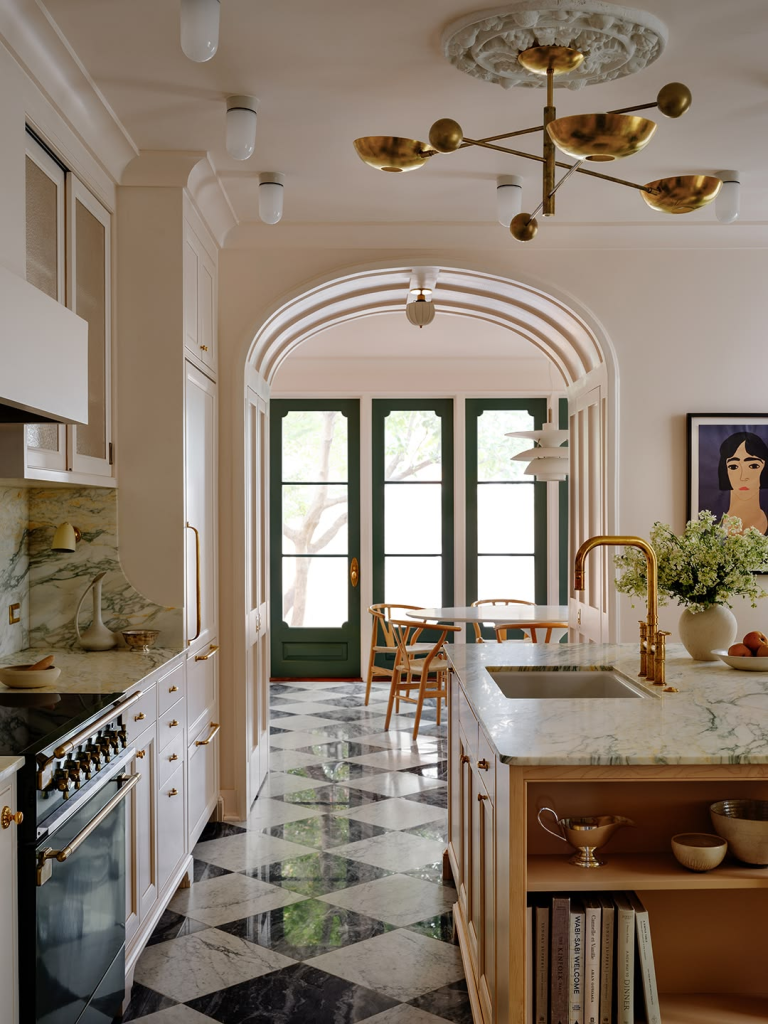
CREDIT: DOMINO MAGAZINE
The Big Reveal: Timeless Kitchens Start with High-Quality Cabinets
Cabinets are the backbone of any kitchen remodel, and the one element you absolutely must get right for a timeless design. Why do cabinets matter more than anything else? Consider this: Kitchen Remodels
- Permanence: Cabinets are the most permanent part of a kitchen’s architecture. Unlike wall paint or light fixtures (which you can swap out relatively easily), cabinet layout and quality are meant to last for decades. Once you’ve installed them, you’re committed, most homeowners will live with their cabinet choices for 20+ years. Timeless kitchen remodels recognize this and invest in cabinets that will go the distance. Kitchen Remodels
- Layout & Function: Your cabinet configuration literally defines the kitchen’s layout and workflow. Where your cabinets go, your counters and appliances follow. If you choose a trendy cabinet style that sacrifices function, you’re stuck with a less efficient kitchen. High-quality, well-planned cabinets ensure the kitchen works well for daily use and can adapt to different needs over time. Kitchen Remodels
- Cost & Investment: Cabinetry often represents the largest chunk of a kitchen remodel budget, typically 25% to 35% of the total cost. They’re a major investment in your home. Cutting corners with cheap materials or flimsy construction is a false economy; you might save a bit now but end up paying more to replace or repair them later. Timeless kitchen remodels put the budget where it truly counts: into quality cabinets that won’t need an overhaul in a few years. Kitchen Remodels
Chris Chapman puts it this way: “Appliances can be swapped out. Backsplashes can be updated. Even wall colors and hardware are easy to change. But cabinets? You live with those decisions for a long, long time.” In other words, a timeless kitchen starts by choosing cabinetry that will stand the test of time, in durability, in functionality, and in classic style. Kitchen Remodels
Unfortunately, many homeowners make a costly mistake here by choosing cabinets for the wrong reasons. It’s easy to be tempted by whatever cabinet style is trending on Pinterest or to shave costs with bargain cabinets from a big-box store. But if those cabinets aren’t high quality, you’ll quickly regret it. Doors might sag, finishes might wear, or the style might scream “2020s trend!” a few years from now. Kitchen Remodels
So what do timeless kitchen cabinets look like, according to our expert? Chris shared a checklist of cabinet features that every enduring kitchen remodel has in common, and it’s surprisingly simple stuff. It’s not about picking the trendiest door profile or an exotic color. It’s about smart, solid design choices that create a kitchen you’ll love now and 20 years from now. Let’s break down the must-haves of timeless cabinetry.
What Timeless Kitchen Cabinets Always Have in Common (According to Chris Chapman) Kitchen Remodels
Every kitchen remodel is a little different, but when Chris sees a truly timeless kitchen, the cabinets almost always check the following boxes: Kitchen Remodels
1. Full-Height Cabinets that “Finish” the Room Kitchen Remodels
One hallmark of a timeless kitchen remodel is cabinetry that goes all the way to the ceiling. Full-height wall cabinets (often 42-inch uppers in rooms with an 8-foot ceiling) eliminate the empty space above cabinets and give a kitchen a built-in, custom look from floor to ceiling. Here’s why Chris is a big fan of full-height cabinets:
- Clean, Custom Appearance: Cabinets that meet the ceiling (often finished with crown molding or trim) make the kitchen feel polished and intentional. There’s no awkward gap collecting dust or looking like an afterthought. “Full-height cabinets offer the ability to add custom trim that finishes off the whole kitchen, giving it a grander, more upscale feel,” notes one construction expert. The kitchen looks fully “designed”, rather than cabinets just floating on the wall. (It’s a look you often see in high-end or custom kitchens, which rarely leave that top space unused.) Kitchen Remodels
- More Storage Up Top: While those top shelves near the ceiling aren’t for everyday items, they’re perfect for storing infrequently used or seasonal items. Think holiday serveware, huge stockpots, or appliances you bust out occasionally. You might need a step stool to reach, but it’s bonus storage you’ll be glad to have, especially in a smaller kitchen remodel where every inch counts. Timeless kitchens prioritize ample storage (a theme we’ll revisit), and full-height cabinets capitalize on vertical space that would otherwise be wasted. Kitchen Remodels
- Visual Height and Elegance: Full-height cabinets draw the eye upward, making the room feel taller and more spacious. They create pleasing vertical lines that add an elegant, proportional look to the kitchen. Many timeless kitchen remodels use this trick to make the space feel larger and more open. As one design blog notes, floor-to-ceiling cabinets can be an impactful design statement that adds elegance while maximizing storage. Kitchen Remodels
A bright, timeless kitchen remodel with full-height white cabinetry and a large island. Cabinets that extend to the ceiling (finished with crown molding) give a custom, built-in look and provide extra storage up top. This kitchen remodel also features other timeless design choices: a simple white-and-gray palette, Shaker-style cabinet doors, and an island free of appliances, serving instead as a gathering and prep space.
From a contractor’s perspective, building cabinets to the ceiling is a smart long-term move. It may cost a bit more in materials and finish work (since you’re essentially adding another foot of cabinetry or paneling), but it pays off in both style and function. Chris points out that none of his clients ever complain about “too much storage” or a kitchen feeling too finished! In contrast, leaving a gap can date the kitchen’s look (open soffits above cabinets were common in mid-century kitchens but now often feel old-fashioned). For a timeless remodel, closing that gap is well worth it. Kitchen Remodels
2. Plenty of Drawers (Especially in the Lower Cabinets) Kitchen Remodels
Another feature Chris sees in timeless kitchen remodels: lots and lots of drawers. In the eternal battle of drawers vs. cabinet doors for base cabinets, drawers win every time for longevity and usability. Deep cabinet cavities with a single shelf are inefficient and inconvenient, they’re the dark pit where Tupperware and heavy pots go to die. Timeless designs swap many of those lower cabinet doors for pull-out drawers of varying sizes.
Why are drawers such a game-changer for a kitchen remodel? A few key reasons: Kitchen Remodels
- Easy Access & Organization: Drawers bring the contents out to you. No more squatting and reaching into the back of a base cabinet while muttering in frustration. With full-extension drawer glides, even the stuff at the very back comes smoothly into view. This is especially valuable as homeowners age, it’s much easier on the back and knees. Drawers also naturally encourage organization: you can have dedicated drawers for utensils, spices, pots, plastic containers, etc., often with handy dividers. Cavernous cabinets create clutter and confusion, whereas drawers compartmentalize everything, making the kitchen more user-friendly. Kitchen Remodels
- No Wasted Space: Most cabinet boxes have a center stile or divider that interrupts the opening, and fixed shelves that only use part of the vertical space. Drawers eliminate those obstacles. Because there’s no vertical divider in the middle, you can use every inch of width for storage. And because drawers can be different depths, you can optimize the vertical space too (shallow drawers for cutlery, deep drawers for pots). One interior designer explains that you can often fit more in the same base footprint with drawers than with shelves. In a well-designed timeless kitchen remodel, nearly every lower cabinet might be a pot drawer or multi-drawer stack, maximizing storage capacity. Kitchen Remodels
- Flexible & Adaptable: Drawers contribute to a timeless kitchen because they adapt as your needs change. You can insert organizers (for cutlery, knives, plates, etc.) and later reconfigure or remove them as needed. If your cookware or gadget collection grows, deep drawers can accommodate them better than fixed shelves. Drawers essentially future-proof the storage. As family needs evolve (say, kids grow up and start using the kitchen, or you take up baking), drawers are ready to adjust. You simply won’t outgrow a well-planned array of drawers the way you might find a kitchen full of basic cabinets becoming limiting. Kitchen Remodels
Chris recommends a mix of drawer sizes in a kitchen remodel, shallow drawers, medium depth, and deep ones, tailored to what you need to store. One cabinetry expert suggests combinations like two-drawer, three-drawer, or even four-drawer base cabinet configurations to create convenient, flexible storage for all kinds of items. For example, a three-drawer base might have a shallow top drawer (utensils), a slightly deeper middle drawer (bowls, wraps, small pots), and a deep bottom drawer (stockpots or appliances). This variety is something you’ll see repeatedly in timeless kitchens. Kitchen Remodels
And yes, installing lots of quality drawers can be a bit pricier upfront (they require more hardware and craftsmanship than a basic cabinet with a door). But homeowners rarely regret the investment. In Chris’s experience, no one has ever said “I wish I had fewer drawers.” On the contrary, people often say they wish they’d added more pull-outs or drawers in past remodels. The convenience factor is just that high. A well-organized, easy-to-access kitchen is one you’ll love to use for years, a key reason drawers are a cornerstone of timeless kitchen remodels. Kitchen Remodels
Deep pull-out drawers in a kitchen island, equipped with peg organizers for dishes. Incorporating plenty of drawers(with adjustable organizing systems) is a hallmark of timeless kitchen remodels. Drawers improve accessibility and ensure no space is wasted, even heavy plates and pots are easy to reach without bending or digging through a cluttered cabinet. Kitchen Remodels
3. High-Quality Drawer Glides (Hardware You Don’t See, But Feel Every Day)
It’s not just the cabinets themselves that need to be high quality, the hardware matters too, especially the drawer glides (slides). This is a detail many homeowners might overlook, but seasoned contractors like Chris know that the durability of a kitchen remodel lives in these hidden details. Cheap drawers with flimsy glide hardware can quickly become a source of annoyance (or even breakage) with daily use. On the other hand, heavy-duty, smooth drawer glides keep your cabinets feeling and functioning like new for the long haul.
Here’s what to consider to keep your kitchen remodel timeless on the inside as well as on the surface:
- Soft-Close, Full-Extension Glides: Opt for drawers that have full-extension glides, meaning the entire drawer pulls out so you can access the very back. This pairs with the storage advantage of drawers, no hidden recesses. Soft-close (self-closing) mechanisms are also now standard in quality kitchens; they prevent slamming and reduce wear-and-tear (plus they just feel satisfying). Quality glides will keep that smooth, quiet shut even after years of use. Kitchen Remodels
- Avoid Cheap, Flimsy Slides: Many budget cabinets or ready-to-assemble (RTA) cabinets skimp on glide quality. They might use thin metal slides or plastic rollers that wear down or catch. As Chris notes (and other experts echo), “Avoid inexpensive glides common in a lot of RTA cabinets, aim for high-quality drawer slides that operate effortlessly.” Drawer hardware should be rated for heavy loads (think of a drawer stuffed with cast iron pans) and frequent use. The difference is something you’ll feel every single day in your kitchen remodel. A drawer that sticks or sags is the opposite of timeless quality.
- Longevity and Maintenance: Good drawer glides (like those from top hardware brands such as Blum or Accuride) are engineered to last for decades. They won’t need constant adjusting or replacing. This means your kitchen drawers will feel just as sturdy and smooth in year 15 as they did on day one. It’s a small detail that plays a big role in keeping your kitchen remodel experience positive over time. Timeless kitchen remodels are built “from the inside out,” and Chris always checks that the cabinet supplier uses reliable, well-reviewed hardware. It’s worth the extra expense upfront. Kitchen Remodels
In summary, part of what makes a kitchen remodel timeless is that it ages gracefully. High-quality cabinets paired with high-quality hardware are a duo that ages very well. If you open a drawer or cabinet 10 years later and it still glides nicely, closes softly, and the hinges haven’t loosened, that’s a sign of a well-built, timeless kitchen. These are the kitchens where homeowners say “It still feels new to me!” even a decade on.
4. Storage That’s Planned, Not Left to Chance Kitchen Remodels
If there’s one thing people chronically underestimate, it’s how much stuff they have, and the kitchen is exhibit A. A timeless kitchen remodel anticipates storage needs proactively in the design, rather than hoping to figure it out after the fact. Chris has seen many trendy kitchen remodels that looked great in photos but failed the real-life test because there wasn’t enough well-thought-out storage. The result? Cluttered counters, overstuffed cabinets, and regret. Timeless kitchens avoid this by baking in smart storage solutions from the start. Kitchen Remodels
What does “planned storage” include? Here are some features and strategies common to enduring kitchen designs: Kitchen Remodels
- Dedicated Pantry Space: Whether it’s a full walk-in pantry, a tall pantry cabinet, or pull-out pantry shelves, timeless kitchen remodels give you a proper place for dry goods and bulk storage. Without sufficient pantry space, counters end up lined with cereal boxes or you’re cramming food into random cabinets. One expert designer notes that most people vastly underestimate their storage needs; a well-planned pantry keeps the kitchen functional and uncluttered. Kitchen Remodels
Kitchen Remodels - Deep Drawers & Custom Inserts: We already covered the virtue of drawers. Timeless designs take it further with custom interior fittings: think dividers for utensils, knife blocks in drawers, pegboard systems for plates (as shown in the image above), spice rack pull-outs, and so on. These might seem like “extras,” but they greatly enhance how your storage works. They keep items organized, easy to find, and efficiently spaced. As interior designer Dorothy Weise says, “Timeless kitchens prioritize thoughtful solutions such as deep drawers, organized pantries, tray dividers, pull-outs, and hidden utility zones.” In short, every item should have a home. Kitchen Remodels
Kitchen Remodels - Appliance Garages / Closed Storage for Gadgets: A trend in recent years is tons of gadgets on countertops (toaster ovens, mixers, coffee machines). Timeless kitchen remodels aim to keep the main surfaces clear by providing places to tuck these things away. An appliance garage (a cabinet with a roll-up or pocket door on the counter) can hide the toaster or coffee maker when not in use. Mixer lifts or designated cabinet cubbies for bulky appliances are also great. When everything can disappear behind closed doors, the kitchen maintains a clean, classic look, no visual chaos, and it’s more enjoyable to work in. Kitchen Remodels
Kitchen Remodels - Overflow and Utility Storage: Consider those awkward items: the oversized roasting pan, the 12-cookie-sheet collection, the bulk pack of paper towels, the pet food bin. Timeless kitchen remodels account for those too, perhaps with a tall utility cabinet or clever use of island storage. For instance, vertical tray dividers in a cabinet can neatly store baking sheets and cutting boards upright. A narrow pull-out can stash all your baking sheets or spices. Hooks or pegboards inside cabinet doors can hold measuring cups or pot lids. The key is no wasted opportunities for storage. Kitchen Remodels
Kitchen Remodels
The bottom line: Clutter is the enemy of a timeless kitchen. It’s hard for a kitchen to feel classic and serene if it’s overflowing with stuff with nowhere to go. Chris’s advice is to inventory what you own (and realistically, what you’ll accumulate) during the planning phase of your kitchen remodel. Design the cabinetry around that inventory. It’s much easier to include an extra cabinet now than to wish later you had more storage. The most timeless kitchens Chris has built are those where homeowners say “Everything fits!” and the counters stay mostly clear even after years of living, because the storage was designed to accommodate real life.
5. Neutral Cabinet Colors that Age Gracefully
When it comes to cabinet finishes, timeless kitchen remodels tend to favor a neutral, adaptable color palette. Does that mean a timeless kitchen can only be white? Not at all, but it does mean avoiding extremely loud or trendy colors on the most permanent surfaces. Chris’s rule of thumb: go for cabinet colors (and general color schemes) that have broad, long-term appeal and can flex with different styles. Neutrals like whites, off-whites, soft grays, beiges, and natural wood tones are MVPs here.
Here’s why neutral cabinets are a smart choice for the long haul:
- Timeless, Not Tiring: A neutral kitchen serves not only your current taste but also the test of time, and even future owners of your home. As contractor Jonah Canter notes, “Loud or bright colors may please you now, but they’re likely trendy and not as timeless as neutral tones.” It’s fun to look at a bold teal cabinet on a magazine cover, but will you love it five years from now? Neutrals are a safer bet because people generally don’t get sick of them. A classic white kitchen, for example, has stayed popular for generations. There’s a reason you still see white or wood kitchens from the decades ago that look charming, neutral bases endure.
- Easy to Update Accents: A neutral backdrop gives you flexibility to change the kitchen’s look with relatively small tweaks. If your cabinets are a simple white or gray or warm wood, you can dramatically shift the vibe down the road by changing the wall color, the backsplash tile, or even just the hardware and decor. The cabinet color won’t lock you in. By contrast, if you chose bright green cabinets as the dominant element of your kitchen remodel, you have to live with that choice, or else undertake another big remodel to repaint or replace them. Timeless design leaves the trendy pops of color to things that are easier to swap out (like wall paint, window treatments, or countertop appliances), not the cabinets.
- Resale and Broad Appeal: If you might sell your home in the future, a timeless kitchen can be a big asset. Real estate experts often say kitchens sell homes, but that only works if buyers aren’t turned off by the kitchen. Neutral kitchens, especially white kitchens, have a broad appeal and are often seen as move-in ready by buyers. In fact, white kitchens consistently top popularity lists and tend to have better resale value than very taste-specific designs. Studies have shown that updated neutral kitchens can help homes sell faster and for more money. Even if resale isn’t your main goal, it’s nice to know your timeless kitchen remodel is also a smart investment.
Neutral doesn’t have to mean all-white (though a white kitchen is certainly a classic choice). Timeless neutrals can include shades of cream, taupe, greige, soft blue-grays, or natural wood finishes like walnut or oak that have enduring popularity. The key is that the color feels natural and versatile. For instance, navy blue cabinets might be a bit bold for some, but navy can act like a neutral if done in a classic style (navy lower cabinets with white uppers is a trend that’s still grounded in classic color theory). On the flip side, something like a bright purple kitchen or a matte black ultra-modern cabinet might cross into “fad” territory that dates itself.
Chris often advises homeowners to imagine living with the cabinet color in different seasons, different trends, and alongside different accent colors. If you can envision your cabinet color working with a variety of knobs, countertops, and decor styles over the years, it’s probably a timeless choice. And remember: you can always add personality with your backsplash, wall paint, or accessories if neutrals feel too bland, those are easier to change later than repainting all your cabinets.
One more tip: consider the natural light and context of your home. Neutral doesn’t mean one-color-fits-all. A creamy off-white might be timeless and warm in an older home, whereas a bright cool white might suit a modern space. Soft gray-greens or greiges can play neutral while adding subtle interest. Stick to the family of colors you won’t mind looking at every day, and you’ll love your kitchen remodel for a long time.
6. Clean, Simple Lines (Avoiding Ornate Details)
If you flip through photos of kitchens described as “timeless,” you’ll notice a common theme in the cabinet styling: clean, simple lines. Whether it’s the ever-popular Shaker-style cabinet (with its straightforward frame-and-panel) or a plain slab cabinet in a modern design, timeless kitchens forego excessive ornamentation on the cabinets. Ornate or highly fussy cabinet door styles tend to be tied to specific eras (think of the heavily carved cherry cabinets of the early 2000s, or the cathedral-arched oak doors of the 1980s, they instantly date a kitchen). Simpler profiles, on the other hand, have a cross-genre appeal and lasting power.
Chris explains that choosing a clean-line cabinet is like giving your kitchen remodel a blank canvas that can adapt. Here’s why this matters:
- Versatility Across Styles: A plain Shaker cabinet can look classic or contemporary depending on its finish and the hardware you put on it. It’s a chameleon. That’s why Shaker cabinets have been a staple for 150+ years, they just work. In fact, designers note that Shaker or other five-piece doors with narrow frames consistently stand the test of time. They can swing farmhouse, traditional, transitional, or modern. On the flip side, if you install, say, ultra-intricate Victorian-style cabinetry or super glossy lacquered cabinets with no handles (ultra-modern), you’re committing hard to a specific look. Timeless kitchens lean toward the middle ground, a streamlined look that can lean classic or modern as needed.
- Avoiding Visual Heaviness: Ornate cabinet details (lots of moldings, raised panels, scrolls, etc.) can make a kitchen feel heavy and locked in the past. Simpler cabinets feel lighter and more open to fresh accents. As designer Dorothy Weise puts it, clean styles “avoid the visual heaviness of ornate profiles”. This doesn’t mean your kitchen can’t have any detail or charm, it just means the cabinetry itself shouldn’t be overly elaborate. You can always introduce pattern or texture with a backsplash tile or lighting fixtures. But keeping the cabinet fronts straightforward ensures they won’t become an overpowering feature you regret.
- Easier to Update: Clean-line cabinets allow homeowners to refresh the kitchen’s look in the future without a full renovation. Suppose 10 years down the line you want a new vibe, with simple cabinets, you could change the hardware style (maybe from brushed nickel knobs to sleek black pulls), swap out pendant lights, and maybe repaint the walls or island. Voilà, new look. If your cabinets were extremely stylized to begin with, your options to update are limited. Timeless design is somewhat “neutral” in style so that you can play with trends in small doses later. Clean cabinets painted a new trending color down the road will still look great, whereas cabinets that have a dated shape won’t magically look modern with a coat of paint.
A prime example of timeless cabinet design is again the Shaker cabinet: a recessed center panel, no extra grooves or carvings, just a simple frame. It’s perennially in style. As noted in a remodeling article, Shaker cabinets’ clean lines and practical design work beautifully in both historic homes and new builds, which is why they remain a go-to choice for a kitchen that won’t age out. Other timeless options include flat slab cabinets in a mid-century modern or minimalist kitchen (provided the overall look is simple and the color neutral), or a subtle beadboard panel for a cottage feel (if it suits the home’s character).
In summary, keep the fancy flourishes to decor, not to the cabinets themselves. Timeless kitchen remodels embrace simplicity and craftsmanship over ornamentation. This creates a calming, uncluttered backdrop that you’ll appreciate every day and that can evolve with your tastes.
Beyond Cabinets: Other Timeless Kitchen Features Chris Recommends
While high-quality cabinets are the foundation of a timeless kitchen remodel, they’re not the only ingredient. Chris Chapman points out several other key features and design decisions that contribute to a kitchen that never goes out of style. Here are some of the “bonus” features to consider if you want your kitchen to feel as good in 2035 as it does today:
Smart, Simple Layouts (Function Over Fashion)
Trends might try to reinvent the kitchen floor plan (for a while open-concept was everything, or people experimented with zig-zag islands, etc.), but good layout principles are essentially timeless. The classic example is the kitchen work triangle, the logical positioning of fridge, sink, and stove for efficient movement. Decades of use proved it effective, and it still works in most kitchens. “The triangle never goes out of style,” says Jonah Canter, another experienced contractor. A simple, intuitively functional layout is a hallmark of timeless kitchen remodels.
Now, in very large kitchens or those with multiple work zones, the exact triangle might be less relevant (you might have multiple triangles or work areas). As designer Emily Mackie notes, enormous modern kitchens with things like secondary prep sinks or separate baking stations may need a modified approach. But the core idea remains: design the layout for how people actually use the kitchen, not around a trendy concept or purely aesthetic symmetry.
Some tips for a timeless layout:
- Keep Major Pathways Clear: Ensure there’s enough clearance around key areas (at least 3-4 feet of walkway). Don’t place an island so large that it becomes an obstacle (more on that below). A timeless kitchen feels easy to navigate.
- Think in Zones: Apart from the main cook zone (sink-fridge-stove), consider where you’ll do prep (need counter space near stove), where kids or guests might hang out (provide seating that’s out of the cook’s way), and how groceries will come in (pantry or fridge access). A layout that accounts for these everyday flows will always “age” better than one that ignores them for the sake of a look.
- Avoid Gimmicky Layout Trends: For example, some trends have pushed for removing upper cabinets entirely in favor of open shelving. It looks airy, but often it’s impractical storage-wise and can make a kitchen feel cluttered (unless you’re extremely minimalistic). Timeless design usually balances a reasonable amount of cabinets with perhaps a bit of open shelving for display. Another example: putting the sink in the island became popular, but consider the mess and disruption that can cause on your central gathering space. It works for some, but many timeless kitchens keep the sink against a wall or window, preserving the island for prep or dining.
In essence, functionality is always in style. A kitchen that “just works” well, where you can cook efficiently, socialize comfortably, and everything is where you intuitively expect, will never feel outdated. That’s a guiding principle Chris uses: if a layout idea seems clever but doesn’t actually improve how the kitchen works, he’d advise caution. The trendiest colors or materials can’t compensate for a poor layout in daily life. So nail the layout first and foremost.
Islands that Add Value (Not Obstacles)
Kitchen islands have become nearly ubiquitous in remodels, and for good reason: a well-designed island is incredibly useful and inviting, and it certainly earns a place in timeless kitchen design. People have been gathering around tables or work surfaces in kitchens for centuries, the island is basically the modern evolution of the old farmhouse table or hearth area. In a timeless kitchen remodel, the island is there to enhance function and social connection, not just to be a design showpiece that you end up walking around with annoyance.
Key traits of a timeless kitchen island, according to Chris:
- Right-Sized (Goldilocks Principle): An island should be proportionate to the kitchen. Too small and it’s not very functional; too large and it becomes a hulking barrier. Chris advises keeping an island within certain max dimensions for usability. In fact, one expert cautions not to exceed about 52 inches by 120 inches (approximately 4.5 feet by 10 feet) for a single island. Anything larger can make the space feel impersonal or be hard to walk around. In very large kitchens, it’s sometimes better to have two medium islands than one gigantic one. The goal is an island that you can easily navigate around and work at without it dominating the room or causing traffic jams.
- Primarily for Prep, Storage & Gathering: Timeless islands often serve as multi-purpose workhorses, extra prep countertop, additional lower cabinets or drawers for storage, maybe seating on one side for casual dining or kids doing homework. Many contractors like Chris actually prefer islands without major appliances (like sinks or cooktops) built into them. Why? Because leaving the island top free means you get an expansive, uninterrupted workspace, great for baking, buffet serving, or projects, and you gain a lot of cabinet storage beneath. If you cut up the island with a sink or range, you lose some of that utility (and you have to deal with plumbing or ventilation in the island, which can complicate things). A timeless design hews toward simplicity: perhaps a set of drawers, an under-counter microwave, or a beverage fridge in the island, but largely it’s kept as open surface and storage.
- Social Hub: One reason islands have staying power is that they naturally become the kitchen’s social center. Family and guests love to congregate around an island, it’s casual, you can face each other, and the cook isn’t isolated. Timeless kitchen remodels embrace this by providing seating at the island if space allows (even two or three stools can make a difference). This turns the kitchen into a welcoming hangout without needing a separate dining table in the space. It’s a feature that has only grown in popularity and likely isn’t going away, since modern lifestyles often favor informal dining. Just be sure the seating overhang is planned (about 12-15 inches of overhang for legroom is typical) and that the walkway behind seated people is still sufficient.
In summary, an island in a timeless kitchen is there because it truly adds to the kitchen’s functionality and atmosphere. If your space can support an island without crowding, it’s usually a good idea. But if shoving an island in would make movement tight or serve little purpose, don’t force it. A peninsula or an open table might be better in some layouts. Timeless design is about what works best, not just what looks trendy. Chris helps homeowners assess this carefully, ensuring the island, if included, will be an asset they love, not a decision they question later.
Layered Lighting for Every Occasion
Lighting can make or break a kitchen’s ambiance and usability, yet it’s often treated as an afterthought. Not in a timeless kitchen, though, smart lighting design is a key feature. A timeless kitchen remodel incorporates a layered lighting scheme: multiple light sources serving different purposes to create a balanced, welcoming, and functional environment. If your kitchen only has a single overhead light or solely relies on pretty pendants for all its illumination, it won’t be pleasant to work in or live in for long.
Here are the layers of lighting Chris always makes sure to include for a timeless result:
- General (Ambient) Lighting: This is your overall room illumination, often achieved with ceiling recessed lights (high-hats) or a central ceiling fixture (or both). In a timeless kitchen remodel, you’ll likely see a grid of recessed LED lights providing even lighting across the room. They’re low-profile (letting other design elements shine) and can be adjusted with dimmers. Ambient lighting ensures there are no dark corners and the kitchen is well-lit for gatherings or day-to-day tasks. If the kitchen has areas without overhead cabinets, you might incorporate ceiling-mounted fixtures or flush mounts to fill in light. The key is a good baseline of light that you can then enhance or dim as needed.
- Task Lighting: These are lights targeted to work areas, chiefly under-cabinet lights over the countertops, and possibly targeted pendants or track lights over specific zones like the sink or island. Under-cabinet LED strips or pucks are a game-changer; they put light right where you chop veggies or read recipes, eliminating shadows cast by overhead lighting (especially since your body might block the ceiling light when you work at the counter). Timeless kitchens pretty much always have under-cabinet lighting, it’s an expected feature now, and it dramatically improves functionality. Similarly, pendant lights over an island are not just decor, they provide focused light onto the island surface for tasks or eating. Good task lighting means the kitchen is highly functional even on the darkest evenings.
- Accent / Ambient Lighting: This layer is more about mood and highlighting. It can include things like interior cabinet lights (if you have glass-front cabinets to display dishes), toe-kick lighting along the floor for a subtle night light, or small spotlights on a special backsplash or piece of art. Even pendant lights contribute to ambiance, the style of the fixture and the quality of light can set a tone (warm, cozy, or bright and airy). Dimmer switches on all groups of lights allow you to shift the kitchen from bright task mode to soft evening mode easily. Chris often installs dimmers and recommends warm-white LED bulbs to mimic the inviting glow of incandescent lighting.
A well-lit kitchen never goes out of style because it feels good to be in. It’s both about function (no one wants to prep food in their own shadow) and about atmosphere (kitchens are increasingly social spaces, and lighting creates the vibe). If anything, the trend in the last decade has been more layering, swapping old single fixtures for a combination of recessed lights, pendants, and under-cabinet LEDs. There’s no danger this will feel outdated; it’ll just feel normal and necessary.
One pro-tip: consider the color temperature of your lights and keep them consistent. Most timeless kitchens use a warm to neutral white (2700K–3000K range) for a cozy yet clear light. Avoid overly cool, bluish light, it can make even a beautiful kitchen feel sterile. Balance and adjustability are the goals.
A Clear Focal Point
Great rooms often have a focal point, a design element that draws the eye and gives the space a sense of order and emphasis. Timeless kitchens are no different. They typically include one strong focal feature that defines the character of the kitchen, and everything else supports it. This could be a statement range hood, a beautiful backsplash, or a showpiece island, for example. The idea is that years later, that focal point still wows or pleases because it has inherent style (not just shock value).
Chris says that having a focal point provides a sort of anchor or “wow factor” without needing a bunch of flashy trendy things everywhere. Designers agree: “A focal point is a clear anchor that brings order, symmetry, and flow to the space,” notes Dorothy Weise. Here are common timeless kitchen focal points:
- Decorative Range Hood or Stove Area: Often the stove wall becomes the focal point, since it’s naturally a center of activity. Many timeless remodels feature a striking range hood, it could be a wood hood with furniture-like detailing, a sleek metal hood (brass or stainless), or a custom stone or plaster hood that looks like a fireplace mantel. This instantly draws attention. Pair that with a gorgeous backsplash behind the range (perhaps a mosaic tile inset or a slab of marble with unique veining) and you’ve got a focal wall. Because these elements can be done in classic materials (stone, metal, subway tile, etc.), they age well. A “statement backsplash” with a timeless pattern (like a herringbone marble, or a hand-painted tile that looks like art) can remain a beloved feature for decades.
- An Eye-Catching Island: If the kitchen layout is such that the island is front and center, it can be the focal point. Maybe it’s painted a contrasting yet classic color (like a deep navy or sage green, while the perimeter cabinets are white). Or it has decorative paneling and furniture-style legs that set it apart. A solid walnut butcher block countertop on the island in an otherwise white kitchen could be a focal point. As long as the choice has some classic underpinning (navy blue and rich wood are pretty timeless), it will age well while providing visual interest.
- Architectural Features: In some kitchens, a window with a view or a built-in hutch/cabinet can be the focal point. For example, a beautiful picture window above the sink with an arch or special mullions might be the natural focal point, you’d play it up with minimal treatments and let the view shine. Or a floor-to-ceiling cabinet piece that looks like a furniture armoire (perhaps housing the pantry or built-in ovens) could be designed to stand out slightly (with glass doors displaying nice dishware, or with a unique color/stain).
The key is choosing one main focal area. In a timeless design, you typically don’t want multiple elements competing loudly (which can happen in overly trendy designs that try to mix too many bold ideas, e.g., bright cabinets and busy counters and a wild backsplash all in one space). That tends to age poorly. Instead, pick one hero and let the rest be the supporting cast. If your focal point is a stunning copper range hood, then maybe keep the counters and cabinets relatively simple and classic. If your focal point is a deep navy island with a walnut top, maybe your backsplash is a simple white subway that won’t steal the limelight. This restraint is something Chris often guides clients on, and it results in kitchens that feel balanced. They’re interesting but also cohesive.
Space for How People Actually Live (Eating, Gathering, and More)
Finally, timeless kitchen remodels remember that the kitchen is more than just a showpiece, it’s the heart of the home. Trends in magazines sometimes forget this, staging impractical minimalist kitchens with no seating or a sterile vibe. But real life will happen in your kitchen: family breakfasts, kids doing homework at the counter, friends sipping wine while you cook, or even you paying bills at the kitchen table. Designing the kitchen to accommodate these activities ensures it remains a beloved and functional space.
Some considerations to make your kitchen remodel align with real living (which never goes out of style):
- An Eating Area: If at all possible, incorporate a spot for casual dining within or adjacent to the kitchen. Historically, kitchens have often had a table (think farmhouse kitchen or a breakfast nook) because it’s convenient and cozy to eat where the food is. In modern designs, this might be bar stools at the island or a built-in banquet in a corner, or a small breakfast table if space allows. Having an eat-in aspect to the kitchen is timeless because people will always appreciate the option. As designer Emily Mackie notes, tables in kitchens are part of how people live that have never changed. We naturally gravitate to eating and gathering in the kitchen. If you don’t have room for a permanent table, consider a mobile island or cart that can double as a small dining surface when needed. There are clever solutions like drop-leaf tables or wheeled islands that tuck away, giving flexibility in smaller kitchens.
- Multi-Use Surfaces: Today’s kitchens often serve as homework stations, home offices, or entertaining zones. A timeless remodel acknowledges these uses. For example, ensure there is at least one section of counter that can be kept relatively clear, this can be a laptop spot or buffet serving area for parties. If you have kids, maybe a lower section of countertop (or that table area) where they can comfortably sit and work or snack. Outlets with USB chargers hidden in the island or a tech drawer for devices can quietly serve modern life without affecting the classic look.
- Comfortable Seating and Flow: We touched on island seating, but whatever the arrangement, make sure seating is comfortable and integrated. If you have a nook, perhaps built-in bench seating with cushions can invite lingering. If the kitchen opens to a family room, consider that flow, perhaps a peninsula with seating divides the space in a friendly way. The goal is a kitchen that invites people to hang out. That never goes out of style, because humans are social and the kitchen naturally draws us in. Chris often gets feedback that after a remodel, the kitchen became the most used room of the house, not just for cooking but for everything, that’s a sign of a truly successful, timeless design.
In short, design for real life, not just the magazine shoot. The most timeless kitchens are those that feel warm, welcoming, and usable every day. They’re not sterile art installations. They have soul, maybe it’s the sunlight on a breakfast nook, the comfy barstools that kids scramble onto for pancakes, or the open sight-lines to the family room so nobody cooking feels isolated. Those qualities will be just as cherished in 20 years as they are today.
Final Thoughts: “Timeless” Isn’t Trendy, It’s Thoughtful
As we wrap up, it’s clear that a timeless kitchen remodel doesn’t happen by accident. It’s the result of thoughtful planning and smart choices focused on longevity, quality, and real-life function. While trends will come and go, the elements discussed above, from high-quality cabinets and drawers to simple layouts and neutral colors, form a solid backbone that transcends fad or fashion.
To recap Chris Chapman’s core message: Invest where it counts. Spend your budget on the permanent features (like cabinetry, flooring, and layout configuration) that form the canvas of your kitchen. Choose quality over flash, solid wood boxes, durable finishes, good hardware, classic designs. These will serve you well for many years and keep your kitchen feeling fresh. Meanwhile, feel free to incorporate your personality in ways that can be updated: maybe you add a colorful rug, fun pendant lights, or seasonal decor. Those can always be swapped out if tastes change. But the bones of your kitchen make those timeless.
Also, design for how you really live, not just for the photos. A kitchen that looks amazing but doesn’t function for your daily routine will quickly become a source of frustration. Conversely, a kitchen tailored to your needs (ample storage for your cooking gear, a spot for your dog’s food bowls, whatever it may be) will bring you joy every single day, and that feeling never goes out of style.
Finally, a word of encouragement: If you’re planning a kitchen remodel and you want it to feel just as beautiful and functional 15 or 20 years from now as it does the day after the renovation, it truly pays to work with an experienced contractor or designer who prioritizes timeless principles. Professionals like Chris Chapman have seen the long-term outcomes of various design choices and can help guide you toward a kitchen remodel that you won’t regret. They’ll remind you what matters (quality cabinets, layout, lighting) and help steer you gently away from choices that might seem exciting now but could lose their luster.
In the end, a timeless kitchen remodel is one that you love coming home to, year after year. It’s not about impressing strangers on the internet, it’s about enhancing your daily life and your home’s value in a lasting way. Trends are fun, but a timeless kitchen is fulfilling. It’s the kind of kitchen where, a decade from now, you’ll walk in and still smile, thinking, “I wouldn’t change a thing.” And that is the ultimate success in any kitchen remodel.
Considering a kitchen remodel in Northern Virginia that will stand the test of time? MGS Contracting Services specializes in designing and building timeless kitchen remodelswith expert craftsmanship. Reach out to Chris Chapman and the MGS team to turn your vision into a kitchen that’s beautiful for decades to come.