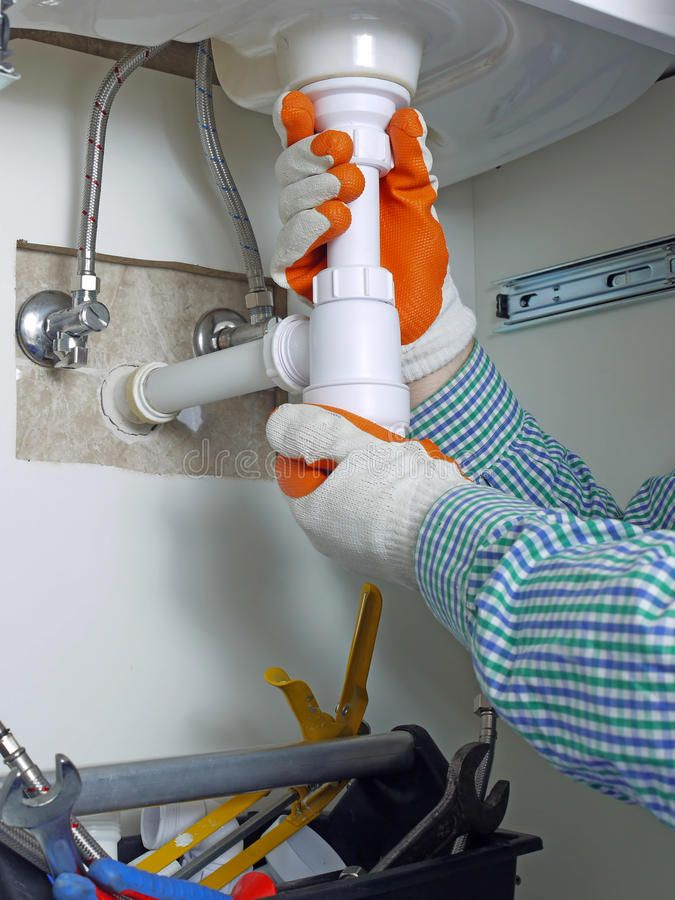
Imagine this: You turn on the kitchen sink and water starts gushing out from under the cabinet. Or worse, the toilet overflows right as dinner guests arrive. Maybe the hot water heater kicks out on the coldest morning of winter. In a flash, you’re flooded with panic – and a burning question: “What’s this plumber cost going to be?” Plumbing problems go from zero to disaster in seconds, so it’s smart to know ahead of time what plumber cost looks like for various repairs. Plumbing is one home system worth leaving to licensed pros – but that doesn’t mean you should be left guessing the price. We’re breaking down plumber cost per project, the factors behind those numbers, and how to avoid overpaying. Let’s dive in and make sure you’re ready before you “get plumbers out here!” turns into “Yikes, how much will this cost?”.
CREDIT: PINTEREST
When Plumbing Goes Wrong, It Goes Wrong Fast
Few things cause stress like plumbing woes. One minute your home is fine, the next there’s water everywhere. A dripping leak hidden behind the wall can suddenly become a spray of water, or an old pipe splits with no warning. Homeowners often feel helpless in these moments. We get it: you want answers, not surprises. The truth is simple: a good plumber is a must, but you deserve to understand what you’re paying for. High-quality plumbers charge for their expertise – not to trick you. Knowing what goes into plumber cost puts you in control.
Think about it: Calling a plumber is not like buying groceries. You can’t “just grab it off the shelf.” It involves expert labor, materials, possibly permits, and often hidden work. But the right plumbing pro (or general contractor) will explain all that up front. Our goal here is to break down the numbers and reasons behind them, so you feel confident when that plumber arrives. We’ll cover average plumber costs, common repairs, emergency fees, and even money-saving tips. We’ll also show where MGS Contracting Services comes in – because sometimes you might need more than just a quick fix.
Let’s start with the basics: What does a plumber cost in 2024–2025?
What Does a Plumber Cost in 2024–2025?
Average Plumbing Repair Cost
On a national level, plumbing work can have a wide range of prices. HomeAdvisor reports that the average total plumbing bill is around $339, with most homeowners paying between $181 and $497. Spruce finds something similar: the average plumbing repair runs about $325. Smaller jobs (think a straightforward drain unclog) might be under $200, while moderate projects (like replacing a toilet) fall in the $300–$500 range. Very complex jobs (like re-piping a house or major sewer work) can easily jump into the high hundreds or thousands of dollars.
In Northern Virginia specifically – Loudoun and Fairfax counties – the picture is a bit pricier. The DC area has a high cost of living and older housing stock, so expect plumber cost to skew higher than these national averages. For example, Angi’s data for Washington D.C. (with lots of historic homes) shows homeowners paying most around $350 on average. That’s a hint that local plumber cost will often top the national average, especially when permit fees and regional labor costs are factored in. (We’ll cover permit fees and all that in a bit.) In short: if you live in Northern Virginia, plan for the higher end of these national ranges – but not without understanding exactly where the money goes.
Hourly Rate vs. Flat Rate Pricing
How plumbers charge is important too. Plumbers typically bill by the hour or offer flat rates for common jobs. According to HomeAdvisor, residential plumbers charge between $45 and $200 per hour, with an average right around $105 per hour. The wide range depends on experience, specializations, and location. A seasoned master plumber in a city might be $150-$200/hr, while an apprentice or a rural plumber might be on the low end. Remember, in NoVA you’re on the higher side.
Hourly billing means the final plumber cost depends on time – so complex troubleshooting or messy jobs can add up. By contrast, flat rates give a set price for well-defined tasks (like unclogging a drain). Both methods are common. Flat-rate pricing is convenient: if a plumber says “$150 to fix that leak,” you know the cost upfront. Hourly pricing can swing depending on how long it takes. Good contractors will explain which approach they use for your job.
Key point: Reputable plumbers will give you a clear estimate upfront. For example, MGS Contracting Services prides itself on transparent quotes. As their website says, you can trust their team to deliver “consistent, exceptional craftsmanship” and clear communication. In practice, that means they’ll explain if a job is quoted hourly (like $105/hr) or flat (like $285 for a toilet unclog), so you’re not surprised when the bill arrives. Skilled plumbing professionals also plan the job carefully to minimize surprises. That’s why their upfront invoice – their plumber cost estimate – is as accurate as possible. In fact, knowledgeable contractors often do a thorough diagnosis first to limit change orders. So yes, ask for an itemized quote: is it hour-based or flat, and what does it cover?
Now, let’s look at real examples by project type. These are the numbers that will be front-of-mind when you call MGS or any plumber for each common repair.
Real Plumbing Costs by Project (The Numbers Homeowners Want)
Below are typical plumber costs for specific jobs. We’ve gathered the latest data (mostly from Spruce and trade guides) and adapted it for context. Remember, your actual cost may differ slightly, but these ranges give you a ballpark. In Northern Virginia, add a bit for the local premium on labor and permits.
Fixing a Leak
Average plumber cost: $340 (range $150 – $525). A simple leak (like a dripping kitchen sink pipe that just needs a tightening) might be as low as $150. But if the leak is hidden inside a wall or under a concrete slab, it can jump to $500+ after excavation, drywall repair, etc.. Finding a sneaky leak is labor-intensive: it can involve cutting through walls or using leak detection, which is why the cost can triple.
Why it varies: Leaks are tricky. Tightening a joint is quick; chasing a leak through plaster or concrete is time-consuming. In many cases, the plumber will need to locate where the water is actually coming from – sometimes even using special cameras.
Pro Tip – Signs of a Hidden Leak: Before calling, watch for clues that might justify a higher plumber cost:
- Unusually high water bill (with normal usage patterns).
- Damp spots or mildew smell behind walls or under floors.
- Soft or sagging drywall, warped wood, or discolored ceiling tiles below a bath.
- Lower water pressure in faucets.
If you see any of these, mention it to the plumber. They’ll know it could be a bigger job (and thus a higher plumber cost) and prepare accordingly.
Unclogging or Fixing a Toilet
Average plumber cost: $285 (range $100 – $470). A simple toilet clog that just needs a thorough plunge can be as little as $100. If the blockage is more stubborn – requiring a heavy-duty auger (a.k.a. closet auger) – costs can approach $470. In extreme cases (tree roots or broken pipe into the sewer), it could be more, but that’s rare for a standard clog fix.
If the problem is not just clog removal but something like tightening a loose toilet or minor leak at the base, that might be a similar cost range. However, a common trap is ignoring a recurring clog: multiple clogs often mean there’s a deeper issue in the drain line, which leads to our next sections.
Why it varies: Severity of the clog. Whether it’s just the toilet’s trap or deep in the main line. Also, older clay pipes need more care.
Pro Tip: Recurring clogs usually signal a bigger issue. If your toilet clogs often, a plumber might do a video inspection of the drain (roughly $425 on average for a sewer camera check). This upfront cost can actually save money by pinpointing the problem. Newer high-efficiency toilets also clog less; installing one is relatively cheap but check your floor flange as well.
Replacing a Toilet
Average plumber cost: $470 (range $240 – $700). Installing a brand-new toilet is usually straightforward, but costs run higher than a simple fix. The $470 average covers removing the old one and setting the new one on a standard flange. Expect to pay around $240 at the low end (simple swap-out with no surprises). It can climb to $700 if complications arise, like a damaged flange or if the floor needs repair.
What drives cost: Toilet height/alignment, flange type, and subfloor condition. If the original closet flange is above floor level or damaged, the plumber might need to install a flange extender or re-pour a bit of concrete to fix it. Those extra steps add labor.
Educational Note: Toilet leaks often occur because the wax ring seal fails, often due to poor installation. A pro plumber will use the correct ring (wax or rubber seal) and proper tightening so you don’t get that wobbly, leaky toilet. Saving by hiring someone too cheap can backfire here with water damage under the floor later.
Installing a New Faucet
Average plumber cost: $340 (range $150 – $535). Swapping in a new sink faucet typically runs about $150 if the existing water lines and drain all line up. But if the new faucet is bigger, or changes from two-handle to single-handle requiring new plumbing work, the cost can go up to around $535.
Why it varies: If it’s a straight replacement with all supply/drain ready, that’s quick. But if the location changes or someone forgot about old pipe corrosion, the plumber might have to replace some valves or even reroute pipes. These surprises can bump your plumber cost.
Pro Tip: Watch out for hidden corrosion in old metal valves. If you yank a faucet out and the angle stops are frozen, the plumber might need to cut and resolder pipe or replace the shutoff. That could add a bit to the bill. Also, faucet quality matters: really fancy fixtures can have trickier install instructions.
Unclogging a Drain
Average plumber cost: $275 (range $125 – $425). Sink or shower drains tend to clog from hair, grease, or debris. A basic clog often costs $125 to clear – this might just involve disconnecting the trap and snaking out the gunk. A deeper line clog that needs an auger, hydro jetting, or chemical-free professional treatment might be up to $425.
Why it varies: Accessibility. If the clog is just under the sink, quick. If it’s 10 feet down the pipe or in a wall, it’s more work. Also, clogs in tricky places might require tools (snakes, drain machine, hydro jetter) that take extra time.
Beware: Chemical drain cleaners (“liquid Drano,” etc.) can sometimes clear small clogs yourself, but they are often harmful to pipes and shouldn’t be a long-term fix. Plus, if they fail, the plumber has to remove the chemical. It’s often best to rely on mechanical means. Prevent clogs by using a hair catcher in showers and not pouring grease down kitchen sinks.
Drain Line Repair
Average plumber cost: $700 (range $225 – $1,175). When your issue is a broken or leaking pipe (in a wall, ceiling, slab, or yard), costs rise. If the damaged drain is easily accessible behind a wall, a minor patch might cost $225. But in many homes (especially older or slab construction), a drain line repair can run well over $1,000.
Key factors: Accessibility is huge. If pipes run under a concrete slab, the plumber may need to cut and jackhammer concrete ($$$) or even dig from below. In an open basement wall, it’s much cheaper. Another factor is how old the pipe is: breaking up old clay vs. cutting into newer PVC looks different.
Local note: In Northern Virginia, many mid-century homes have drain lines running under slab, so expect a higher plumber cost if excavation is needed. Always ask: “Do we have slab or crawlspace access to that pipe?”
Water Heater Repairs
Average plumber cost: $450 (range $100 – $715). Fixing a water heater can mean different things. Simple maintenance like testing or replacing a leaking pressure-release valve might be around $190. Replacing a corroded anode rod or a bad heating element might go up to $715. In general, experts say repairing a tank water heater often runs $100–$500, which agrees with the Spruce figures.
What to expect:
- Minor fix (tightening a small leak, adjusting the thermostat): ~$150–200.
- Medium fix (replacing valve, thermostat, anode rod): $200–$450.
- Major repair (tank replacement internally, new valve + rods, etc): $450–$700+.
Lifespan check: It’s important to remember water heaters aren’t immortal. A typical tank-style water heater lasts 10–15 years. If yours is older, a repair might only be a temporary band-aid. In many cases, at 12+ years old it makes more sense to replace the heater than keep fixing it (more on that next). Ask your plumber if they advise replacement instead; sometimes a new unit and peace of mind is worth it.
Water Heater Replacement
Average plumber cost: $1,320 (range $855 – $1,785). Replacing a traditional tank heater is a big job because you have to buy a new heater and install it properly. The average replacement bill (unit + labor) is about $1,335 according to Angi. Spruce rounded that to $1,320. On the low end, a small standard tank might be $855 if it’s a simple swap. On the high end, a large high-capacity or fancy tankless unit install can reach $1,785 or more.
Tank vs. Tankless: Traditional tank heaters (gas or electric) are cheaper to start, usually $600–$2,500 total. Tankless units cost more up front ($1,400–$3,900) but can be worth it long-term for energy savings. The cost above assumes standard hookups; adding new gas lines or electrical work will add to your plumber cost. (One guideline says labor for tank installs is $150-$450, whereas tankless labor can be $600-$1,900 due to complexity).
Upgrades and Permits: Installing a new water heater might trigger upgrades. For example, if you switch from electric to gas or increase capacity, you could need electrical or gas permits. These can run an extra $50–$300 each. Always factor that in. Also, disposing of the old heater is sometimes extra (some plumbers include a small haul-away fee, usually $50–$100).
Sewer Line Unclogging
Average plumber cost: $600 (range $320 – $875). A clogged main sewer line is usually more serious than a simple sink or toilet clog, and it costs accordingly. On average a professional drain cleaning of a sewer main is about $600, with minor cases around $320 and tough, deep line clogs up to $875. If an auger doesn’t clear it and a camera is needed, costs can climb further (a sewer camera inspection alone is roughly $425).
Why sewer clogs are serious: These clogs are often due to tree roots, broken pipe, or ground settling. Clearing them may require powerful equipment or even digging in the yard. That’s why the average plumber cost is higher than indoor clogs.
Tip: If you have frequent sewer backups (or a gurgling backup when toilets flush), a plumber’s video inspection is smart. It identifies if roots, collapses, or offset pipe are to blame, which saves money in the long run compared to guessing. Once found, the fix could be anything from a simple root-cutting to a full sewer replacement (which can cost thousands – see next section).
The Big Jobs (When Costs Jump Into the Thousands)
Beyond small repairs, some plumbing projects are truly major and can become very expensive. These are typically emergency or whole-house issues:
- Sewer Main Line Repair – Average $3,075 (up to $5,000+). Fixing a broken sewer main often means digging 3-4 feet deep across your yard, replacing pipe, and patching everything. This is heavy excavation, so costs can easily exceed $5,000 if a wide area is needed. Expect thousands for anything extensive.
- Replumbing a House – Average $6,095; $10,000–$20,000 for large homes. If you’re redoing all pipes (like replacing outdated galvanized or coping with a home addition), it’s a major renovation. A 2,000 sq ft house replumb (with open walls) is ~$6,095. But if walls/ceilings must be opened or it’s a complex system, $10k–$20k is common. Many insurance claims involve old pipe replacements in this range.
- Water Main Repair – Average $1,825 (range $450–$3,200). This is the water supply line, usually from the street to your house. If the break is at the street cleanout, it can be a few hundred to a couple thousand for digging up sidewalk/yard. If the line under your yard cracks, assume mid-thousands.
All these major jobs usually require permits, coordination, and multiple trades. At this scale, you might call a full-service contractor like MGS Contracting to handle not just the plumbing but also any carpentry, concrete work, or permits needed – and to ensure code compliance and inspections are done properly.
Emergency Plumbing: What You’re Really Paying For
Emergency plumbing is a whole different beast. If a leak or burst pipe can’t wait, you’re paying for round-the-clock service:
- Premium hourly rates: In an emergency, plumbers often charge time-and-a-half to triple their normal rate. If your usual plumber is $105/hr, an emergency call at midnight could be $160–$315/hr.
- Trip / service fees: Many plumbers add a service call fee (~$100–$250) or trip fee to cover after-hours dispatch and mileage. Angi notes that DC plumbers’ trip fees run about $100–$300; plan similarly for NoVA.
- Overtime pay: Workers get overtime for weekends/holidays, so you cover that extra pay.
- Priority dispatch: You’re literally jumping the queue. That speed has a cost.
In short, emergency plumber cost can be 1.5 to 3 times normal rates. That means a burst-pipe fix at night might double or triple the bill. If it’s not life-threatening (minor drip or slow drain), try to schedule during business hours to save. For example, if your hot water heater is dripping slowly, a weekday morning fix avoids the overtime premium. But if water is gushing or sewage backing up, pay the premium for sure.
The cost factor here is time: “regular hours” vs “emergency hours.” HomeAdvisor notes a flat trip fee of $300–$400 is not uncommon in emergencies. Bottom line: Know your main shutoff valve and do what you can temporarily (like turning off water to that area) so you truly have an emergency (and not just a nuisance). It could save hundreds.
What Actually Affects Plumbing Costs?
By now you see costs vary wildly. Here are the big checklist items that make one plumber cost different from another:
- Type of repair: A simple fix like a minor leak or clog is cheap. Replacing a whole water heater or sewer line is expensive.
- Accessibility: Working under a sink vs behind drywall vs under the slab – every extra layer (sheetrock, concrete, cabinetry) adds time and cost. For example, a leak behind a wall means cutting and repairing drywall too.
- Permits and code compliance: Small jobs often need no permit, but anything involving gas, new plumbing, or major work usually does. Permit fees add up (see below) and the plumber’s time to file paperwork counts toward cost.
- Materials: Replacing a simple valve uses a $5 part. Replacing galvanized pipe with copper or PEX uses expensive materials. Upgrading fixtures (e.g., to earthquake-safe valves, backflow preventers, etc.) will bump up costs.
- Labor time: Naturally, how long the job takes. Plumbing pros generally charge hourly for labor, so more hours = higher cost. Experienced plumbers are usually faster (but might charge a bit more per hour).
- Emergency vs. scheduled: If you could wait until Tuesday, you’ll pay less. 24/7 service adds fees.
- Complexity and troubleshooting: Sometimes a hidden issue must be discovered. Plumbing problems can hide behind finished walls. Finding the source is extra work (think leak detection equipment) – all of which shows up in the plumber cost.
- Local labor rates: Where you live matters. Loudoun/Fairfax labor rates are high, so “plumber cost” will reflect that. We saw DC pays more because of old homes; similarly, NoVA’s affluent market pushes wages up (and often requires unionized or highly credentialed contractors, which costs more).
To put it another way, one clogged sink can cost $125 or $425 depending on what’s causing it. One dripping faucet could be a quick fix or a sign of an aging plumbing system about to fail. Always factor in that by the time water appears on the floor, there may be ceiling, floor, or hidden repairs involved. As MGS’s approach suggests, every plumbing issue should be thought of as part of the whole house – a leak might need drywall repair, paint, flooring patch – which multiplies the real cost beyond just the plumber’s fees.
Special Plumbing Services (Often Overlooked)
Some home plumbing jobs aren’t daily occurrences, so they may surprise you:
- Sewer main line repair – $1,250 to $5,000+ (avg ~$3,075). If your main sewer is broken, plan for heavy excavation.
- Video inspection of sewer – ~$350–$500 (Angi data). A smart step before doing anything major.
- House replumbing – ~$6,095 avg (full repipe, open walls). Entirely replacing pipes in a home is thousands, often tens of thousands for big houses.
- Water main repair (incoming line) – $450–$3,200 (avg ~$1,825). The water main from street to house.
- Sewer main repair (yard) – $1,250–$4,900 (avg ~$3,075) per The Spruce table.
- Special systems:
- Septic tank repair: $575–$3,000 (avg ~$1,790). Includes digging up leach fields.
- Septic pumping: $290–$555 (avg ~$420). Not a plumber’s job, but related. Pump every 3–5 years.
- Water purification system install: ~$1,000–$2,150 (avg ~$2,150) for a whole-house system.
- Gas line install: ~$600 (up to $900).
- Gas line repair: ~$225–$800 (avg ~$510).
- Sump pump install: ~$1,375 (up to $2,100).
- Sump pump repair: ~$520 avg. (Since a failed pump can flood a basement.)
These “special” tasks often have their own contractors, but a good GC like MGS can coordinate them (especially if they tie into a remodel). The key takeaway: Preventative maintenance on these systems is always cheaper than waiting for a failure. A $50 check of your sump pump or a $100 sewer camera inspection can avert a $3,000 sewer line dig.
How to Save Money on Plumbing (Without Making It Worse)
Plumbing work is expensive, but you can take steps to reduce the bill (and stress):
- Know your main shutoff valve. If a pipe bursts, turning off the water to the house immediately limits damage. No plumber can fix flooding for free.
- Schedule non-urgent jobs. If possible, book plumbing work during normal hours. Early scheduling helps you avoid emergency premiums. Even scheduling a week later for a dripping faucet can save up to 2–3x the hourly rate.
- DIY where safe: There are basic tasks most homeowners can do: replace a toilet seat, change an aerator, tighten a valve, unclog a sink trap. Spruce’s experts encourage doing minor fixes yourself to lower plumber cost. Just be careful not to damage anything if you’re not sure how.
- Get free quotes and compare: Always ask for multiple estimates and check reviews. Knowing what others have paid (your neighbors or via services like Angi/HomeAdvisor) helps ensure your plumber cost quote is fair.
- Maintain your plumbing: Simple annual tasks (flushing the water heater, cleaning faucet aerators, checking valves) keep problems at bay. Avoiding grease in the kitchen and limiting hair in drains means fewer clogs.
- D.I.Y. minor demolition: If a wall needs opening, and you’re able, consider knocking out small sections of drywall yourself. That way the plumber isn’t billing you for demo time. (Of course, be sure it’s safe to do so.)
- Ask about discounts: Some plumbing companies run seasonal deals or coupons. It never hurts to ask if they have a new-customer discount or package pricing.
- Plan for the future: Instead of patching every small issue, it can be cheaper long-run to do a bundled remodel. For instance, if a bathroom needs new piping, doing the whole bathroom in one go can save on overall plumber cost compared to repeated separate fixes.
- DIY with caution: Don’t DIY the big stuff. Gas lines, sewer backups, complete repipes, or anything beyond a wrench turn – leave those to pros. A mistake there can be far more costly than what you think you save. Plumbing often intersects with electrical or structural, which a trained hand can navigate safely.
Following these tips doesn’t mean avoiding hiring a pro. It means smartly preparing and taking little steps to lower the scope (and surprise) of the professional job. As Spruce reminds homeowners, simple precautions and maintenance can keep that high plumber cost from hitting you all at once.
When to Call a General Contractor Instead of Just a Plumber
Sometimes you might start with a plumbing problem and realize it’s bigger. That’s where a general contractor (like MGS Contracting Services) comes in. If the job is more than just tweaking pipes, call a GC. For example:
- Home remodels or additions: If you’re redoing a bathroom, kitchen, or finishing a basement, plumbing work is integral. A GC will coordinate plumbers, electricians, and carpenters in one package. MGS, with its Class A Virginia Contractor license and NVBIA membership, handles permits and inspections seamlessly.
- Water damage/wall repairs: Say a slab leak caused wall or floor damage. A plumber fixes the leak, but then you need drywall repair, painting, new flooring – that’s a remodeling job. Hiring MGS means they ensure the plumbing fix and all related repairs are done together.
- Structural changes: Moving a sink or adding a bathroom often involves rerouting plumbing through new walls. That’s a remodel, not a simple service call.
- Complex systems: Large households, green homes, high-tech systems (like water filtration integrated into the plumbing) might be beyond standard plumber scope. A contractor designing the whole system is wiser.
- Insurance/permits: Major plumbing work often needs a contractor’s license on file. A GC has the credentials MGS has, so the work passes city/ county scrutiny without issues.
In short, call MGS Contracting Services when the plumbing fix is part of something bigger – a renovation, an emergency with collateral damage, or an upgrade. Chris Chapman and his team are licensed, locally-focused (serving Loudoun and Fairfax), and skilled at communicating with homeowners every step. They can translate that technical plumber cost estimate into a full scope with timelines, materials, and even design advice for your space.
The Real Cost of Waiting
Ignoring a plumbing issue to save money often costs more later. A small drip can lead to mold that needs professional removal. A clogged drain can mask a burst pipe that eventually floods a whole floor. An old water heater leaking could eventually flood your basement. Each of those scenarios multiplies the initial plumber cost into a crisis with insurance claims.
We don’t mean to scare you – knowledge is power. By understanding plumber cost upfront, you plan instead of panic. Early intervention means cheaper fix vs full replacement later. Even just getting a professional consultation puts you ahead.
Remember: The goal of all this isn’t just to list scary numbers – it’s to empower you as a homeowner. When you know what things should cost, you’ll know if a quote is fair, you’ll know what questions to ask (why is this expensive? is there a cheaper fix? do I need a permit?), and you’ll make decisions on your terms.
Contact Us
If you’re in Northern Virginia and have plumbing questions or a project coming up, reach out to MGS Contracting Services. Chris Chapman, Danielle, and the MGS team bring both plumbing knowledge and full-remodel expertise. They’ll help you decipher plumber cost estimates and recommend smart solutions – whether it’s a quick fix or a full renovation. Call MGS (Leesburg-based, proudly serving Loudoun & Fairfax) for a free consultation and transparent quote. You’ll get honest guidance and a clear plan forward, not surprises. When it’s time to tackle that leak or plan that remodel, MGS will be ready with solid estimates so you can make informed decisions.
Feel confident before, during, and after the plumbing repair – after all, understanding the plumber cost is part of making your home work for you.