
You’ve got a loose door that won’t latch unless you lift it with your knee. A strip of drywall tape is peeling like a banana. The bathroom faucet is doing that slow-drip thing that somehow sounds louder at 2:00 a.m. None of it feels like “a big project,” but it’s all annoying enough that you finally decide: today’s the day.
So you do what everyone does. You grab your phone, type handyman near me, and start clicking around.
And within five minutes you’re more confused than when you started. Handyman Pricing
One person says they can “swing by” for $75. Another says $150. Another won’t even talk pricing until they “see it.” And then you run into a company that says their minimum is $500. Handyman Pricing
It feels like the same category of work. Why does it look like a totally different planet of pricing?
Here’s the honest answer: in 2026, handyman work is in demand, and there’s a huge gap between “someone who can do it” and “someone who will do it correctly, safely, and predictably.” That gap shows up in how estimates are built, what’s included, and what you’re really paying for. Handyman Pricing
At MGS Contracting Services, we believe homeowners deserve transparency, not guesswork. Chris Chapman built this company around craftsmanship that holds up and communication that lowers your stress. Chris served in the Marines for four years, and that mindset shows up in how we plan, how we work, and how we finish. Handyman Pricing
This guide is going to walk you through what handyman pricing actually means in 2026, why the range is so wide, what a minimum service investment really covers, and how to avoid the expensive cycle of “cheap first, corrected later.” Along the way, we’ll show you how to think like a pro when you’re comparing quotes, deciding what’s urgent, and figuring out whether you should bundle jobs or split them up. Handyman Pricing
If you’re a homeowner in Northern Virginia, especially around Loudoun County and Fairfax County, this is written for you. MGS is based in Leesburg and proudly serves communities like Ashburn, Sterling, Herndon, Reston, Vienna, and Great Falls, along with other areas in Loudoun and Fairfax. Handyman Pricing
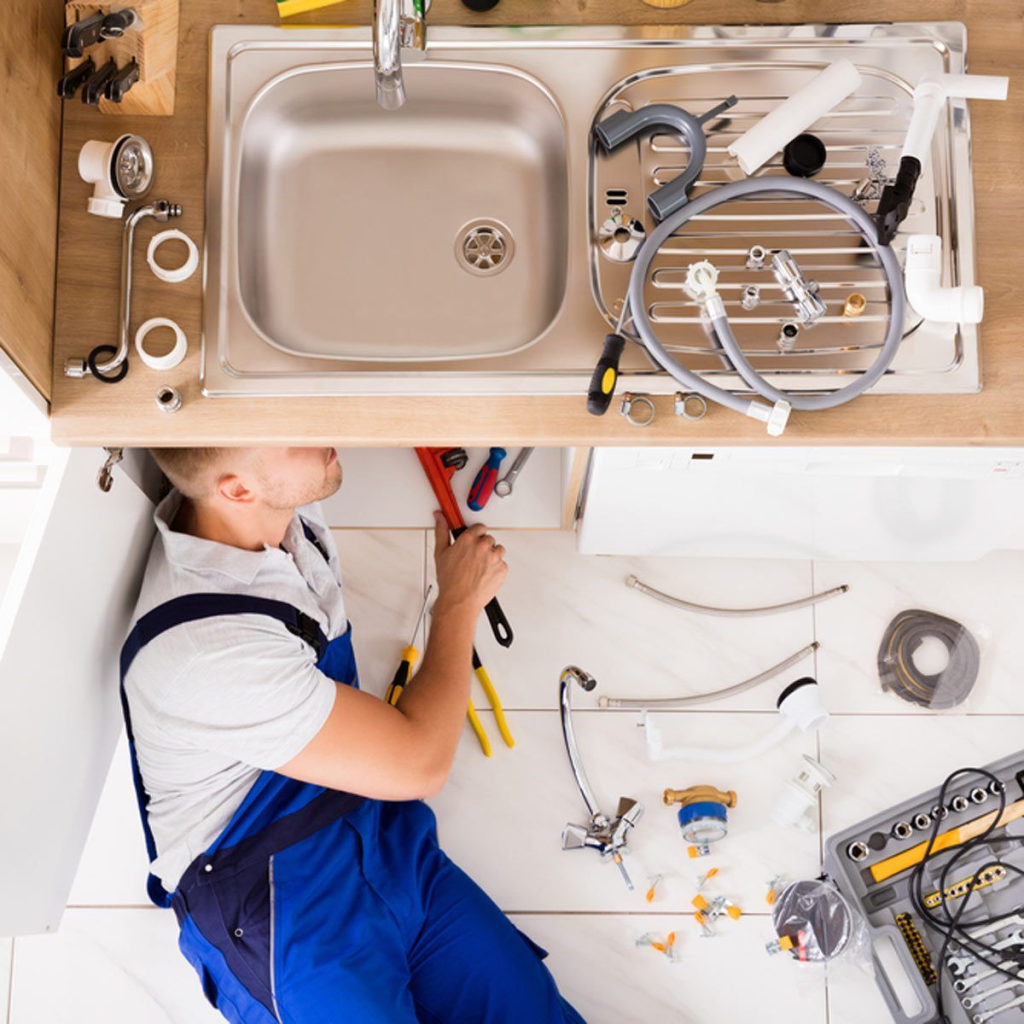
CREDIT: PINTEREST
The Reality Behind Handyman Pricing In 2026 Handyman Pricing
If you’ve hired help around your home before, you probably have a “mental price list” from a few years ago. A small repair used to be a couple hundred bucks. A day of work used to feel attainable. In 2026, those old anchors can make today’s pricing feel shocking. Handyman Pricing
Handyman pricing is higher than it used to be for a few reasons, and they aren’t just “because someone wants to charge more.” Costs around the entire construction and home-improvement ecosystem have been under pressure for years, and that pressure flows straight into small jobs. Handyman Pricing
Inflation is still part of the story. The Consumer Price Index (CPI-U) rose 2.7% from December 2024 to December 2025, and the all-items index was up 2.4% over the 12 months ending February 2026. Those percentages matter because a handyman business isn’t just labor. It’s fuel, vehicles, insurance, tools, supplies, and the administrative time it takes to schedule, diagnose, source materials, and warranty the work.
Material costs also stay “sticky.” NAHB has noted that residential building material price growth remained elevated heading into late 2025 based on Producer Price Index data, signaling ongoing pressure for builders. Even for small repairs, you still buy caulk, fasteners, shims, drywall compound, paint, and replacement parts. When inputs rise, small jobs feel it quickly. Handyman Pricing
Then there’s the labor shortage issue, and this is the piece most homeowners don’t connect to the price of a “simple” repair. Associated Builders and Contractors projected that the construction industry would need to attract 349,000 net new workers in 2026 to meet demand. When skilled labor is scarce, schedules tighten and wages rise. That doesn’t just affect big builds; it affects the availability of the people who can do small jobs correctly. Home Builders Institute (with NAHB Economics) has also highlighted real economic impact from skilled labor shortages in the home building sector. Handyman Pricing
Now layer in regional reality. Handyman Pricing
The Washington, DC metro area and Northern Virginia are not low-cost markets. High demand, a lot of aging housing stock that needs updates, and homeowners who expect professional communication all push the standard up. Even national pricing guides call out that metro and high-cost-of-living regions tend to see higher hourly rates. Handyman Pricing
So yes: pricing is higher. Handyman Pricing
But that’s only half the reality. The other half is understanding why the range is still massive.
A handyman charging $75 may be pricing like a side gig. They might not have insurance. They might not include warranty expectations. They might not be accounting for travel, sourcing time, or cleanup. They might not have a process for diagnosing what’s actually wrong. And they might not know the local code requirements that turn a “quick fix” into a risk. Handyman Pricing
A company charging $500 minimum is usually building the price around an entirely different standard: show up when scheduled, diagnose correctly, protect the home during the work, complete the scope cleanly, and be accountable after the fact. That standard has real costs. Handyman Pricing
This is where the “cheap isn’t actually cheap” lesson shows up. Handyman Pricing
Poor workmanship doesn’t just look bad; it multiplies. You end up paying twice because the first attempt didn’t solve the real problem. And in the worst cases, the cheap fix creates a bigger repair than the original issue.
There’s also the risk side. When someone is not insured, and they damage your property or someone gets hurt, it can become your problem in ways most homeowners never anticipate. Mainstream consumer guidance consistently encourages homeowners to verify credentials and insurance, because scams and shoddy work do happen and can get expensive fast. Handyman Pricing
Here’s the line we’ll stand behind all day: Handyman Pricing
Most homeowners don’t overpay. They underpay first, then pay twice. Handyman Pricing
How MGS Contracting Services Pricing Works And Why
Let’s talk about the numbers you asked for clearly and confidently. Handyman Pricing
MGS Contracting Services has a minimum service investment of $500 per job, plus a $69 diagnostic fee.
If you’re reading that and thinking, “That’s… a lot for a ‘small job,’” you’re not alone. But once you understand what professional small-job service actually requires, it starts to make sense. Handyman Pricing
Start with the simplest truth: small jobs aren’t small for the contractor. Handyman Pricing
A “small” job still requires someone to block time on the calendar, drive to your home, park, unload tools, protect the work area, assess the problem, get materials, do the work carefully, test it, clean up, load out, and document what was done. The time you see (the 30 minutes of actual repair) is often the smallest slice of the total time that job consumes. Handyman Pricing
Many pricing guides acknowledge this reality. It’s common for handymen to have a minimum service fee or call-out fee even when the job itself is quick, because time and travel still exist. Handyman Pricing
So what does a $500 minimum do? Handyman Pricing
It creates a floor that allows the work to be done properly, without rushing, cutting corners, or pushing you into a “quick patch” you’ll regret later. It also protects planning time. If we’re taking responsibility for your home, we’re taking responsibility for doing the job correctly, not just doing something that looks okay from five feet away. Handyman Pricing
It also sets expectations. MGS is not a “drive-by patch” company. We’re a done-right company.
Now let’s talk about the $69 diagnostic fee, because that number tends to trigger one of two reactions:
One group says, “Of course. You’re paying for expertise.” Handyman Pricing
Another group says, “I shouldn’t have to pay for you to tell me what’s wrong.” Handyman Pricing
If you’re in the second group, here’s the honest, homeowner-friendly version of why diagnostics matter.
Many home problems have a visible symptom and a hidden cause. Handyman Pricing
A door that won’t latch might be a hinge issue. Or it might be frame movement. Or it might be swelling from moisture. Or it might be a strike plate alignment issue caused by settling. If you guess and grind down the latch, you might “fix” it for two weeks and then realize the root cause wasn’t addressed.
Drywall cracking might be a minor seam issue. Or it might be movement. Or it might be a moisture problem that will keep reappearing until you handle what’s happening behind the paint. Handyman Pricing
A dripping faucet might be a cartridge issue. Or it might be pressure. Or it might be supply line wear. A quick swap can solve it, but only if you’re replacing the right component, on the right type of fixture, with the right compatibility. Handyman Pricing
A diagnostic fee is there to prevent guessing. Handyman Pricing
Angi’s 2026 cost guidance directly calls out that project type and scope drive price and that more specialized work costs more, and it also notes that many handymen have minimum fees for single small jobs. The diagnostic phase is what turns “maybe” into “here’s what it is, here’s what it takes, and here are your options.”
And that last part is important: options. Handyman Pricing
A good diagnostic visit doesn’t just tell you what is wrong. It gives you choices that match your goals and your budget. Sometimes you want “make it functional for now.” Sometimes you want “fix it properly so I never think about it again.” Sometimes you want “tell me the risk if I do nothing for six months.” Diagnostics is how we stop pretending every homeowner situation is identical. Handyman Pricing
This is also where MGS’s larger identity matters. We’re a remodeling contractor, not just a repair stop. Chris and the team operate with a design-build mindset, which means we’re thinking about long-term outcomes and how parts of your home interact, not just a one-off patch. Handyman Pricing
We don’t just show up. We diagnose, plan, and execute. Handyman Pricing
Market Rates In 2026 And Why Comparing Hourly Quotes Can Mislead You Handyman Pricing
Let’s zoom out and talk about what you’re seeing online, because it’s not your imagination. There really is a wide spread in handyman rates right now. Handyman Pricing
Multiple industry and consumer sources place common handyman hourly rates in roughly the $50 to $150 range, depending on location, experience, and the type of work. Some sources narrow a “typical” band. For example, Housecall Pro’s 2026 pricing guide describes most handymen charging $60–$85 per hour, with predictable flat-rate jobs often landing between $150 and $600. Thumbtack’s published estimate says that, on average, hourly rates range around $60–$75, with a wider low-to-high spread. And Angi’s cost guide shows hourly rates can range from $50 to $150, again depending on region and complexity.
So where does that leave you as a homeowner in Northern Virginia? Handyman Pricing
It leaves you with a problem: hourly rates don’t tell you the thing you actually care about, which is: what will this cost me, total, and will it be done right? Handyman Pricing
Hourly pricing can be fair. It can also become a black hole if the scope is unclear. And it often shifts risk to you, the homeowner, especially if there’s no real estimating process behind it. Handyman Pricing
Here are the most common ways pricing shows up for small jobs in 2026: Handyman Pricing
Hourly pricing with a minimum (for example, a two-hour minimum). Flat rate per task (for example, a set price to hang a TV or replace a faucet). Project-based pricing that bundles multiple tasks into a defined scope. Hybrid pricing: a base service fee (or diagnostic) plus labor and materials. Handyman Pricing
Even consumer guides encourage bundling tasks because it can reduce the impact of minimum service fees and travel charges. That’s not a gimmick. That’s basic economics. If a company has to lose half a day of schedule capacity to do a 30-minute repair properly, that time has to be accounted for somewhere.
So why doesn’t MGS compete on hourly rates? Handyman Pricing
Because homeowners hate uncertainty. Handyman Pricing
If you’ve ever watched a technician work and thought, “Are they slow… or careful… or both?” you already know why hourly can feel uncomfortable. And if you’ve ever had a job stretch from “quick” to “half a day,” you know why hourly can blow up budgets.
A project-based approach is often more honest for homeowners because it focuses on outcomes. You’re not buying time; you’re buying a result. And in a professional model, the contractor carries more of the risk if they underestimate the time required, which is why pros care so much about scope clarity and diagnostics.
You’re not buying hours. You’re buying outcomes.
What You’re Actually Paying For When You Hire A Pro
If you want to understand handyman pricing, you have to stop thinking of the bill as “labor only.” Labor is only one piece, and in 2026 it’s not even the most misunderstood piece.
Here’s what’s really inside professional pricing, explained in plain English.
Expertise and experience
This is the part nobody wants to pay for until something goes wrong.
Experience is knowing what’s behind the wall, not just what’s visible. It’s knowing when something is cosmetic and when it’s a symptom. It’s knowing what can be safely tightened and what needs to be replaced. It’s also knowing which materials, fasteners, sealants, and adhesives actually hold up in real-world conditions.
When you hire someone who is experienced, you’re buying fewer surprises. You’re also buying decision-making. That’s a big deal in home repair, because guessing is expensive.
Tools and equipment
Professional work is faster and cleaner when the right tools show up. That includes everything from oscillating tools and levels to dust control, proper ladders, and the little specialty tools that make certain repairs possible without destroying the surrounding area.
A homeowner might not care whether a contractor uses a $10 caulk gun or a professional one. But you will care if the seal fails. You will care if the finish looks jagged. And you will care if your house is full of dust because the work wasn’t set up for a clean environment.
Time efficiency and the hidden “non-wrench” hours
The visible repair might take 30 minutes. The job might still take two hours of real time when you include setup, protection, cleanup, and testing.
Then there are the non-wrench hours. Scheduling, driving, sourcing, communicating, documenting, and follow-up. Housecall Pro’s pricing guidance explicitly calls out overhead like insurance, tools, vehicle costs, fuel, and admin time as part of what needs to be covered for a business to stay profitable.
That administrative layer is exactly what often separates a professional experience from a frustrating one. It’s also why a “cheap” quote can come with slow responses, missed appointments, and vague timelines.
Licensing and the legal foundation of accountability
This is where things get real, especially in Virginia.
Virginia contractor licensing isn’t just a badge. It’s regulated law, and the thresholds matter. Under Virginia law, contractor license classifications are tied to the total value of work, and the definitions set clear tiers (Class A, B, C) based on project value. That matters because licensing exists to create a minimum standard of competency and accountability for certain levels of work.
MGS is listed as holding a Class A Virginia Contractor License (including license number displayed on the company website). Just as importantly, MGS positions itself as a standards-driven company through professional memberships like NAHB and the Northern Virginia Building Industry Association.
For homeowners, licensing matters because it creates traceability. It also creates leverage. If a contractor is operating outside of what’s allowed, or misrepresenting credentials, that can trigger serious problems.
And Virginia law has teeth when it comes to unlicensed contracting. Virginia Code addresses prohibited acts and includes language about enforceability issues for contracts entered into by unlicensed contractors, with limited exceptions.
That’s not abstract. That’s “this can become a legal and financial headache” territory.
Insurance and risk transfer
Insurance is one of those invisible things you don’t think about until something breaks, leaks, or sparks.
Consumer and insurance guidance consistently recommends that homeowners verify insurance and ask for proof, commonly via a certificate of insurance. The reason is simple: if a worker is injured or property is damaged, you want to know there’s a system in place for handling it.
When a contractor carries proper coverage, it’s part of what you’re paying for. It also supports stable staffing and professional operations. And yes, it’s one reason professional companies cost more than the guy who says, “I can do it cheaper.”
Project management and homeowner sanity
Even small jobs can become stressful when communication is sloppy. The homeowner experience is shaped by: scheduling, clear scope, knowing what will happen when, knowing what’s included, and knowing what happens if something changes.
MGS repeatedly positions its process as one that minimizes homeowner anxiety and prioritizes an “effortless” experience, which is exactly what most homeowners want when they’re already juggling work, kids, and life.
A handyman isn’t just labor. It’s liability, logistics, and leadership.
How Estimates Are Actually Built And Why Diagnostics Prevents Expensive Mistakes
Let’s demystify the estimate, because once you understand it, you’ll never look at a quote the same way again.
Most homeowners think estimating is: look at the thing, guess the time, multiply by a rate, add materials.
That’s how underpricing happens. It’s also how “cheap quotes” happen.
A professional estimate is closer to: understand the real problem, define the scope, consider constraints, plan the sequence, account for risk, then price the outcome.
Here’s what that looks like in the real world.
Understanding the scope, not just the symptom
The first question is not “what do you want fixed?” The first question is “what’s actually happening?”
A door problem might involve hinges, strike plate alignment, swelling, frame movement, or settlement. Drywall damage might involve moisture or movement. A faucet issue might be a cartridge, a supply line, a pressure issue, or deterioration.
If the person pricing your job is not asking questions, there’s a good chance they’re either guessing or planning to “figure it out as they go.” Both can work. Both can also get expensive.
Time and complexity
A “simple” task can become complex if access is difficult. Working in a tight vanity cabinet is different than working in an open utility room. Working on a tall stairwell wall is different than working in a standard bedroom. Working in a finished space requires more protection and cleanup than working in an unfinished space.
This is why two homeowners can describe the same job and get very different quotes. Complexity isn’t always obvious in a short phone call.
Materials and the sourcing reality
A lot of people hear “materials markup” and assume the contractor is just padding the bill.
Sometimes the contractor is padding the bill. That’s real.
But often, a markup is covering time and risk. If the contractor buys the part, they take responsibility for compatibility, returns, replacements, and warranty coordination. They also lose time to sourcing and picking up.
Angi’s 2026 handyman cost guide explicitly discusses that material markups can run roughly 10% to 30% when the handyman purchases materials, which reflects sourcing and delivery overhead. Industry guidance for service businesses also often includes material markups to cover sourcing time and operational costs, with some handyman pricing guides citing even higher ranges in certain contexts.
If you want to reduce that component, the best option is often to buy the materials yourself, but only if you’re confident you’re buying the right thing. Otherwise you can end up paying extra labor time while someone waits for you to run to the store, or you can end up buying the wrong part and paying twice.
Risk factor and what you can’t see yet
This is the part that separates a professional estimate from a “sounds about right” number.
Risk is anything that could change the scope once the work begins: hidden water damage, rotten framing, outdated wiring, inaccessible shut-offs, stripped fasteners, incorrect prior repairs, tile that crumbles when disturbed, and the list goes on.
Professionals aren’t charging you for hypothetical disasters. They’re pricing in the reality that homes are complicated, and that “quick fixes” often aren’t possible once you discover what’s underneath.
Here’s a classic example: the “simple drywall patch.”
Homeowner sees a softball-sized hole and thinks: patch, sand, paint, done.
But if that hole is near a window and there’s moisture intrusion, the visible damage is just the front edge of a bigger issue. If you patch it without addressing moisture, you get staining, bubbling, and recurring cracks. That’s not a drywall issue. That’s a moisture management issue.
Or think about this one: “just replace the bathroom fan.”
In older homes, the ducting might be inadequate. The wiring might not meet modern expectations. The vent termination might be blocked. The right fix may involve more than swapping a fan.
Diagnostics is what keeps the estimate honest. It turns a vague task into a defined scope, and defined scopes are how you get predictable outcomes.
Bundling as a real pricing strategy, not a sales trick
Bundling is one of the smartest homeowner moves in 2026, especially when companies have minimum fees.
Angi’s guidance notes that bundling several small tasks into one visit can provide better value than scheduling them separately because it helps reduce repeated minimum fees and travel charges.
This is exactly why a minimum service investment can actually serve you well if you plan strategically.
Instead of calling for one loose doorknob, one leaking faucet, and one cracked tile on three different weeks, make a list. Walk your house. Note what’s been bugging you for months. Then schedule one visit that tackles the list efficiently.
In practical terms, bundling can turn “I’m mad about the minimum” into “this was actually a great value because we knocked out five problems in one shot.”
Common Handyman Services And The Kinds Of Jobs Homeowners Bundle Successfully
When homeowners hear “handyman,” they often think of tiny tasks only. In reality, handyman-style services can cover a wide range of repairs and improvements, with the key limitation being whether the work crosses into specialty trade licensing, permits, or structural requirements.
Consumer resources describe handyman work as spanning routine maintenance, repairs, and installations, from hanging shelves to caulking and weatherproofing, with more specialized tasks (electrical, plumbing, carpentry) often costing more.
In Northern Virginia, the most common bundles we see homeowners build typically fall into a few buckets.
General maintenance and “my house is talking to me” fixes
These are the little warning signs your home sends you: a door that drags, a latch that doesn’t catch, a cabinet hinge that’s tearing out, a railing that wiggles, a vent cover that’s loose, a draft that shows up every winter.
None of these is glamorous. But they’re the difference between a home that feels solid and a home that feels like it’s slowly unraveling.
Drywall and paint repairs that make the home feel finished again
Drywall repairs are rarely just about the hole. They’re about making the repair disappear. And painting is rarely just about color. It’s about surface prep, clean lines, and matching sheen so you don’t end up with a “repair square” visible forever.
This is one of the areas where cheap work screams. Bad sanding shows. Poor texture matching shows. Paint mismatch shows. In a high-visibility room, it’s worth doing properly.
Carpentry adjustments that stop the daily annoyances
Trim gaps, baseboard damage, loose thresholds, swelling doors, sticking windows, cabinet alignment issues, shelf installation, closet upgrades. These are the tasks that change how your home functions day to day.
They also require precision, because small errors look bigger in finish work than they do in rough work.
Exterior repairs that prevent future damage
Exterior problems are often “small” until water gets involved. Loose trim, failing caulk, minor siding gaps, and small deck issues can become large repairs over time.
Even if you’re not doing major exterior remodeling, it’s smart to handle small exterior vulnerabilities quickly.
The key message is simple:
If it affects how your home functions or feels, it’s worth doing correctly.
And if you’re already paying for someone to mobilize to your home, it’s usually smarter to bring them a list than a single item.
The Biggest Homeowner Mistakes That Create Expensive Outcomes
Let’s talk about what actually causes homeowners to overspend. It’s not usually that they chose a “premium” provider. It’s that they made one or two decisions early that forced them into costly corrections later.
Choosing based on price alone
Price matters. Budget is real. But choosing the lowest number without understanding what’s included is one of the fastest ways to pay more overall.
The Federal Trade Commission warns that home improvement scams exist and that dishonest contractors may do shoddy work, damage your home, overcharge, or take money without performing services. You don’t need to be paranoid, but you do need a process for vetting.
The most dangerous cheap quote is the one that sounds confident but isn’t specific.
Skipping diagnosis and asking for a “quick fix”
Homeowners sometimes push for a quick patch because they don’t want to “open a can of worms.”
But here’s the irony: avoiding the can of worms often leads to a bigger can of worms.
A diagnostic-first approach typically saves money because it prevents misdiagnosis. Misdiagnosis is how you replace the wrong thing, patch the wrong area, or ignore the real cause until it becomes larger.
Hiring unlicensed or unverified contractors in a state with real licensing rules
Virginia has a formal contractor licensing structure tied to project value, with classifications defined in state law. Loudoun County explicitly directs residents to verify contractor licensing through the Virginia DPOR License Lookup (or by calling DPOR) when hiring.
This matters because licensing isn’t just a formality; it’s part of a framework that supports consumer protection and accountability. Virginia law also addresses prohibited acts and, in consumer transactions, unlicensed contracting can carry serious consequences.
Expecting major work for small-job pricing
A common homeowner frustration is: “But it’s a quick job.”
Sometimes it is. Many times it isn’t.
If you want the repair to be invisible, durable, and clean, it involves prep and finish work that takes time. If you want it done safely, it involves protection and testing. If you want someone to stand behind it, it involves a business structure that supports warranty and follow-up.
If the price feels too good to be true, it usually is.
How To Choose The Right Handyman Or Contractor In Northern Virginia
If you take nothing else from this blog, take this: the right provider makes your home feel calmer. Not louder.
Here’s a homeowner-friendly way to vet the person or company you’re considering. This isn’t about being difficult. It’s about protecting your home and your money.
Start with credentials and verification
Ask whether they are licensed for the appropriate level of work. In Virginia, you can verify contractor licensing status through the DPOR License Lookup, and Loudoun County explicitly recommends that residents use it or contact DPOR to confirm licensing and check complaints or disciplinary actions.
Then ask for proof of insurance. Consumer and insurance guidance commonly recommends verifying insurance and requesting a certificate of insurance when hiring contractors.
If someone gets weird about either question, that’s your sign.
Ask for a clear scope, not just a number
A professional quote doesn’t just give you a price. It gives you an understanding of what’s included: what will be repaired or replaced, what materials are included, what assumptions are being made, and what happens if conditions change.
Even Angi’s homeowner guidance emphasizes documentation, written estimates, and proof of insurance as part of what you should expect when hiring.
Pay attention to communication
The number one complaint homeowners have about contractors is not always quality; it’s communication. Missed calls, missed windows, unclear timelines, and surprises.
A structured process matters. MGS’s public messaging repeatedly points to an “effortless” process designed to minimize homeowner anxiety, which is exactly what good service should do.
Look for accountability after the job
Ask: what happens if something isn’t right? Do they warranty their work? Do they come back? Do they have a real business presence?
Your goal is not to win the cheapest deal. Your goal is to solve the problem and not have it come back.
In 2026, the best pricing is the pricing that ends the problem.
FAQ, Final Thoughts, And The Next Best Step
What’s the minimum cost for handyman services with MGS Contracting Services?
MGS Contracting Services has a minimum service investment of $500 per job, designed to support a done-right standard and a professional, predictable experience. This aligns with the broader reality that many handymen and service providers have minimum service fees to cover travel and time even for small tasks.
What is the $69 diagnostic fee for?
The diagnostic fee covers professional evaluation so you aren’t guessing. In 2026, many home problems have a visible symptom and a hidden cause. Diagnostics reduces the risk of misdiagnosis, rework, and “fixing the wrong thing.”
Do you offer small jobs?
Yes, but the focus is doing them properly, not rushing them. In practice, the best value for homeowners often comes from bundling several small tasks into one visit, a strategy also recommended by consumer cost guidance to reduce repeated minimum fees and travel charges.
Do you serve Northern Virginia?
Yes. MGS is based in Leesburg, Virginia and serves areas across Loudoun County and Fairfax County, including places like Ashburn, Sterling, Herndon, Reston, Vienna, and Great Falls.
How do I protect myself when hiring any contractor in Loudoun or Fairfax?
Use the same fundamentals every time: verify licensing through DPOR, ask for proof of insurance, get a written scope, and avoid pressure tactics or vague pricing. Loudoun County specifically recommends verifying contractors through DPOR’s tools, and consumer agencies warn about home improvement scams and the risks of poor-quality or dishonest work.
Final thoughts
In 2026, handyman pricing looks messy from the outside because you’re not actually comparing identical services. You’re comparing different levels of professionalism, different levels of risk, and different levels of accountability.
The lowest price often means someone is skipping something: diagnosis, protection, insurance, documentation, warranty, or time. Sometimes you get lucky. Often you don’t.
At MGS Contracting Services, Chris Chapman and the team operate with a simple philosophy: quality over shortcuts, transparency over guesswork, and craftsmanship that holds up. Chris’s background and the company’s emphasis on a low-stress process are built into how MGS approaches work, whether it’s a list of small repairs or a larger remodeling project.
We’re not here to be the cheapest. We’re here to be the last contractor you’ll need to call.
If you have a list of repairs that keeps growing, the smartest move is to bundle them. Write them down room by room, prioritize what’s causing damage or safety issues, and start with a professional diagnostic. That’s how you get clarity, control, and a result that lasts.