
If you have ever walked into a lumber aisle, grabbed a board labeled 2×4, and assumed it measured exactly 2 inches by 4 inches, you have already stepped into one of the most common construction misunderstandings there is. Dimensional lumber sizes sound simple, but dimensional lumber sizes are one of those building basics that can quietly affect layout, labor, materials, inspections, and cost. At MGS Contracting Services, Chris Chapman and the team approach remodeling as collaboration, not just construction, and that matters because dimensional lumber sizes are one of the places where smart planning saves homeowners from expensive surprises later. MGS is based in Leesburg, serves Loudoun and Fairfax Counties, operates as a licensed Class A Virginia contractor, and positions itself around trust, craftsmanship, and guided design-build service.
The reason dimensional lumber sizes deserve a full homeowner-friendly explanation is that dimensional lumber sizes are not just a contractor vocabulary word. Dimensional lumber sizes affect whether a wall ties in cleanly to an existing room, whether a joist span is appropriate, whether your deck feels solid underfoot, and whether your cabinets, trim, plumbing, and electrical rough-ins fit the way you expect. In the United States, the official standard framework for softwood lumber sizing is maintained through the American Softwood Lumber Standard, and federal definitions explain that nominal size is the marketplace name based on the board when it is first rough-cut, while planing is the process that smooths the board to a uniform size. That is why dimensional lumber sizes look straightforward on a label and then look different under a tape measure.
This topic becomes even more important in remodeling. Dimensional lumber sizes in a brand-new home already matter, but dimensional lumber sizes in an older home can become the difference between a smooth addition and a frustrating series of field adjustments. The American Lumber Standard Committee says lumber standardization efforts began in 1922 and the first American Lumber Standard was published in 1924, while the USDA’s Wood Handbook notes that balloon framing was used in the early part of the 20th century and platform framing later came to dominate the market. In practical terms, that history helps explain why dimensional lumber sizes in older houses can feel inconsistent compared with dimensional lumber sizes you buy today. That is partly documented history and partly a contractor’s inference from how standards changed over time.
So let’s break this down the way a good contractor would explain it on-site. We are going to look at what dimensional lumber sizes actually mean, why dimensional lumber sizes are different from the names on the tag, where dimensional lumber sizes show up throughout a home, how dimensional lumber sizes complicate remodeling, and when dimensional lumber sizes stop being enough and engineered solutions take over. By the end, dimensional lumber sizes will feel much less mysterious, and you will have a far better sense of what your contractor is talking about when the conversation turns from design ideas to framing reality.
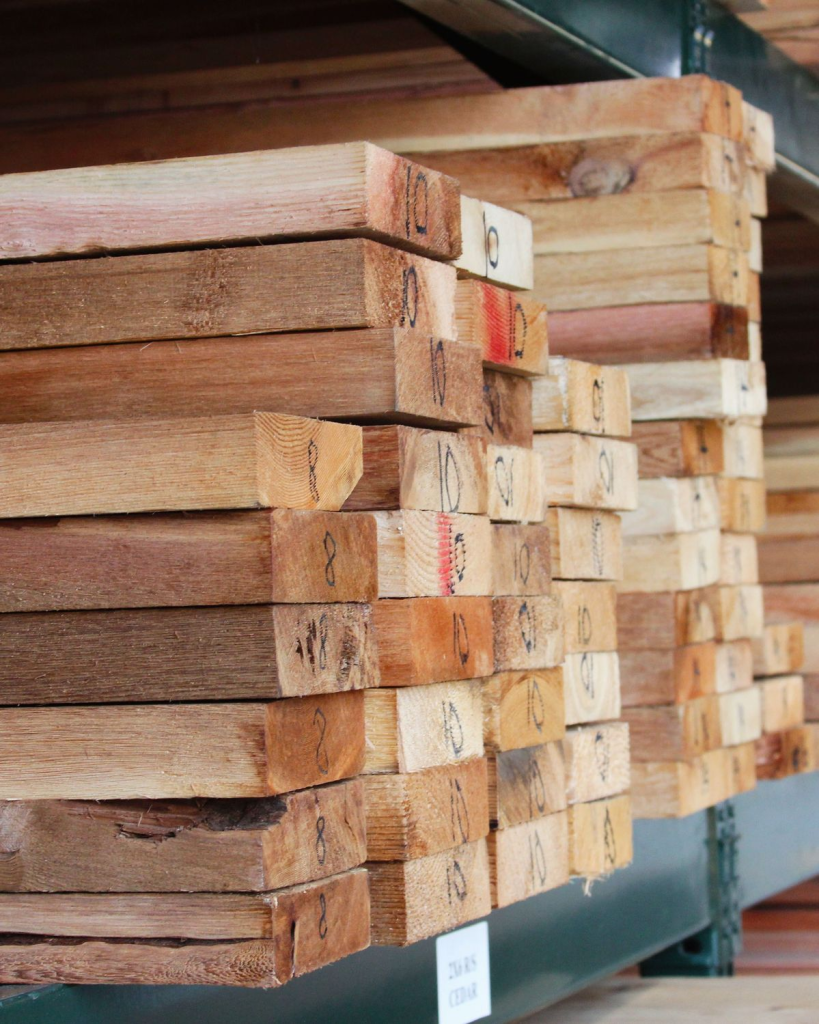
CREDIT: VALLEY FIR
Why Dimensional Lumber Sizes Surprise Even Experienced Homeowners
Dimensional lumber sizes start with a system of standardization, and that standardization is what makes modern construction even possible at scale. According to the current American Softwood Lumber Standard, effective January 2025, the standard establishes common sizes and requirements for grading and classifying softwood lumber. The USDA Wood Handbook explains that lumber width and thickness are traditionally recorded in nominal dimensions, while length is recorded in actual dimensions, and it further separates lumber into boards, dimension lumber, and timbers by nominal thickness. That means dimensional lumber sizes are not random store terminology. Dimensional lumber sizes are part of a nationally standardized language that allows mills, suppliers, contractors, designers, and inspectors to speak the same structural language.
The category definitions themselves are worth understanding because dimensional lumber sizes are easier to follow once you know the family each product belongs to. Under the standard, boards are lumber less than nominal 2 inches thick, dimension lumber runs from nominal 2 inches up to but not including nominal 5 inches thick, and timbers are nominal 5 inches or greater in the least dimension. The USDA Wood Handbook uses the same three-category logic. So when people talk about dimensional lumber sizes in ordinary residential framing, they are usually talking about 2-by material used as framing, joists, rafters, studs, or planks, even though dimensional lumber sizes also intersect with 1-by boards and heavier timber products around the edges of many projects.
That standardization is a big part of why dimensional lumber sizes feel so ordinary now. But historically, dimensional lumber sizes were not always this predictable. ALSC’s history says the first efforts to standardize lumber began in 1922, and the first American Lumber Standard followed in 1924. SFPA’s industry explanation for why a 2×4 is not actually 2×4 adds helpful context: in the 1800s there were no uniform size standards, which made building inconsistent and difficult. Once the industry and regulators pushed toward standardization, dimensional lumber sizes became more reliable, more interchangeable, and far more useful in everyday construction. In other words, modern dimensional lumber sizes exist because chaos was a terrible building system.
For homeowners, the practical beauty of dimensional lumber sizes is consistency. When Chris Chapman’s team opens a wall, builds a partition, frames a basement, or ties a new addition into an existing structure, dimensional lumber sizes help the crew estimate materials, stage labor, coordinate other trades, and keep the project aligned with inspection expectations. MGS describes its own work around high-end remodeling, additions, and design-build collaboration, and that process only works efficiently when the structural materials come with predictable dimensional rules. Builders can absolutely solve one-off field problems, but standard dimensional lumber sizes are what allow those solutions to be repeatable instead of improvised every single day.
Another subtle point homeowners miss is that dimensional lumber sizes are not just about shopping. Dimensional lumber sizes are also about how loads move through a building. The American Wood Council’s span tables are based on species, grade, spacing, design values, support conditions, and assumed structural behavior. So when a contractor chooses between 2×8, 2×10, and 2×12 framing, the choice is not aesthetic. Dimensional lumber sizes influence stiffness, deflection, allowable span, and ultimately how safe and comfortable the finished structure feels over time. That is why dimensional lumber sizes matter long before drywall goes up and long after paint has dried.
What Dimensional Lumber Sizes Really Mean At The Lumberyard
Now we get to the part that confuses almost everybody: nominal size versus actual size. Dimensional lumber sizes are sold by nominal size, and dimensional lumber sizes are measured in actual size, and those two things are not the same. Federal definitions in the eCFR say nominal size is the size by which softwood lumber is known and sold in the marketplace, and that it differs from actual size because it is based on the board when it is first cut from the log before drying and planing. The same source defines planing as smoothing the wood to make it a uniform size. Put simply, dimensional lumber sizes begin as rougher, fuller pieces, and dimensional lumber sizes end up smaller after processing.
SFPA explains the process in very plain language. Freshly sawn lumber is close to its rough-cut size when it is green and full of moisture, then kiln drying removes moisture and causes shrinkage, and planing smooths the surfaces for consistency. By the time that familiar 2×4 is ready for use, SFPA says it measures about 1-1/2 inches by 3-1/2 inches. That is the real heart of dimensional lumber sizes. Dimensional lumber sizes are part name, part manufacturing history, and part finished performance standard. Once you understand that, the whole system stops feeling deceptive and starts feeling logical.
Here are the dimensional lumber sizes homeowners run into most often in dry, dressed stock. A nominal 1×4 is typically 3/4 inch by 3-1/2 inches. A nominal 1×6 is typically 3/4 inch by 5-1/2 inches. A nominal 2×4 is 1-1/2 inches by 3-1/2 inches. A nominal 2×6 is 1-1/2 inches by 5-1/2 inches. A nominal 2×8 is 1-1/2 inches by 7-1/4 inches. A nominal 2×10 is 1-1/2 inches by 9-1/4 inches. A nominal 2×12 is 1-1/2 inches by 11-1/4 inches. A nominal 4×4 is 3-1/2 inches by 3-1/2 inches. Those dimensional lumber sizes appear both in the American Softwood Lumber Standard tables and in SFPA sizing guidance for Southern Pine.
One nuance that deserves more attention is that dimensional lumber sizes can differ depending on whether the lumber is green or dry. The USDA Wood Handbook explains that PS 20 provides green and dry standard sizes because some boards and dimension lumber may be surfaced green or dry at the manufacturer’s option, and the standard aims for the piece surfaced green to shrink to approximately the dry size as it dries to about 15 percent moisture content. The Wood Handbook also states that dry boards and dimension lumber are defined as seasoned or dried to a maximum moisture content of 19 percent. That means dimensional lumber sizes are not just about trimming a board down. Dimensional lumber sizes are also tied to how wood behaves as a moisture-sensitive natural material.
There is another detail homeowners often get wrong: length. Dimensional lumber sizes along thickness and width are nominal-versus-actual issues, but dimensional lumber sizes in length are a different story. The USDA Wood Handbook says lumber length is recorded in actual dimensions, and SFPA’s explanation says when you buy lumber labeled 8, 10, or 12 feet long, those lengths are true to size even though thickness and width are nominal. SFPA’s specification guidance also notes that products included in lumber standards are generally specified by nominal thickness and width and by standard lengths spanning 8 feet to 20 feet in two-foot increments, while separately warning that availability still depends on actual supply. So dimensional lumber sizes can be tricky, but the length part is usually the easy part.
One of my favorite practical homeowner tips is this: when you order or review lumber paperwork, look for actual dimensions, not just nominal labels. The American Softwood Lumber Standard notes that invoices for dressed lumber of standard sizes should show the nominal size and length as well as the actual thickness and width. That is a small documentation point, but it matters. Dimensional lumber sizes become far less mysterious when the paperwork shows both the nickname and the measured dimensions, and dimensional lumber sizes become much easier to coordinate when everyone on the project is talking about the same physical numbers.
How Dimensional Lumber Sizes Show Up In Walls, Floors, Roofs, And Decks
Dimensional lumber sizes stop being abstract the moment you picture where they live in an actual house. In walls, dimensional lumber sizes usually show up as studs, plates, blocking, and headers. PS 20 explicitly notes that dimension lumber is also designated as framing, joists, planks, rafters, or studs, and WWPA identifies stud lumber as a category used in vertical applications such as load-bearing walls. In ordinary homeowner language, that means dimensional lumber sizes are the skeleton of the room you walk through every day. When dimensional lumber sizes change, the shape and performance of that skeleton change too.
That is why a 2×4 wall is not really a 4-inch wall. The stud itself in modern dry stock is 3-1/2 inches deep, not 4 inches, because dimensional lumber sizes in a nominal 2×4 translate to an actual 1-1/2 inches by 3-1/2 inches. That matters more than most homeowners realize. Dimensional lumber sizes affect rough opening layout, trim returns, pocket door assemblies, cabinet clearances, plumbing paths, and electrical box planning. The board label may feel like a casual nickname, but dimensional lumber sizes show up in hard geometry everywhere a contractor has to make new work meet existing work cleanly.
Floors and roofs are where dimensional lumber sizes start carrying more obvious structural consequences. The American Wood Council’s 2024 span tables say their allowable spans apply to nominal 2-inch framing lumber customarily used in construction and assume at least three joists or rafters, spaced no more than 24 inches on center, fully supported, and properly sheathed and nailed. That is important because dimensional lumber sizes do not have one universal span value. Dimensional lumber sizes gain or lose allowable performance based on species, grade, spacing, load, and support conditions. So a 2×10 is not simply “stronger” in a vague sense. In context, dimensional lumber sizes determine how far a member can go before deflection and stress limits say stop.
A deck example makes this easy to visualize. In AWC’s prescriptive residential deck guide, Southern Pine No. 2 joists under the guide’s assumptions can span 9 feet with 2×6 at 16 inches on center, 11 feet 10 inches with 2×8, 14 feet with 2×10, and 16 feet 6 inches with 2×12. The same guide says those joist calculations assume a 40 psf live load, 10 psf dead load, wet service conditions, and No. 2 lumber. That tells you two big truths at once. First, dimensional lumber sizes really do control how far a member can span. Second, dimensional lumber sizes never tell the whole story without load assumptions. Bigger boards usually span farther, but dimensional lumber sizes must always be read with the structural context attached.
Deck surfaces introduce another homeowner checkpoint because dimensional lumber sizes in decking do not always mirror framing stock. SFPA notes that Southern Pine standard sizing includes radius-edge decking, and its published actual sizes show the common nominal 5/4 by 6 deck board dressing to about 1 inch by 5-1/2 inches. SFPA also says Southern Pine 5/4 radius-edge decking and 2×6 decking used for walking surfaces are both rated to span up to 24 inches on center when installed perpendicular to joists, although many professionals limit 5/4 decking to 16 inches on center to reduce bounce. So dimensional lumber sizes on decks are not just a matter of thickness. Dimensional lumber sizes affect feel underfoot, appearance, fastening, and long-term stiffness.
One more practical detail deserves a permanent spot in every homeowner’s mind: grade marks. Dimensional lumber sizes tell you the piece size, but dimensional lumber sizes are only part of the story because structural lumber is also graded. SFPA’s pocket span card says each piece should be identified by the grade mark of an agency certified by ALSC’s Board of Review and manufactured in accordance with Product Standard PS 20. If you ever watch a good framing contractor select material, you will notice they are thinking about more than nominal label. Dimensional lumber sizes matter, yes, but dimensional lumber sizes live alongside grade, species, moisture condition, and intended use.
Why Dimensional Lumber Sizes Become Complicated In Remodeling Work
Remodeling is where the theory of dimensional lumber sizes becomes real-world detective work. In new construction, dimensional lumber sizes are usually predictable because the entire structure is being framed within one standard and one era. In renovation work, dimensional lumber sizes may have to connect to framing installed decades ago, in a house that has moved, settled, been repaired, or been altered more than once. Since ALSC notes that lumber standardization began in the 1920s and the USDA notes that balloon framing was common in the early part of the 20th century before platform framing took over later, it is reasonable to infer that dimensional lumber sizes can show up differently in older properties than they do in current-stock framing yards. That is one reason dimensional lumber sizes matter so much in additions, basement remodels, and wall reconfiguration work.
This is exactly where homeowners get tripped up by the phrase “we just need to frame a wall.” Dimensional lumber sizes make that sound easy, but dimensional lumber sizes become tricky when the new wall has to line up with old plaster, vintage framing, uneven subfloors, and existing mechanical runs. A contractor may have to sister framing, shim planes, straighten transitions, or rethink rough openings because dimensional lumber sizes on the shelf do not always drop seamlessly into what is already in the home. You do not need to be a carpenter to understand the underlying issue: every fraction of an inch becomes meaningful once new and old work have to meet cleanly. The reason dimensional lumber sizes matter in remodeling is that finish perfection starts with structural alignment.
Another common homeowner mistake is assuming that nominal sizes are interchangeable because the labels look similar. Dimensional lumber sizes are not interchangeable simply because the board names belong to the same family. A 2×4 is not a substitute for a 2×8 where span or load requires more capacity. A 1x board is not structural framing just because it is wood and roughly the right width. SFPA’s span-table guidance says span tables are essential for safety, code compliance, and structural integrity, and AWC’s span resources are built exactly because dimensional lumber sizes must be tied to structural assumptions to mean anything useful. If a project needs a certain member depth, dimensional lumber sizes are not a design preference. Նրանք are a performance requirement.
There is also a budgeting angle here that homeowners appreciate once they see it clearly. Dimensional lumber sizes influence material estimates, waste, labor time, fastener schedules, and downstream finish decisions. SFPA sizing guidance explicitly notes that choosing the right size can minimize waste and reduce extra cutting and shaping, and that is exactly what good contractors are trying to do in the field. If dimensional lumber sizes are misunderstood on the front end, the ripple effects are annoying and costly: reframing, order changes, revised trim details, shifted mechanical routes, and delayed finish work. If dimensional lumber sizes are understood correctly on the front end, the build feels calmer because fewer corrections are needed later.
Because MGS works in Northern Virginia, dimensional lumber sizes also sit inside a current code environment that homeowners should know exists even if they never read a code book. Virginia’s Department of Housing and Community Development says Virginia adopted the 2021 I-Codes effective January 18, 2024, and Fairfax County’s reminder says the grace period for using the 2018 Virginia code provisions expired on January 17, 2025, meaning permit applications after that point had to use the 2021 code set. That matters because dimensional lumber sizes are not chosen in a vacuum. Dimensional lumber sizes for structural work must align with the code edition and local review expectations that govern the permit.
This is why MGS’s design-build positioning matters for a homeowner. MGS says it guides clients through materials, colors, and finishes, and its own educational content emphasizes collaboration, transparency, and informed client decisions. Dimensional lumber sizes may sound too technical for a customer conversation, but dimensional lumber sizes are exactly the kind of subject a trustworthy contractor should simplify before work begins. When homeowners understand dimensional lumber sizes, they ask better questions, read estimates more intelligently, and make choices with fewer surprises. That is good for the homeowner, good for the contractor, and good for the finished project.
When Dimensional Lumber Sizes Are Not Enough On Their Own
There is a point in many projects where dimensional lumber sizes stop being the whole answer. Dimensional lumber sizes handle an enormous amount of everyday residential framing, but dimensional lumber sizes are not magic. When openings get wider, loads get heavier, or floor plans become more open, designers and builders often move into engineered wood products. The American Wood Council’s products primer says engineered wood products in the market include I-joists, trusses, glued laminated timber, and structural composite lumber such as LVL, PSL, and LSL. The USDA Wood Handbook adds that LVL is used extensively in the flanges of prefabricated I-joists and that LVL and PSL beams are used as headers and major load-carrying elements. So yes, dimensional lumber sizes are essential, but dimensional lumber sizes are only one piece of the structural toolbox.
Homeowners see this most often when they want a larger kitchen opening, a combined living area, or an addition that needs bigger uninterrupted spans. In those situations, dimensional lumber sizes may still appear as built-up members or supporting framing, but dimensional lumber sizes are often supplemented or replaced by engineered elements selected for higher, more predictable design values. This is not overengineering for the sake of drama. It is the normal logic of load paths. Dimensional lumber sizes are fantastic within their designed role, yet dimensional lumber sizes must sometimes hand the baton to LVL, glulam, I-joists, or other engineered members when the architecture asks more of the structure.
The same evolution shows up in modern framing overall. The USDA notes that since the latter part of the 20th century, platform framing has dominated the housing market and that prefabricated roof and floor trusses or I-joists are replacing some piece-by-piece on-site construction with dimension lumber. That observation does not diminish dimensional lumber sizes. It actually puts dimensional lumber sizes in context. Dimensional lumber sizes remain foundational, but dimensional lumber sizes now coexist with factory-made components that improve efficiency, consistency, and span performance in many applications. A good contractor knows when dimensional lumber sizes are enough and when dimensional lumber sizes should be paired with something more specialized.
There is also an approval piece homeowners should understand. AWC’s prescriptive deck guide says decking that does not meet the guide’s default requirements may still be used when approved by the authority having jurisdiction, provided equivalent connections are assumed. That idea applies more broadly to construction thinking. Dimensional lumber sizes are part of a code-recognized system, but substitutions, special products, and nonstandard assemblies often require documentation, engineering, manufacturer data, or local approval. In other words, dimensional lumber sizes are the beginning of a compliant conversation, not the end of it.
That is why experienced contractors slow clients down at exactly the right moments. A homeowner may look at dimensional lumber sizes and think the job is simple because wood is wood and framing is framing. A contractor sees dimensional lumber sizes and immediately starts asking better questions: What is the species and grade? What is the span? Is this dry or wet service? Does the local code path allow this? Are we tying into older framing? Is this bearing? Do we need engineering? Those are not complications for the sake of complication. They are the disciplined questions that keep dimensional lumber sizes working in your favor instead of against you.
What Dimensional Lumber Sizes Mean For Your Next Project With MGS
If you strip this whole subject down to the homeowner essentials, the lesson is simple. Dimensional lumber sizes are not trivia. Dimensional lumber sizes are one of the hidden systems behind accurate estimates, smoother scheduling, stronger framing, and better finished spaces. Understanding dimensional lumber sizes helps you read a proposal without guessing, picture a wall before it is closed up, appreciate why one beam costs more than another, and understand why a responsible contractor does not substitute framing members casually. When dimensional lumber sizes make sense to you, the construction process stops feeling like specialized jargon and starts feeling like informed decision-making.
For MGS Contracting Services, this is exactly the kind of education that builds trust. MGS presents itself as a family-driven, veteran-founded remodeling company that values craftsmanship, communication, and guided design-build service, and its own content repeatedly frames remodeling as collaboration. Dimensional lumber sizes may seem like a niche topic, but dimensional lumber sizes are the kind of topic that separates surface-level remodeling conversations from real project understanding. Chris Chapman’s team is not there just to install finishes. They are there to translate structural reality into a result that looks beautiful and performs well.
So if you are planning a basement finish, a home addition, a structural rework, a deck refresh, or a whole-home remodel, keep this in mind: dimensional lumber sizes affect more than the framing crew. Dimensional lumber sizes affect everyone who follows the framing crew, from electricians and plumbers to drywall installers and trim carpenters. Dimensional lumber sizes also affect how your finished home feels, whether that means a stiffer floor, a cleaner doorway transition, a better-fitting cabinet wall, or a deck that feels more solid and less springy. The more clearly dimensional lumber sizes are handled at the beginning, the happier you tend to be at the end.
And that brings us back to the original question: why is your 2×4 not actually 2×4, and why should you care? You should care because dimensional lumber sizes are the quiet math behind remodeling reality. Dimensional lumber sizes explain why a board label and a tape measure disagree, why structural choices cannot be guessed, why older homes sometimes fight modern framing, why deck boards and joists are not the same thing, and why engineered members sometimes replace standard framing stock. Once dimensional lumber sizes are understood, the whole construction conversation gets clearer. That clarity is exactly what homeowners deserve, and exactly what a good contractor should provide before the first cut is made.
If you are thinking about remodeling in Leesburg, Ashburn, Sterling, Herndon, Reston, Vienna, Great Falls, or elsewhere in Loudoun and Fairfax Counties, the smart move is to bring your questions forward early. Dimensional lumber sizes are easier to solve on paper than after demolition. Dimensional lumber sizes are easier to budget for before materials are ordered. Dimensional lumber sizes are easier to coordinate when your contractor, designer, and homeowner are aligned from the start. That is the value of planning with a team that treats remodeling as both craftsmanship and communication.