
It’s a frigid January morning in Virginia, sleeting sideways, and you find yourself bundled up scraping ice off your windshield, all because your garage is now a “bonus room.” The car that used to sleep in a cozy garage is out in the elements, and suddenly that extra living space doesn’t feel so worth it. You imagined a perfect game room or home gym, but reality is hitting as your fingers go numb on the ice scraper. Garage conversions seem like “found” square footage at first, yet they often trade away a home’s most useful space and create new problems with comfort, storage, and even resale value. Garage Conversion
At MGS Contracting Services, our owner and contractor Chris Chapman has seen this scenario play out. He helps Virginia homeowners plan renovations that feel great now and still make sense later. And when we talk to homeowners and other contractors about the renovations people regret the most, garage conversions top the list. In this article, we’ll unpack why converting a garage can backfire, and explore smarter ways to add space without those future regrets. Garage Conversion
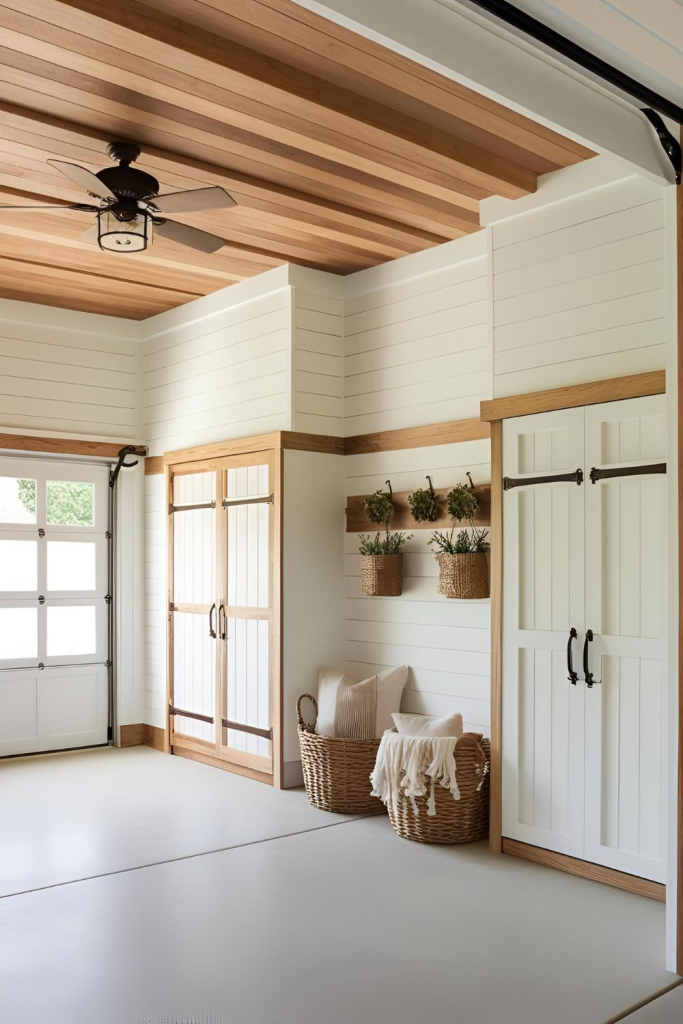
CREDIT: PINTEREST
Section 1: What a Garage Conversion Really Includes (It’s More Than Paint & Flooring)
Converting a garage isn’t as simple as slapping up some drywall and flooring. It’s essentially a mini home addition within an existing shell. To make a former garage feel like part of your house, you typically have to undertake a full build-out. Here’s what a true garage conversion project often involves:
- Insulation and Drywall: Most garages have little to no insulation. You’ll need to insulate walls and the ceiling to meet indoor living standards. Often the existing drywall (if any) isn’t sufficient, and shared walls may need fire-rated drywall per code if the garage is attached to the house. The concrete slab might even require insulation or a subfloor so your feet aren’t freezing. Garage Conversion
Garage Conversion - Electrical & Lighting: Garages usually have a couple of outlets and a bulb in the center. A conversion means installing proper wiring for many outlets (to code), overhead lights or recessed lighting, and perhaps hardwired smoke detectors. In many cases, a new circuit or an upgrade to your electrical panel is needed to handle the additional load. Garage Conversion
Garage Conversion - Heating & Cooling (HVAC): To be comfortable year-round, the new room must be heated and cooled. This could mean extending your home’s HVAC ducts into the space or adding a dedicated system like a ductless mini-split. Either way, you can’t rely on a space heater or fan if you want true livable space, it needs a real HVAC solution. Garage Conversion
Garage Conversion - New Windows or Doors: Living space requires adequate egress (for fire safety) and probably some natural light. If the garage doesn’t have windows, you’ll likely add one or two. The big garage door will be removed and that opening framed in, possibly for a new wall with a window or a patio door. The exterior has to be closed up and finished to look like part of the house. Also, you might need to add or widen an interior door to connect the garage-turned-room to the main house. Garage Conversion
Garage Conversion - Flooring & Moisture Control: That oil-stained concrete floor isn’t built for comfort. Many conversions either pour a leveling layer or build a wood subfloor over the slab, often with insulation or vapor barriers. This keeps the new floors warmer and prevents moisture from seeping up. You’ll then add your carpet, hardwood, or other finished flooring on top. Skipping these steps could leave you with cold feet and potential mold issues later. Garage Conversion
Garage Conversion - Permits & Inspections: Since you’re altering how the space is used (from storage/parking to living area), you almost always need a building permit. Expect to have plans drawn and multiple inspections (framing, electrical, insulation, drywall, etc.). Navigating this process is part of the conversion project, and it ensures the room is safe and up to code. Garage Conversion
Garage Conversion
Reality Check: If you want the new room to feel like the rest of your home, you’re basically building a small addition, inside your existing walls. In other words, a high-quality garage conversion involves nearly all the steps (and costs) of adding a brand-new room from scratch, just not expanding the footprint.
Section 2: Why Homeowners Regret Garage Conversions (The Big 4 Reasons) Garage Conversion
Converting a garage can solve one problem (more living space) but create several new ones. Here are the four biggest areas where homeowners often experience regret after turning their garage into living space:
1. Loss of Functionality, The Pain Shows Up Later Garage Conversion
When you convert a garage, you gain a room but you lose a garage, and that trade-off can hurt more than people realize. The missing functionality tends to sting in everyday life: Garage Conversion
- No Covered Parking: In real life, having a garage for your vehicles is a huge perk. Without it, winter snow and ice removal becomes a daily chore, and in Virginia’s hot summers your car bakes in the sun. During heavy rainstorms or hail, there’s no sheltered spot to unload groceries or keep the car safe. Homeowners often don’t appreciate the convenience of covered parking until it’s gone, like when you’re sprinting through a downpour with an armful of groceries because there’s no garage to duck into.
Garage Conversion - Storage Domino Effect: Garages are storage workhorses. Tools, lawn equipment, holiday decorations, sports gear, bicycles, all those things lived in your garage for a reason. Take away the garage, and you have to find new homes for all that stuff. Maybe you cram the mud mower and ladder into a shed (if you buy one), shove boxes into closets or a spare room, or leave bikes on the patio. Soon your patio or basement gets cluttered, the shed overflows, and you find yourself feeling disorganized. The lack of an easily accessible storage area can make your whole home feel more cramped and messy.
Garage Conversion - Lifestyle Impact: Think about how your family actually uses the garage. It might be where the kids drop muddy boots or sports cleats, where the dog’s towel lives for rainy-day wipe-downs, or where you set up a workbench for DIY projects. Without a garage, those functions need to move elsewhere. Muddy boots and dripping umbrellas might now come directly into your hallway, or you lose your hobby workspace. In Virginia’s spring pollen season, for example, a garage is a great buffer, you could leave that yellow pollen-covered yard equipment in the garage. If it’s now a bedroom or office, you definitely can’t do that, so the pollen (or mud, or sawdust from a project) ends up coming inside. Losing that flex utility zone is a bigger lifestyle change than people anticipate. Garage Conversion
Garage Conversion
In short, a garage offers everyday practical benefits, from parking comfort to storage to a transitional space for dirty/wet items, and its loss is felt constantly. Many homeowners regret giving up those conveniences. As one real estate writer noted, you might love your new home gym in the converted garage, but a future buyer (or you, a year later) is more likely to think about how nice it would be to have a dry place for an armload of groceries on a rainy day. The new room may be nice, but the absence of the garage is noticed daily.
2. Comfort & Livability Issues, Garages Weren’t Built for Cozy Garage Conversion
Another common regret comes after the excitement of the new space wears off and you start using it through all seasons. Many converted garages just aren’t as comfortable or inviting as the rest of the house, unless you truly went above and beyond in the construction. The reasons lie in how garages are originally built:
- Temperature Fluctuations & Drafts: If the conversion wasn’t insulated to the hilt, you’ll feel it. Garages often have thin walls and uninsulated doors that let in drafts. The concrete slab can make the floor icy cold in winter. Even with new flooring, that slab might radiate cold (or humidity in summer) if not properly insulated or sealed. So you end up with a room that’s chilly in winter, hot in summer, or gets drafty near the floor. Sitting in that room might never feel as comfortable as your living room unless the insulation and heating/cooling were done flawlessly. Garage Conversion
Garage Conversion - Humidity & Mustiness: In Virginia’s humid climate, an improperly converted garage can develop moisture issues. Garages are not typically built with the same moisture barriers as living spaces. Without good sealing, moisture can seep through the slab or walls. This can lead to a musty smell or even mold/mildew over time, definitely not the “cozy bonus room” you wanted. Proper vapor barriers and possibly dehumidification are a must, and if they were skipped, the air quality in the room suffers.
Garage Conversion - Noise Problems: Garages often have minimal insulation not just for heat, but also for sound. If your garage walls face the street or a noisy neighbor, you might find the new bedroom or office hears every passing car or lawnmower. Likewise, sounds from inside can easily leak out. Without adding acoustic insulation, a converted garage can be noticeably louder or less private than other rooms. Many people regret not investing in soundproofing when their new home office picks up all the street noise.
Garage Conversion - Wear on Finishes: Those comfort issues can also affect the materials in the room. For example, if the slab wasn’t properly sealed, moisture can warp hardwood floors or cause adhesives in carpet tiles to loosen. High humidity might make paint peel or drywall joint compound stay soft. Furniture in that room might suffer (think rust on metal legs or warping wood) if the climate control isn’t consistent. Homeowners might notice their nice new room looking aged or damaged sooner than expected because it’s fighting the residual effects of being a former garage. Garage Conversion
Garage Conversion
The bottom line: If you don’t truly rebuild the garage space to indoor standards, it may never feel quite like a true interior room. Many people cut corners to save money, then regret that their converted garage is always 5-10 degrees more uncomfortable or just feels “off” compared to the rest of the house. Garages weren’t meant to be lived in without serious upgrades, so a half-baked conversion can be a source of ongoing annoyance. Garage Conversion
3. Surprise Costs & Code Hurdles, The “Budget Creep” Culprit Garage Conversion
Budget surprises are a huge source of garage conversion regret. What starts as “let’s cheaply turn the garage into a room” can snowball into a much more expensive project. Homeowners often underestimate the true cost and complexity, leading to midway sticker shock or unfinished work. Here’s how the budget (and stress) can creep up: Garage Conversion
- Hidden Project Costs: It’s easy to overlook many requirements of a proper conversion. For instance, your current HVAC might not be sized for an extra room, you could need to upgrade the system or add a new one (like a $3,000+ mini-split unit). Your electrical panel might be near capacity; adding circuits for the new room could mean a panel upgrade or subpanel. If you want plumbing in the converted space (say, for a bathroom or wet bar), digging into the slab to run drain lines is a significant cost. Even seemingly minor things add up, insulation, drywall, new windows, flooring, paint, etc., all cost money and labor. Many homeowners budget, say, $10k for a DIY conversion and then discover it’s realistically two to five times that cost for a safe, comfortable result. In fact, professional garage conversions typically range from around $20,000 up to $50,000 depending on finishes and whether plumbing is added. That can be a shock if you were comparing it to, say, a $5,000 kitchen makeover or other simpler project.
Garage Conversion - Permits and Code Compliance: Getting permits means your conversion has to meet current building codes. This is good for safety but can introduce “unexpected” requirements. You might need to add a step or ramp if the garage floor is lower than the house, to meet code for floor height differences. You’ll likely need an egress window or exterior door of a certain size if the room can be used as a bedroom (for fire escape). The wall where the garage door was might need extra structural support or a new foundation curb. If your local code requires a certain insulation R-value or energy efficiency standard, you can’t skip it without failing inspection. Each of these requirements can mean more materials and labor. Many homeowners admit later, “I didn’t know what I didn’t know.” The project grows as they learn about each code item that needs fixing. Garage Conversion
Garage Conversion - “DIY” and Unpermitted Work Risks: Trying to save money by skipping the permit or doing it all yourself can lead to massive regret. Unpermitted garage conversions can lead to hefty fines and even forced undoing of the work if discovered. There’s also the risk of insurance denying claims if an accident (like an electrical fire) occurs in an unpermitted space. Down the line, if you try to sell, an unpermitted conversion is a red flag that can kill deals or force you to negotiate the price down. What felt like saving money upfront can morph into bigger expenses later, either to bring the room up to code or to literally tear it out. We’ve heard the horror stories of homeowners having to yank out wiring and walls to get back in compliance, a nightmare scenario of regret. Garage Conversion
Garage Conversion
All these factors contribute to budget overshoot. The project that was supposed to be quick and cheap turns into a long, stress-filled renovation that still might not be fully code-compliant. The regret here isn’t necessarily that the new room isn’t nice, it’s that it cost way more (and took way more effort) than expected. Always plan a contingency budget for surprises. As remodeling experts often advise: add at least 20% to your cost estimate for the unforeseen on a project like this. Garage Conversion
4. Resale Value & Buyer Appeal, “Garages Sell Homes” Garage Conversion
Even if you adore your new converted space, you have to consider resale value. Many homeowners regret garage conversions when it comes time to sell (or even just refinance) because a missing garage can make your home less appealing to buyers and appraisers. Here’s why: Garage Conversion
- Buyers Want Garages: A lot of home buyers actively filter for houses with garages in their home search. Especially in suburban and rural parts of Virginia, a garage is seen as a must-have for storage and parking. Statistics back this up: 92% of people shopping for new single-family homes wanted a house with a two-car garage or larger, according to a survey by the National Association of Home Builders. It’s ingrained in the American lifestyle to have a garage. If your home is the one in the neighborhood that lacks a garage, it’s likely at a disadvantage. In fact, since 2010 the proportion of new homes built without garages has been very low (only around 7% as of a few years ago), meaning most homeowners and builders consider a garage essential. So removing yours can shrink your pool of potential buyers.
Garage Conversion - Perceived Lower Value: Even if you gained square footage in the conversion, buyers might not value it as highly as you do. Many see a conversion and think “I have to sacrifice a garage to get this extra room.” Real estate agents often note that such conversions can make a home feel smaller or less functional overall, which can lower the perceived value. Unless garage space is truly abundant in your area (rare), most buyers see the lack of a garage as a compromise rather than an upgrade. One financial analysis found that garage-to-living-space conversions only return about 80% of their cost in added home value on average. So if you spent $30k on it, your home’s value might only go up by $24k, meaning you lost money compared to just keeping the garage. And that 80% ROI is only if done well and legally, a poorly done conversion could actually hurt your home’s value. Garage Conversion
Garage Conversion - Appraisal and Financing Issues: If the garage conversion wasn’t properly permitted and finished to code, it can become a nightmare in a sale. Appraisers may not count the converted room as official square footage if it doesn’t meet standards (for example, if it doesn’t have proper heating or egress). They will, however, note the lack of a garage, which could lower the appraisal compared to similar homes with garages. Even more troubling, lenders and insurance companies might balk. Banks have been known to refuse mortgages on homes with unpermitted garage conversions, because it’s a potential liability. That means your future buyer might not get financing unless you reconvert the space back or do expensive after-the-fact permitting (if that’s even possible). This significantly limits your buyer pool and can force you to accept a lower price. We’ve also seen buyers walk away because they don’t want the hassle of a house without a true garage or with unpermitted work. Garage Conversion
Garage Conversion
Regret Meter: Most garage conversion regrets aren’t about disliking the new den or guest suite that you created, it’s about realizing what you sacrificed to get it. The lost functionality, comfort issues, surprise costs, and resale risks cast a long shadow. As we often say, most regrets aren’t about the new room itself… they’re about what you gave up (a garage!) to have it. Garage Conversion
Section 3: The Checklist Before You Convert (If You’re Still Considering It) Garage Conversion
If you’re still on the fence about converting your garage, it’s time for a serious pause-and-assess. Before you grab the sledgehammer, run through this checklist of questions. Your answers will clarify whether a garage conversion truly makes sense or if another solution would be better. Garage Conversion
- What problem are you trying to solve?, Be specific about what you need. Are you looking for a full-time home office? An occasional guest room? A playroom for the kids? A suite for multi-generational living (in-laws, adult children)? Identifying the core purpose of the space is crucial. Sometimes, there are other ways to achieve that goal without losing the garage (we’ll cover alternatives soon). For example, if it’s mostly storage you need, a garage conversion is a very expensive storage solution, maybe better to invest in organization or a shed instead. Garage Conversion
Garage Conversion - How often will you use this new space?, Is it an everyday necessity or a once-in-a-while bonus room? If it’s daily (like a bedroom or your work-from-home office), comfort will be critical and the conversion needs to be top-notch. If it’s only occasional (like a guest room for holiday visitors or a home gym you use twice a week), think about whether it’s worth giving up prime real estate (the garage) 365 days a year. Sometimes a dual-purpose room inside the house can meet an occasional need without a full conversion. Garage Conversion
- Where will everything currently in the garage go?, Make an inventory of your garage’s contents now. Every box of seasonal decor, every tool, the lawn mower, the bikes, the extra freezer, list it out. If you delete your garage, you must have a plan for these items. Will you build or buy a shed for the lawn gear? Install attic storage? Cram things into a spare bedroom or rent a storage unit (added ongoing cost!)? Don’t assume “Oh, we’ll figure out storage later.” That’s the top regret we hear. If you can’t immediately answer where those items will live in a garage-less future, you’re not ready to convert.
- What’s normal for your neighborhood?, Look at the homes around you. Do most have garages? In many Virginia suburbs, for instance, a garage (often two-car) is the standard. If you remove yours, your home could become an outlier. This matters for resale and even for how your home is perceived. As one expert put it, if every other house on the street has a spacious garage, you might want to shut the door on the conversion idea altogether. On the other hand, if you’re in an urban historic district where few homes have garages, a conversion might be more acceptable. Know your market.
- Is your garage attached or detached?, An attached garage is directly connected to your home (usually with an internal door) and visible as part of the facade. A detached garage sits separate from the house. This distinction can influence the outcome. Attached garage conversions blend into the house but also permanently alter your main structure (and its curb appeal). Detached garages can sometimes be converted into a small standalone cottage or studio without messing with the main house flow, essentially creating an ADU (accessory dwelling unit). However, detached conversions often require adding plumbing or stronger HVAC since they’re isolated, and local zoning might treat it differently (for example, parking requirements or utility hookups). Neither scenario automatically makes conversion “easy,” but sometimes a detached garage conversion, done properly, can function like a little guest house or office without impacting the main house. Just go in with eyes open about the pros/cons of each layout.
- Will you obtain permits and get inspections?, The only correct answer here is “Yes.” If your plan was to do this under the radar to save time or money, please rethink. An unpermitted conversion might seem fine now, but it can become a major regret. Aside from legal issues (fines or forced removal if found out), it’s about safety and future value. Work that hasn’t been inspected could have hidden flaws (faulty wiring, insufficient structure) that put your family at risk. And when you sell, you could be in a world of hurt (buyers and banks do not like unpermitted additions). So budget for the permit process and do it right. It’s worth it for peace of mind.
Chris Chapman’s Pro Tip: If your garage conversion plan involves telling yourself, “We’ll figure out storage later,” that’s the biggest red flag. Lack of storage planning is the #1 source of regret in these projects. Always solve the storage question before you start swinging a hammer.
By carefully answering these questions, you might realize that a garage conversion isn’t the best route, or if it still is, you’ll at least go in prepared. Next, let’s explore those alternative ways to gain space without losing your garage, as well as how to do a conversion correctly if you decide to proceed.
Section 4: What to Do Instead, Smarter Ways to Gain Space Without Losing Your Garage
Let’s say that checklist gave you pause. Maybe a garage conversion isn’t the slam-dunk you thought. The good news: there are several other ways to get the extra space or functionality you need, without giving up the benefits of your garage. Here are some garage conversion alternatives to consider:
Option A: Reclaim “Hidden” Space Inside Your Home
Before building new space (or repurposing the garage), make sure you’re fully using the square footage you already have under your existing roof. Many homes have areas that can be reimagined for better use:
- Repurpose an Underused Room: Do you have a formal dining room that’s only used twice a year? Or a living room that no one actually lives in? Consider converting it into something you’ll use daily. For example, a seldom-used dining room could become a much-needed home office by adding doors or built-in shelving. A formal living room can be turned into a playroom or media room. This way, you gain a functional space and keep the garage too.
- Optimize a Large Room: If you have a generously sized bedroom or family room, you might be able to carve out a corner for a small office or homework area. For instance, a master bedroom could have a reading nook/office behind a room divider. A basement can be sectioned into a rec room plus a guest sleeping area. Think in terms of multi-purpose use of big spaces.
- Finish Your Basement or Attic (if available): In Virginia, many homes have basements or even large attics. Finishing a basement is often a better investment than converting a garage, because you’re adding true living space without altering the exterior. A basement can become an office, home theater, or guest suite. Likewise, an unfinished walk-up attic could potentially be converted into a cozy loft room. These projects still cost money, but they preserve the garage and typically add more value for resale.
- Utilize Nooks and Crannies: Look around, is there a wide hallway, an oversized foyer, or a loft area at the top of the stairs? Sometimes a small renovation can turn these into usable space. For example, a large foyer could get custom cabinetry for storage and a desk (instant mini-office). A wide upstairs landing could house a homework station. Before sacrificing your garage, maximize every inch inside.
Why this works: Using existing interior space is usually less complicated than converting a garage or building new. The area is already heated, cooled, and wired, so you’re mostly just reconfiguring or refinishing. No need for new foundations or roofing, you’re not fundamentally changing the structure. It often costs less than a garage conversion and won’t hurt your home’s resale appeal (since you’re not removing anything, just improving what’s there). Plus, interior renovations can blend seamlessly with your home’s flow, whereas a converted garage sometimes feels a bit “separate.” Always ask, “Can we solve this need within our current layout?” before you look to the garage.
Option B: Make the Garage Work Harder (Upgrade Instead of Convert)
Maybe you do really need more usable space, but not necessarily heated/finished living space. In that case, consider upgrading your existing garage to serve dual purposes, rather than eliminating it. There are fantastic garage enhancement projects that can make that area far more useful and organized:
- Organization & Storage Systems: Treat your garage like the extension of your home that it is. Install storage solutions such as slatwall panels or pegboards with hooks for hanging tools, bikes, and sporting goods. Add heavy-duty garage cabinets for paints, gear, and seasonal items. Overhead storage racks can hold bins of holiday decorations or out-of-season items up near the ceiling. With everything off the floor and in its place, you might free up enough area to use part of the garage for a hobby or gym while still parking a car.
- Create a Mudroom Corner: If your garage connects to the house via a door, transform that entry area into a mini mudroom. Put a bench with shoe storage, some wall hooks for coats and backpacks, and maybe shelving for hats and gloves. This way, the garage partially serves as a drop zone for the family. It keeps dirt and clutter out of the main house but doesn’t take away your parking. A nicely organized garage entry can make your whole home more efficient.
- Improve Comfort in the Garage: While stopping short of a full conversion, you can make the garage more pleasant to work in. For example, upgrade the lighting from a single bulb to bright LED shop lights. Add a few extra electrical outlets for convenience (charging tools or plugging in an extra fridge). You might even insulate the garage door or walls to take the edge off extreme temperatures, and use a portable space heater or fan when you’re working on projects out there. Epoxy-coating the concrete floor or adding a workshop mat can make it cleaner and safer. These upgrades don’t turn it into a living room, but they can turn your garage into a more functional workshop/hobby area while still storing cars and gear.
- Partition the Space: In some cases, homeowners choose a partial conversion, for instance, enclosing a small portion of the garage as conditioned storage or a tiny office, while keeping the rest as garage. This can be tricky (needs careful planning to not look odd), but it’s an option. A simpler approach is using furniture or screens to section off a corner of the garage for a treadmill or a desk. It’s not fancy, but it’s cost-effective and reversible. The key is you’re still preserving the essence of a garage.
Result: By beefing up your garage’s organization and features, you might achieve what you need (be it more storage, a hobby workshop, or a tidy mudroom) without losing the parking and general utility of the garage. Many homeowners find that after a good garage makeover, the space feels almost like an extension of the home anyway. And when it’s time to sell, a well-organized garage is actually a selling point (buyers love seeing ample storage), whereas a converted garage can raise questions. You’ll have the best of both worlds: a garage that’s maximally useful.
Option C: Build a Modest Addition or “Bump-Out”
If you truly need more living space (an extra bedroom, a bigger family room, etc.) and no existing area can serve that purpose, consider a small home addition instead of repurposing the garage. Yes, an addition typically costs more than a garage conversion, but it can be a smarter long-term investment. Here’s why:
- Purpose-Built Space: With an addition, you’re constructing a new room designed exactly for its intended use. Want a large home office with lots of windows? Or a ground-floor bedroom suite? You can tailor the addition’s size, shape, and layout to that need. It will have a proper foundation, insulation in all walls, the right ceiling height, etc. from the start, no compromises. The comfort and quality of the space will be equivalent to the rest of your home (because it is part of your home), often superior to what a garage conversion could achieve.
- Keep the Garage: This is key, you’re adding space without subtracting anything. You get to keep your garage for parking and storage, so none of the functionality loss from earlier happens. Your cars stay cozy and your boxes stay put, while you also gain a new room elsewhere.
- Better Resale Value: Adding square footage (while keeping the garage) usually increases your home’s value more reliably. An addition is seen as a true enhancement, it’s more living area plus all original features remain. Appraisers will count the new square footage fully, and you still have a garage on the listing which buyers want. It’s generally a better ROI. Even though the upfront cost is higher than a conversion, you’re likely to recoup more of that cost because you’re not losing an existing asset (the garage). Think of it this way: House with 3 beds, 2 baths, and a garage becomes house with 4 beds, 3 baths, and a garage, that’s a bump in value. Versus converting the garage: house might still say 3 beds, 2 baths, but no garage, value might not move much, or could even drop in buyer perception.
- Bump-Outs for Less Cost: If a full addition (with foundation, etc.) is too large a project, consider a bump-out. A bump-out is a small extension of an existing room. For example, bump out the back wall of your kitchen by 6 feet to create a breakfast nook, or extend a bedroom to add a bigger closet or small sitting area. These usually don’t cost as much as adding a whole new room because you’re not adding plumbing-heavy spaces like bathrooms or an entirely separate HVAC zone. They can often be done on piers or cantilevers without a full foundation (depending on local code). A bump-out gives you a little extra space where you need it, alleviating the pressure to convert the garage for space. It’s a middle ground: you get maybe 50-100 sq ft more in a key area, and that relieves your need to repurpose the garage.
Setting Expectations: A quality addition will indeed cost more than a garage conversion. You have to pour foundation, frame walls, extend roofing, etc. However, you also avoid a lot of tricky retrofitting issues that conversions face. The timeline might be longer, and you’ll need a good contractor (hello, MGS Contracting) to handle design and construction. But in return, you get exactly what you want, and your home’s integrity and functionality stay intact. Many homeowners who initially thought of a garage conversion are much happier when they choose to invest in a small addition instead. They end up with a home that truly meets their needs and is easier to sell down the road. It’s worth pricing out both options, you may find the addition is a smarter splurge that you won’t regret.
Option D: Convert a Different Space (Sunroom, Porch, or Bonus Room), The Right Way
Not all extra space has to come from the garage. Look at other unfinished or semi-finished areas of your property:
- Enclose a Porch or Sunroom: Do you have a covered porch or a three-season sunroom? Finishing that space can be easier than the garage, because it’s often designed for conversion. You’ll need to add insulation, better windows, and possibly beef up the framing, but you’re not taking away a storage area used for critical functions. For example, turning a screened porch into a year-round sunroom or home office can be a fantastic upgrade. Just be sure to do it the right way: you may need to pour a proper slab or footings if the porch floor isn’t sufficient, and definitely insulate and add HVAC. But at the end, you gain living space and still have your garage untouched.
- Finish an Attached Bonus Room: In some homes, there’s a room over the garage (bonus room) or a side room that’s unfinished or only semi-finished. Focus on those before the garage. They might need better insulation or ductwork to be fully comfortable. For instance, an above-garage bonus room might be too hot in summer, investing in better insulation or a dedicated AC can make it a usable bedroom or office, solving your space need without converting the garage. Or perhaps a storage room or enclosed breezeway could be finished out. Always ask: is there a space besides the garage that can be refined or repurposed?
- Improve Existing “Flex” Spaces: Sometimes the answer is not creating a new room, but making an existing space more flexible. Maybe you have a family room that could double as guest space with a sofa bed and some creative furniture arrangement. Or a large bedroom for two kids that could be reconfigured so it also has a small play area, eliminating the need for a separate playroom. Built-in furniture (like a murphy bed or window seat with storage) can dramatically increase how a room functions. By investing in these kinds of upgrades, you might achieve your goals within the house’s current footprint.
The key for Option D is leveraging spaces that aren’t fully utilized year-round. A lot of homes have a sunroom that’s too cold in winter or an enclosed porch that’s basically a storage catch-all. Those are prime candidates to convert to living space properly. Compared to a garage conversion, converting a porch or existing sunroom might involve fewer complications with wiring and foundation (depending on how it was built). Just remember: even if it’s “just a porch,” once you make it interior space, you must treat it like an interior. That means insulation, sealing, permits, the works. Do it right, and you’ll have a lovely new space and zero regret because you didn’t lose anything functional.
Option E: Build or Buy a Detached Shed or Studio (Backyard Flex Space)
One increasingly popular solution, especially for home offices, art studios, or home gyms, is to create a separate small structure on your property. Think of it as a “shed” in name, but more like a tiny house or studio in practice:
- Modern Shed Offices/Studios: There are companies now that sell pre-fabricated studio sheds, or you can custom-build one. These range from a basic 10×12 insulated shed with power, to elaborate tiny cottages with windows and lofts. Placing a small structure in your backyard (if you have room and it’s allowed by local zoning) can give you an entirely new space, for work, guests, hobbies, you name it. And you’re not touching the garage at all. For example, if you need a quiet office for remote work, a 120 sq. ft. studio in the yard can be perfect. Or a “she-shed/he-shed” for crafting, a mini yoga studio, etc.
- Keeps Home & Garage Intact: A detached flex space means your main house’s layout and your garage remain as is. No sacrifice. The garage continues housing your car and gear, your home inside isn’t disrupted by construction, and you just gain a bonus space on the property. If done nicely, it can even add some property value (though perhaps not as much as an attached addition, but it adds lifestyle value for sure).
- Considerations: With a detached space, you will need to run electricity to it (so you have lights, outlets, maybe HVAC). That could involve hiring an electrician to run a buried cable from your panel. You’ll also need some form of climate control, many people use a small mini-split HVAC for these studios or an electric baseboard heater plus a portable AC. Insulation is important here too; treat it like a tiny house. Security and accessibility are factors (how to secure it, do you need a path or lighting to it?). And of course, check local permitting, many jurisdictions require permits for outbuildings over a certain size, and if you’re setting it up as a habitable space, there may be rules (some places might consider it an ADU if it has plumbing, etc.). But generally, a modestly sized, no-plumbing studio shed is a straightforward addition.
- When it shines: This option is especially attractive for use-cases like a home office, where having a separate, quiet area away from household noise is a benefit. It’s also great for things like a home gym, you won’t mind popping out to the backyard to use the treadmill, and you won’t worry about the garage structural issues because you didn’t have to change the garage. And if you ever sell the home, buyers see it as a bonus (“Oh, there’s a finished shed office!”) while still having the garage. If a future buyer doesn’t want the shed, they can remove it, which is easier than undoing a garage conversion.
In summary, before you decide to convert your garage, explore these alternatives. In many cases, one of these options can solve your space problem with fewer compromises. At MGS, we often help homeowners brainstorm such solutions, it might be as simple as rethinking a current room or as exciting as designing a small addition or detached studio. The goal is to gain space and functionality without the regret that comes from losing your garage.
FAQs
Do garage conversions add value in Virginia?
It depends on the situation, but generally garage conversions do not add as much value as homeowners expect. In many cases, they can even make a home less appealing in our market. Most Virginia buyers highly value having a garage for parking and storage, so eliminating it can reduce buyer interest. You might gain some value by increasing finished square footage, but you’re also taking away a feature. Studies have shown that a garage-to-room conversion often only returns about 80% of its cost in added value, at best. And that’s if it’s done properly with permits.
If every other home in your neighborhood has a garage and yours doesn’t, you could be looking at a harder sell and potentially a lower sale price. In short: add value, maybe a little; risk losing value or appeal, quite possible. It’s a trade-off, so think carefully and consider talking to a local real estate expert about your specific home before converting.
Is a garage conversion considered living space?
Yes, but only if it’s done to code. For a converted garage to count as official living space (habitable square footage), it must meet the same building standards as the rest of the house. That means it should be fully finished (insulated walls, finished ceiling, proper flooring), heated and cooled, and it needs to have adequate egress (like a window or door to the outside if it’s a bedroom). If you pull permits and finish the garage legally, the appraiser can count that area as part of the home’s living space.
However, if you just throw down carpet and call it a family room without meeting requirements, appraisers and county records may not count it. They might still classify it as “storage” or just an unpermitted renovation. So, to be considered true living space, do it right: obtain permits and ensure it complies with local code (for example, Virginia code will require certain insulation levels, safety measures, etc.). Once that’s done, you’ve essentially reclassified the space from unfinished to finished living area.
Do I need a permit to convert my garage?
In almost all cases, yes, you need a building permit to convert a garage into a living area. This is because you are changing the use of the space (from non-habitable to habitable), and multiple trades are involved (carpentry, electrical, possibly HVAC and plumbing). Virginia localities, like everywhere else, require permits for things like converting garages or finishing basements.
For example, converting a garage is specifically listed as work that needs a residential building permit in many Virginia city/county guidelines. When you apply, you’ll likely need to submit plans showing how you will meet code (insulation, egress, etc.). During the project, inspectors will check the work. If you skip the permit and try to do it under the radar, you risk serious consequences: fines, having to tear out the work, difficulty selling, and even insurance refusing coverage on that part of the home. It’s not worth it. Getting a permit might feel like a hassle, but it ensures the work is safe and legal. Always check with your local building department before starting, they’ll tell you what’s required.
What’s the biggest mistake homeowners make with garage conversions?
The biggest mistake is underestimating the project, in scope, cost, and impact. Homeowners often think a garage conversion is easy and cheap (“it’s just an empty space, let’s throw up some drywall!”) and dive in without proper planning. This leads to mistakes like not planning for storage (suddenly you have nowhere for your stuff), not budgeting enough (costs balloon when you realize you need better HVAC, insulation, electrical work, etc.), and sometimes not pulling permits or following code.
Another huge mistake is trying to do it as a DIY or on the cheap and ending up with a subpar job, the room is uncomfortable, looks obviously like a former garage, or worse, has safety issues. Skipping steps like insulation or proper floor leveling is a common error that leads to long-term regret (cold, uneven room). So in summary: lack of planning is the root mistake, not fully realizing what’s involved. If you plan thoroughly (or work with someone who knows what to do), you can avoid most of the pitfalls.
What’s a better alternative to a garage conversion for a home office?
A better alternative is to use existing space or create a separate space for your home office. First, look inside your home: is there a little-used dining room, a corner of the basement, or even a large walk-in closet that could be transformed into an office? Often a spare bedroom can do double-duty, set it up as an office with a sleeper sofa for the rare times it needs to host a guest. If privacy and quiet are paramount (say, you have kids at home and need real separation), consider a backyard office shed or studio. These have become very popular, essentially a small insulated shed in the yard equipped with power and maybe internet, turned into a dedicated office. It keeps work and home separate, and you still keep your garage.
Another idea: a bump-out addition. If you can extend a small area of your house, even by 6-8 feet, you might add a cozy office nook off a living room or kitchen. That can be cheaper and less disruptive than converting the whole garage. The best solution depends on your house, but nine times out of ten, people find an office solution without needing to touch the garage. Plus, an office typically doesn’t require a huge amount of space, even 50-100 square feet well-designed can work. So before sacrificing a 400 sq ft garage, try to carve out a smaller spot for that desk elsewhere.
How do I add storage if I convert my garage?
If you go forward with a garage conversion, you must compensate for the lost storage. Here are a few strategies:
- Build a Shed: This is a top solution. A decent-sized shed (or two) on your property can absorb a lot of what the garage held, lawn mower, tools, bins of decorations, etc. Plan the shed size and shelving inside it to fit your needs. Keep in mind you’ll need a convenient spot in the yard and possibly a permit if it’s a large shed.
- Use Attic or Basement Space: If your home has an attic (especially above the garage, ironically) or a basement, optimize those. You can install flooring and pull-down stairs in an attic to create a new storage area. In a basement, add shelving or build a storage closet. The idea is to relocate items to these areas which are inside your house’s footprint.
- Incorporate Storage in the Conversion Design: Think about dedicating part of the new room for storage. For instance, you could section off a rear portion of the garage conversion (maybe a 4-foot deep area across the back wall) as a storage closet with double doors. Or build cabinets and window seats with hidden storage into the new room. If the new room has any chance to include a large closet, do it. This way, while you lost the garage, you gained some indoor storage.
- Purge and Organize: Moving out of the garage is a great time to downsize belongings. Sell, donate, or trash the stuff you really don’t use. For what’s left, invest in good organization, clear plastic bins, labeled and stacked, can go in your new shed or attic making the most of that space. Bikes could be hung on a wall mount in a shed or even on an exterior wall under an awning.
- Parking Solutions: If you had things like a snowblower or other equipment, maybe consider if you really need them or if you can get smaller versions. Also, if you have multiple bikes or kayaks, etc., look into wall racks or ceiling hoists to store them efficiently wherever you relocate them.
The main advice is: plan it out before you convert. Don’t wait until after the garage is a family room and then realize your lawnmower has nowhere to live. By thinking creatively and possibly spending a bit on a shed or attic upgrade, you can manage storage so that life after conversion is still organized.
Will a converted garage be comfortable year-round?
It can be, but only if the conversion is done with comfort in mind. A properly converted garage, with ample insulation, a good heating and cooling system, and attention to moisture sealing, should feel just like any other room. However, many converted garages end up less comfortable because of corners cut. If the walls and slab weren’t insulated well, the room might run cold in winter and hot in summer. If HVAC wasn’t properly extended, you might find the room stuffy or struggling to stay cool on a 95°F July day. Also, garages can have drafts (like air sneaking in under where the old garage door was, or through uninsulated attic spaces above). All those need to be addressed.
In Virginia, we have high humidity in summer, a poorly insulated garage conversion can get sticky or have condensation issues. And in winter, that slab can be very cold if not insulated. So to be comfortable year-round, treat the conversion like you’re building a brand-new room: high R-value insulation in walls and ceiling, insulated floor or a thermal break, a heating/cooling source sized for the room, and good windows/doors that don’t leak air. If you do that, the room should be as comfortable as any bedroom or living room. One more thing: consider sun exposure.
Garages often have large doors facing the driveway; if you fill that in with a wall and windows, know what direction it faces. A west-facing former garage might get a ton of afternoon sun, heating it up. In such cases, use window coatings or shades to control solar gain, or even plan a small porch overhang or landscaping to provide some shade. Likewise, a north-facing garage might be darker and cooler, maybe you’ll need extra lighting or slightly more heating capacity. In short, yes it can be comfortable, but only with good design and likely a higher investment. If someone just paints the walls and throws down carpet, the space will probably be too cold/heat-prone to truly enjoy year-round.
What upgrades make a garage more usable without converting it?
If you want to get more use out of your garage while keeping it a garage, there are plenty of worthwhile upgrades:
- Organization & Storage: As mentioned earlier, adding shelving, cabinets, or wall systems (like Slatwall or Pegboard) can get items off the floor. Overhead ceiling racks let you use the height for storage of bins. A clear, organized garage can double as a workshop or home gym area because you’re not tripping over clutter.
- Improved Lighting: Most garages have one dim bulb. Install bright LED strip lights or fluorescent fixtures. Better lighting makes it pleasant to work on projects or find things at night. Also consider task lighting over a workbench.
- Floor Coating: Applying an epoxy coat or a modular tile system on the garage floor can make a world of difference. It’ll be cleaner, less dusty, and easier to clean up spills. Plus, it looks great and can even brighten the space (light-colored coatings reflect light).
- Insulate and Ventilate: You can insulate the garage door with foam panels and the garage ceiling if there’s a room above. While you might not fully heat/cool the garage, some basic insulation can make it less extreme in temperature. Also, adding a simple exhaust fan or ventilation can help if you use the garage as a workshop (to remove stuffy air or fumes). You could also use a portable heater in winter or a fan in summer to take the edge off when you’re spending time there, just always follow safety guidelines.
- Electrical Outlets: Having a few more outlets in the garage can be super helpful. Maybe you want to plug in a second fridge, charge power tools, or set up a music system. An electrician can add outlets (and a dedicated circuit if needed for heavy tools). While at it, adding an outlet to the exterior of the garage is nice for holiday lights or vacuuming the car.
- Functional Zones: Think about what you want to use the garage for aside from parking. If it’s a home gym corner, lay down some rubber mats and mount a mirror on the wall. If it’s a hobby area, set up a sturdy workbench with pegboard for tools. Maybe create a small gardening station with a potting bench by a window. These mini-improvements let the garage serve multiple purposes.
- Aesthetics & Comfort: Small touches can make the garage feel more like a part of the home. For example, paint the drywall if it’s never been painted (use a light color to make it feel larger and brighter). Weather-seal the garage door to keep drafts and critters out. If you spend a lot of time there, even a portable Bluetooth speaker for music or a wall-mount fan for airflow can make it more enjoyable.
By doing these upgrades, your garage can become a well-organized storage hub, a DIY workshop, or a part-time gym, all while still housing your car. Many homeowners find that once their garage is decluttered and spruced up, it effectively adds “usable space” to the home, you might find the kids playing out there or yourself enjoying fixing things at the bench, without ever losing the core benefits of having a garage. It’s often the best of both worlds solution.
Now you have a comprehensive view of garage conversions and their alternatives. Remember, every home and family is unique, the right answer for you will depend on your needs, your home’s layout, and your future plans. When in doubt, get professional input and weigh the pros and cons carefully. Here’s to making the smartest choice for your home!