
Section 5: If You Must Convert the Garage, Here’s How to Avoid Regret Garage Conversion
After weighing everything, maybe you’re still leaning toward a garage conversion. That’s okay, sometimes it truly is the best or only option for your situation (for instance, your lot can’t accommodate an addition, or you have a detached garage perfect for an in-law suite). If you’re going to go forward with converting a garage to living space, the key is to do it “like a pro.” In other words, plan and execute it so well that you mitigate the common pitfalls we discussed. Here are the best practices to ensure your garage conversion is a success rather than a regret: Garage Conversion
- Plan Alternative Storage First: Before construction starts, have a rock-solid plan for where all the stuff will go. This could mean building a backyard shed before you empty the garage, or incorporating storage solutions into your garage conversion design (e.g., adding a large closet or built-in cabinets in the new room to hold tools, seasonal items, etc.). Some people choose to only convert part of the garage and leave a section walled off for storage, if you do that, plan it carefully so it’s accessible and sufficient. The point is, you shouldn’t end the project with dozens of boxes and bikes with nowhere to live. Solve that upfront. Garage Conversion
Garage Conversion - Address the Floor and Comfort Issues: One big difference between a garage and an interior room is the floor. If you leave the concrete slab as-is, your new room will likely be cold and prone to moisture. The best practice is to insulate the slab or elevate the floor. This might involve laying down sleepers and plywood subfloor with rigid foam insulation, or at least applying a professional-grade vapor barrier and installing flooring that can handle temperature changes. Also, insulate the walls and ceiling to the same standard as the rest of your house (don’t just assume the existing garage insulation, if any, is enough). Basically, treat the envelope of the space as if you’re building a new house within that garage. It’s crucial for comfort. If the garage door was on a slab edge, consider pouring a curb or framing that area to insulate and seal it properly. Taking care of these details will prevent the common drafty, cold outcome that plagues poor conversions. Garage Conversion
Garage Conversion - Do Proper HVAC (Heating/Cooling): Don’t skimp here. Extend your central air ducts if the system can handle it and the duct run makes sense. Or, more commonly, install a dedicated HVAC solution for the room. A ductless mini-split is a popular choice, it provides both heating and cooling efficiently. Yes, it’s a few thousand dollars, but it ensures the room stays comfortable through Virginia summers and winters. Without proper HVAC, you’ll be fighting discomfort and potentially mold issues. Never rely on just a plug-in space heater in winter or a window AC in summer, that’s a band-aid, not a solution, and it can be a safety hazard if overused. Also, think about ventilation, if this room is now a bedroom or a gym, it may need an air return or a window that opens for fresh air exchange. Garage Conversion
Garage Conversion - Air Seal & Moisture Protect: Garages often have small gaps (at the top of the walls, around the garage door framing, etc.) that aren’t an issue when it’s not living space. Once you convert, meticulously air-seal all joints and penetrations. Use expanding foam or caulk on gaps, put weatherstripping where needed. This will help with energy efficiency and keep out pests too. For moisture, ensure you have proper vapor barriers in the walls and perhaps on the slab depending on your setup. If the garage floor is lower than the house and prone to minor flooding in heavy rain, address that with proper drainage outside or adding a sill and gasket to keep water out. You might even run a dehumidifier in the space initially to dry it out. These steps will protect your finishes and health. Garage Conversion
Garage Conversion - Add Soundproofing (if Needed): If your garage faces a noisy street or you plan to use the room for something like a music studio or home theater, invest in sound insulation. This could mean using mineral wool batts in the walls and ceiling, adding sound-damping drywall, or just basic insulated drywall which also helps. It’s much easier to do this during construction than to retrofit later when you realize the road noise is disturbing your sleep. Even in a quiet area, if the space will be a quiet study or bedroom, a little extra soundproofing in the shared wall between house and garage (and any new exterior wall) can make it feel more peaceful and private. Garage Conversion
Garage Conversion - Make It Look Intentional (Exterior & Interior): One pitfall is conversions that clearly look like old garages from the outside. To avoid that, design the exterior changes to blend with the house. For example, where the garage door used to be, install attractive windows or a patio door centered in that space (or two windows) rather than a big blank wall. Match the siding or brick to the main house, and add exterior trim details so no one sees an obvious “patch.” Maybe add some landscaping in front so it looks like a natural part of the house facade. Inside, continue the flooring from the adjacent room if possible, and use the same trim and paint style as the rest of the house. The goal is for a first-time visitor to not realize the room used to be a garage. When a conversion is seamless, you’ll feel better about it and future buyers will see it as just another room, not a weird add-on. Garage Conversion
- Permits, Codes, and Inspections, Follow Them: We can’t stress this enough: do everything by the book. Get the building permit. Have the electrical work inspected. Yes, it adds time and some cost, but it also forces you to do things safely and correctly. Knowing that your new space meets all building codes will give you peace of mind and protect your investment. You won’t have that nagging worry about something being unsafe or the nightmare of an unpermitted work discovery later. Plus, when you go to sell, you can proudly say “This conversion was fully permitted and approved,” which makes buyers comfortable. It’s part of regret-proofing the project, you won’t have future legal or financial headaches related to code compliance if you do it right now.
Garage Conversion
Finally, here’s a quick checklist to keep you on track. If you can confidently tick all these boxes, you’re far less likely to end up disappointed: Garage Conversion
- Storage plan: (You know where all the garage contents will go, and you have storage solutions in place.)
Garage Conversion - Comfort plan: (Floor insulated or raised, walls/ceiling insulated, no drafts, the room will be as comfortable as any other.) Garage Conversion
Garage Conversion - HVAC plan: (Heating and cooling are properly addressed with adequate capacity and ventilation.)
Garage Conversion - Permit/Code plan: (All necessary permits pulled, will follow code, inspections scheduled, no shortcuts.)
Garage Conversion - Resale plan: (You’ve considered how this will affect resale and have mitigated issues, e.g. documented the conversion, maybe kept part of garage function, and made it look great.) Garage Conversion
Garage Conversion
If you can’t check these off, pause and solve those issues before proceeding. A garage conversion done with careful planning and quality work can be successful, but it truly takes a “do it right” approach. Cut corners now, and you’re likely to join the regret club later. Garage Conversion
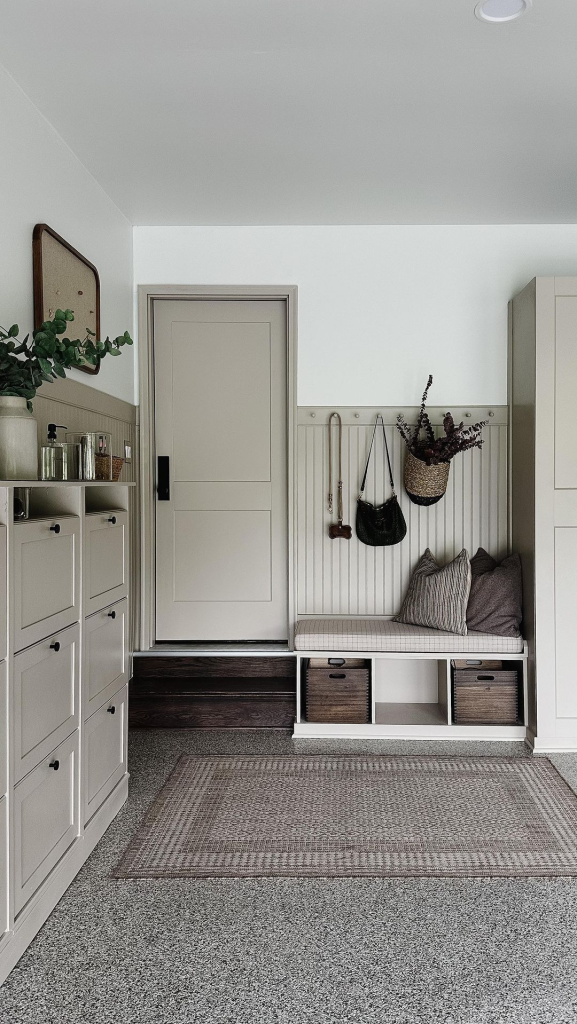
CREDIT: PINTEREST
Section 6: Common Scenarios, The Best Solution for Each Garage Conversion
Every homeowner’s situation is different. Let’s go through a few common scenarios that lead people to think about garage conversions, and discuss the best paths for each. Use this as a “choose your own adventure” guide: Garage Conversion
- “We need a dedicated home office.”, This became a huge need for many recently. Before you convert the garage, see if you can repurpose space inside the home. Could a rarely-used dining room or formal living room become your office with some modifications? What about finishing part of the basement as an office? If noise is an issue (kids, etc.), a backyard office shed might be ideal, it gives separation and quiet. Only if none of those options exist should you consider the garage. Even then, a partial garage office (walling off one bay) could be considered, but keep at least some garage function. Best bet: Reclaim interior space or build a small detached studio for your office; keep the garage for your cars and storage. Garage Conversion
Garage Conversion - “We need a guest room occasionally.”, If it’s truly occasional (holidays, etc.), you probably don’t need to sacrifice the garage full-time. A smarter solution is to create a dual-purpose room inside your house. For example, a TV den or home office that also has a sofa bed or Murphy bed and a wardrobe/closet can serve as a comfortable guest room on occasion. You can also improve an existing spare bedroom with better storage so it can function as something else (hobby room, etc.) when not hosting guests. If you absolutely have no guest space, consider a small addition or perhaps using a portion of a large garage (with a proper wall), but often a creative interior solution is enough. Best bet: Use a flex room with a convertible bed inside the house, or consider a small addition if you want a true dedicated guest suite. Avoid losing the whole garage for a room that sits empty most of the time. Garage Conversion
Garage Conversion - “We have a multi-generational family (need in-law suite or adult child space).”, This is a big need that a simple garage conversion might not satisfy well. An in-law or an adult family member likely needs a comfortable bedroom, maybe a private bath, and even a small living area or kitchenette. A one-car garage space is often too small to create all that comfortably (and may violate code if you try to make it an independent living unit). Instead, an addition or an ADU is usually a better route. For example, build an addition that is a proper first-floor suite with its own bathroom, it will be more accessible and senior-friendly than a converted garage stuck behind the laundry machines. If you have a detached garage, converting it to an ADU (with permits) could work if you add plumbing and meet all building standards, essentially turning it into a little apartment, but that’s a major project akin to new construction. In many Virginia localities, adding an ADU or in-law suite can significantly add value and functionality. Best bet: Design a true in-law suite addition or a separate ADU if allowed. It’s more costly, but it will be purpose-built for long-term comfort (wider doors, insulation, proper bath/kitchen) and you keep the main house’s functionality intact. Garage Conversion
Garage Conversion - “We just have so much stuff; we need more storage space.”, This is extremely common: the garage is bursting, so converting it to a finished room without addressing storage would actually make things worse! If storage is the issue, converting the garage is like treating a headache by cutting off your head. You’d lose the main storage area. Instead, attack the storage problem directly. Declutter what you don’t need, install better storage as in Option B (slatwalls, ceiling racks, etc.), and if necessary, build a shed or utilize attic space for overflow. Often organizing the garage and adding shelving creates a ton of new capacity. You might also repurpose a closet inside for more efficient storage. Only after you’ve optimized all that and still truly can’t live with the storage you have should you think about a conversion (and even then, where would new stuff go?). Best bet: Invest a bit in garage organization and possibly an outdoor storage shed. You’ll be amazed how much space you actually gain, likely negating the need to create a new room at all. It’s far cheaper and you won’t regret having a tidy garage that still fits the cars.
Garage Conversion
In essence, match the solution to the problem. Garage conversions are rarely the only answer. There’s usually a way to tweak your existing space or add on smartly that leaves everyone happier. When in doubt, consult with a contractor (like Chris at MGS) who can evaluate your home and suggest the best route. Sometimes an outside perspective sees options you overlooked. Garage Conversion
Section 7: Costs, Timelines, and Expectations (Keep It Real) Garage Conversion
Let’s say you’ve considered all options and maybe you’re still leaning towards a garage conversion, or you’re just curious about the practical side. It’s important to go in with realistic expectations about cost and time, so you’re not blindsided. Here are some guidelines: Garage Conversion
Cost Factors: As we touched on earlier, converting a garage is not a shoestring project. If someone is imagining “a few drywall panels and done,” that’s way off. Think in terms of a major renovation. The cost will vary widely based on your location, the size of the garage, and what features you add (bathroom? fancy finishes?). In Northern Virginia, for a basic bedroom/office style conversion (no bathroom), you could easily spend in the tens of thousands. Nationally, sources have cited figures like $20,000 to $50,000 for a full, properly-done garage conversion. Garage Conversion
This includes materials and labor for insulation, flooring, electrical, HVAC, windows/doors, and finishes. If your conversion involves a bathroom or kitchenette, add more for plumbing and fixtures. Always get multiple quotes and ensure they cover all the necessary elements (so you’re not hit with “extras” later). Also remember the design and permit costs, you may need to hire a draftsman or architect to draw plans ($), and permits/inspections have fees (usually a few hundred dollars at least). In short, budget generously and include a contingency. It’s safer to plan for a higher number and be pleasantly surprised if it’s lower, than to run out of funds halfway. Garage Conversion
Timeline Considerations: A garage conversion is not an overnight flip. The planning phase can take a few weeks to a few months, you might need drawings, permit review by the county (which could take several weeks). Once you break ground (or break drywall, in this case), the construction itself might be on the order of 4 to 8 weeks for a straightforward conversion, and longer (3+ months) if it’s complex or if there are delays. Inspections will pause work at certain stages until approved. Garage Conversion
Also consider contractor lead times, good contractors might not be able to start your project immediately; there could be a waitlist of a few months. So from the time you say “Let’s do this” to the time it’s fully finished could easily be 3-6 months all told. If you need the space by a certain deadline (like a relative moving in), build in lots of buffer. Also, during construction, prepare for some disruption. If attached, there will be noise and dust; if detached, less so, but you’ll have workers around. And obviously, you can’t use the garage to park or store during that time, so make alternate plans. Garage Conversion
Quality vs. Speed vs. Cost: The old saying in construction is “Fast, good, cheap, pick two.” If someone promises a super quick job for a bargain price, be wary. To do a garage conversion correctly (good), it’s either going to take a reasonable amount of time or cost a fair amount, or both. If you cut the timeline or cost too much, quality usually suffers. For instance, a contractor might skip proper insulation or not seal things well to meet a low budget, leaving you with those comfort issues later. Or they might rush and mess up some structural detail. Garage Conversion
We’ve seen homeowners regret going with the cheapest bid when a year later the paint is peeling because moisture wasn’t handled, or there’s a musty smell. Cheap conversions often mean corners were cut, which can translate to higher costs down the road (repairs, higher energy bills, or even re-doing the project). So set your expectations: a garage conversion is a significant renovation; invest in doing it right or it’s not worth doing at all. Garage Conversion
Discuss with Your Contractor: When planning budget and timeline, have an open conversation with a trusted contractor. They can outline where splurging makes sense and where you might save. For example, you might splurge on a better HVAC unit (important) but maybe save by choosing more modest flooring or light fixtures that you can upgrade later easily. A good contractor will also try to foresee potential hiccups (like “What if we open the wall and find wiring to reroute?”) so you can account for that. They’ll give you a schedule that includes time for inspections and any curing time (like if concrete is poured, etc.). If you’re working with someone like Chris Chapman at MGS, he’ll ensure you know what’s coming at each step, no false promises of “done in a week!” unless it genuinely can be done that fast (unlikely for a proper job). Garage Conversion
In summary, go in with eyes wide open about the commitment you’re making with a garage conversion. It can be worth it if it truly solves a need and you do it right, but it’s not usually a quick weekend DIY or a cheap expansion. Manage your expectations on cost and time, and you’ll be much happier with the end result because it will align with what you planned. Garage Conversion
Section 8: Virginia-Smart Renovation Planning (Local Insights)
Living in Virginia gives us some specific context for home improvements like garage conversions. Here are a few local considerations and tips that Virginia homeowners should keep in mind when planning any renovation, especially one involving changing how space is used:
- Climate & Humidity: Virginia experiences a bit of everything, cold winters, hot humid summers, and a fair amount of rain year-round. That means moisture control is vital in renovations. If you convert a garage (or any space), you need to think about vapor barriers, insulation, and ventilation suitable for a humid subtropical climate. For example, our summers can make uninsulated concrete “sweat” with condensation, so insulating slabs and dehumidifying newly finished spaces is important. In winter, temperatures can dip below freezing, so pipes in any converted space need proper insulation against freezing. When planning, use materials that can handle humidity swings (pressure-treated lumber where wood meets concrete, mold-resistant drywall in areas that could be damp, etc.). And consider an HVAC system with a dehumidification mode or a standalone dehumidifier for summer months. The goal is to keep that new space dry and comfortable in July and January alike.
- Storms & Power Outages: While we’re not in the hurricane bullseye like coastal regions, Virginia does get the tail end of tropical storms and the occasional hurricane remnant. Plus, thunderstorms in summer can be intense, and winter ice storms can knock out power. How is this relevant? Well, having a garage can be part of your storm-readiness, it’s a secure place for your car (safe from hail or fallen branches) and storage for emergency supplies or a generator. If you convert the garage, think about where those functions go. For instance, if you keep a generator for power outages, you’ll need a shed or other place to store it that’s accessible. If your car will be outside, maybe invest in a durable car cover or carport for storm protection. It’s also nice to have a garage as a workshop space for storm prep (like boarding windows, etc.). Losing that means you need alternatives. Plan ahead so you’re not caught off guard during the next Nor’easter or tropical storm.
- Neighborhood Norms & Regulations: We touched on this in the checklist, but in Virginia it’s worth noting: many communities (especially in suburban NoVA or other cities like Richmond, Virginia Beach, etc.) have either HOA rules or established norms about property appearance. An HOA might explicitly forbid converting garages into living space, or at least forbid visibly altering the front (they might not allow you to remove the garage door or require any change to look identical to before). Always check your HOA covenants if you have one! Even if no HOA, consider the resale norm: if you’re in an area like Loudoun or Fairfax County where a majority of single-family homes have two-car garages, converting yours can make your home an outlier. On the flip side, in some historic neighborhoods in Old Town Alexandria or similar, a garage is rare and maybe less expected, but also space is at a premium and permits are harder to get for changes. Also note local zoning: some jurisdictions might require you to maintain a certain number of parking spaces on your property. Converting a garage could technically violate a rule if street parking is limited. For instance, the City of Hampton, VA, notes that converting a garage will involve a permit process and fees, partly to ensure compliance with such regs. Always research local rules in your Virginia locality (or consult a contractor who knows them) before you plan the project.
- Energy Efficiency & Codes: Virginia updated its building codes periodically, often following the International Residential Code with state-specific amendments. A garage conversion in 2025, for example, must meet current energy codes for insulation, windows, and possibly even blower door tests if you’re adding conditioned square footage. Virginia’s summers and winters mean the code will require decent R-values in walls/ceilings and likely a duct insulation if extending HVAC. Doing it by code will actually save you money long-term (lower utility bills) and make the space more comfortable. So don’t view code requirements as just hurdles, they’re there because a tightly sealed, well-insulated room in Virginia’s climate is hugely beneficial.
- Local Experience: It can help to talk to local experts or neighbors who’ve done similar projects. Virginia has a mix of older homes (which might have standalone garages or carriage houses) and newer developments. Each comes with quirks, e.g., older home conversions might encounter lead paint or undersized structural members; newer ones might have truss construction or modern wiring that you need to work around. A local contractor like MGS Contracting will know, for example, that “in this area, the county usually requires X for a conversion” or “homes of this era often have a slope in the garage floor we need to level.” Using that local know-how will streamline your project and avoid surprises. So leverage the fact that you’re in Virginia: there’s a community of pros here who have done additions and conversions in our climate and can guide you best.
The take-home message is: incorporate Virginia’s context into your renovation planning. Our weather, our rules, and our market preferences should shape the choices you make. When done with these in mind, your project is more likely to succeed and bring satisfaction.
Section 9: Working With MGS Contracting Services (Your Partner in Smart Renovations)
Home renovation decisions can be daunting, we get it. The last thing you want is to invest in something and later say, “Why did we do this?” At MGS Contracting Services, our mission is to guide Northern Virginia homeowners toward projects that improve their homes and their quality of life, without the regret. Our owner Chris Chapman isn’t just a contractor; he’s a consultant and neighbor who cares about what makes sense for you long-term.
Chris has helped numerous clients evaluate the real pros and cons of ideas like garage conversions, kitchen expansions, add-ons, and more. Sometimes the best advice is actually: “Don’t do that, do this instead.” We’re not here to upsell you on the biggest project, we’re here to craft the right project. Maybe that’s converting your garage (if it truly fits your needs and we can do it in a way you won’t regret), but maybe it’s an alternative like we discussed. Chris prides himself on honest, no-pressure assessments. You might come to us saying “I want to convert my garage,” and after talking it through, realize a small addition or a basement remodel would solve your problem better. That’s a win in our book, an informed homeowner making the best choice.
If you do decide a garage conversion or any renovation is the path forward, we’ll ensure it’s done expertly. We handle everything from design plans and permits to the final coat of paint. With our experience in Virginia building codes and local trends, you won’t have to worry about the technical stuff, we’ve got it covered. And we’ll keep you in the loop at every step, so there are no surprises.
How We Can Help You Next:
- Design Consultation: Not sure how to utilize your space best? We offer in-home design consultations where Chris can look at your garage and home layout and brainstorm options. Maybe the garage can become a great family room, we’ll sketch it out and also suggest storage solutions for the overflow. Or maybe we find space in an existing room to meet your needs. The goal is a clear plan.
- “Regret-Proof” Renovation Plan: This is our special approach to project planning. We not only plan the build, but also double-check every aspect against functionality and resale value. Basically, we try to poke holes in the idea now, so you don’t face issues later. If something seems like it could cause regret (like “where will my mower go?”), we’ll address it in the plan. By the time we’re ready to execute, you can feel confident you’ve thought of everything important.
- Garage Upgrade Package: If you lean toward keeping the garage, we can help make that space awesome. Our garage upgrade package can include installing storage systems, improving lighting/electrical, and even adding better insulation or a sealed floor. In a few days, your dusty garage can transform into a clean, organized extension of your home, without losing its primary function. It’s a popular service for families who need more order in their garages.
When you work with MGS, you’re not getting a salesman pushing a project; you’re getting a partner who wants your home to serve you beautifully now and in the future. We’re a locally owned company (proudly veteran-owned, too) and our reputation in the community is everything. That means we’re going to give you our honest opinion and treat your home like it’s our own.
Ready to talk? Maybe you have a vision and just need to make sure it’s the right call. Or maybe you only know you need “more space” and want ideas. Either way, we’re happy to help.
Want a reality-check on your garage conversion idea? Reach out to us, Chris will gladly discuss it and tell you frankly if it’s smart for your home or if there might be better options.
Not sure what to do instead of a conversion? We can walk you through a few creative alternatives that you might not have considered, mapping out 2–3 paths forward so you can compare the benefits.
Give us a call or send an email to schedule a consultation. Together, let’s make a plan for your home that you’ll be happy with for years to come, no regrets included!
FAQs
Do garage conversions add value in Virginia?
It depends on the situation, but generally garage conversions do not add as much value as homeowners expect. In many cases, they can even make a home less appealing in our market. Most Virginia buyers highly value having a garage for parking and storage, so eliminating it can reduce buyer interest. You might gain some value by increasing finished square footage, but you’re also taking away a feature. Studies have shown that a garage-to-room conversion often only returns about 80% of its cost in added value, at best. And that’s if it’s done properly with permits. If every other home in your neighborhood has a garage and yours doesn’t, you could be looking at a harder sell and potentially a lower sale price. In short: add value, maybe a little; risk losing value or appeal, quite possible. It’s a trade-off, so think carefully and consider talking to a local real estate expert about your specific home before converting.
Is a garage conversion considered living space?
Yes, but only if it’s done to code. For a converted garage to count as official living space (habitable square footage), it must meet the same building standards as the rest of the house. That means it should be fully finished (insulated walls, finished ceiling, proper flooring), heated and cooled, and it needs to have adequate egress (like a window or door to the outside if it’s a bedroom). If you pull permits and finish the garage legally, the appraiser can count that area as part of the home’s living space. However, if you just throw down carpet and call it a family room without meeting requirements, appraisers and county records may not count it. They might still classify it as “storage” or just an unpermitted renovation. So, to be considered true living space, do it right: obtain permits and ensure it complies with local code (for example, Virginia code will require certain insulation levels, safety measures, etc.). Once that’s done, you’ve essentially reclassified the space from unfinished to finished living area.
Do I need a permit to convert my garage?
In almost all cases, yes, you need a building permit to convert a garage into a living area. This is because you are changing the use of the space (from non-habitable to habitable), and multiple trades are involved (carpentry, electrical, possibly HVAC and plumbing). Virginia localities, like everywhere else, require permits for things like converting garages or finishing basements. For example, converting a garage is specifically listed as work that needs a residential building permit in many Virginia city/county guidelines. When you apply, you’ll likely need to submit plans showing how you will meet code (insulation, egress, etc.). During the project, inspectors will check the work. If you skip the permit and try to do it under the radar, you risk serious consequences: fines, having to tear out the work, difficulty selling, and even insurance refusing coverage on that part of the home. It’s not worth it. Getting a permit might feel like a hassle, but it ensures the work is safe and legal. Always check with your local building department before starting, they’ll tell you what’s required.
What’s the biggest mistake homeowners make with garage conversions?
The biggest mistake is underestimating the project, in scope, cost, and impact. Homeowners often think a garage conversion is easy and cheap (“it’s just an empty space, let’s throw up some drywall!”) and dive in without proper planning. This leads to mistakes like not planning for storage (suddenly you have nowhere for your stuff), not budgeting enough (costs balloon when you realize you need better HVAC, insulation, electrical work, etc.), and sometimes not pulling permits or following code. Another huge mistake is trying to do it as a DIY or on the cheap and ending up with a subpar job, the room is uncomfortable, looks obviously like a former garage, or worse, has safety issues. Skipping steps like insulation or proper floor leveling is a common error that leads to long-term regret (cold, uneven room). So in summary: lack of planning is the root mistake, not fully realizing what’s involved. If you plan thoroughly (or work with someone who knows what to do), you can avoid most of the pitfalls.
What’s a better alternative to a garage conversion for a home office?
A better alternative is to use existing space or create a separate space for your home office. First, look inside your home: is there a little-used dining room, a corner of the basement, or even a large walk-in closet that could be transformed into an office? Often a spare bedroom can do double-duty, set it up as an office with a sleeper sofa for the rare times it needs to host a guest. If privacy and quiet are paramount (say, you have kids at home and need real separation), consider a backyard office shed or studio. These have become very popular, essentially a small insulated shed in the yard equipped with power and maybe internet, turned into a dedicated office. It keeps work and home separate, and you still keep your garage. Another idea: a bump-out addition. If you can extend a small area of your house, even by 6-8 feet, you might add a cozy office nook off a living room or kitchen. That can be cheaper and less disruptive than converting the whole garage. The best solution depends on your house, but nine times out of ten, people find an office solution without needing to touch the garage. Plus, an office typically doesn’t require a huge amount of space, even 50-100 square feet well-designed can work. So before sacrificing a 400 sq ft garage, try to carve out a smaller spot for that desk elsewhere.
How do I add storage if I convert my garage?
If you go forward with a garage conversion, you must compensate for the lost storage. Here are a few strategies:
- Build a Shed: This is a top solution. A decent-sized shed (or two) on your property can absorb a lot of what the garage held, lawn mower, tools, bins of decorations, etc. Plan the shed size and shelving inside it to fit your needs. Keep in mind you’ll need a convenient spot in the yard and possibly a permit if it’s a large shed.
- Use Attic or Basement Space: If your home has an attic (especially above the garage, ironically) or a basement, optimize those. You can install flooring and pull-down stairs in an attic to create a new storage area. In a basement, add shelving or build a storage closet. The idea is to relocate items to these areas which are inside your house’s footprint.
- Incorporate Storage in the Conversion Design: Think about dedicating part of the new room for storage. For instance, you could section off a rear portion of the garage conversion (maybe a 4-foot deep area across the back wall) as a storage closet with double doors. Or build cabinets and window seats with hidden storage into the new room. If the new room has any chance to include a large closet, do it. This way, while you lost the garage, you gained some indoor storage.
- Purge and Organize: Moving out of the garage is a great time to downsize belongings. Sell, donate, or trash the stuff you really don’t use. For what’s left, invest in good organization, clear plastic bins, labeled and stacked, can go in your new shed or attic making the most of that space. Bikes could be hung on a wall mount in a shed or even on an exterior wall under an awning.
- Parking Solutions: If you had things like a snowblower or other equipment, maybe consider if you really need them or if you can get smaller versions. Also, if you have multiple bikes or kayaks, etc., look into wall racks or ceiling hoists to store them efficiently wherever you relocate them.
The main advice is: plan it out before you convert. Don’t wait until after the garage is a family room and then realize your lawnmower has nowhere to live. By thinking creatively and possibly spending a bit on a shed or attic upgrade, you can manage storage so that life after conversion is still organized.
Will a converted garage be comfortable year-round?
It can be, but only if the conversion is done with comfort in mind. A properly converted garage, with ample insulation, a good heating and cooling system, and attention to moisture sealing, should feel just like any other room. However, many converted garages end up less comfortable because of corners cut. If the walls and slab weren’t insulated well, the room might run cold in winter and hot in summer. If HVAC wasn’t properly extended, you might find the room stuffy or struggling to stay cool on a 95°F July day. Also, garages can have drafts (like air sneaking in under where the old garage door was, or through uninsulated attic spaces above). All those need to be addressed.
In Virginia, we have high humidity in summer, a poorly insulated garage conversion can get sticky or have condensation issues. And in winter, that slab can be very cold if not insulated. So to be comfortable year-round, treat the conversion like you’re building a brand-new room: high R-value insulation in walls and ceiling, insulated floor or a thermal break, a heating/cooling source sized for the room, and good windows/doors that don’t leak air. If you do that, the room should be as comfortable as any bedroom or living room. One more thing: consider sun exposure. Garages often have large doors facing the driveway; if you fill that in with a wall and windows, know what direction it faces. A west-facing former garage might get a ton of afternoon sun, heating it up. In such cases, use window coatings or shades to control solar gain, or even plan a small porch overhang or landscaping to provide some shade. Likewise, a north-facing garage might be darker and cooler, maybe you’ll need extra lighting or slightly more heating capacity. In short, yes it can be comfortable, but only with good design and likely a higher investment. If someone just paints the walls and throws down carpet, the space will probably be too cold/heat-prone to truly enjoy year-round.
What upgrades make a garage more usable without converting it?
If you want to get more use out of your garage while keeping it a garage, there are plenty of worthwhile upgrades:
- Organization & Storage: As mentioned earlier, adding shelving, cabinets, or wall systems (like Slatwall or Pegboard) can get items off the floor. Overhead ceiling racks let you use the height for storage of bins. A clear, organized garage can double as a workshop or home gym area because you’re not tripping over clutter.
- Improved Lighting: Most garages have one dim bulb. Install bright LED strip lights or fluorescent fixtures. Better lighting makes it pleasant to work on projects or find things at night. Also consider task lighting over a workbench.
- Floor Coating: Applying an epoxy coat or a modular tile system on the garage floor can make a world of difference. It’ll be cleaner, less dusty, and easier to clean up spills. Plus, it looks great and can even brighten the space (light-colored coatings reflect light).
- Insulate and Ventilate: You can insulate the garage door with foam panels and the garage ceiling if there’s a room above. While you might not fully heat/cool the garage, some basic insulation can make it less extreme in temperature. Also, adding a simple exhaust fan or ventilation can help if you use the garage as a workshop (to remove stuffy air or fumes). You could also use a portable heater in winter or a fan in summer to take the edge off when you’re spending time there, just always follow safety guidelines.
- Electrical Outlets: Having a few more outlets in the garage can be super helpful. Maybe you want to plug in a second fridge, charge power tools, or set up a music system. An electrician can add outlets (and a dedicated circuit if needed for heavy tools). While at it, adding an outlet to the exterior of the garage is nice for holiday lights or vacuuming the car.
- Functional Zones: Think about what you want to use the garage for aside from parking. If it’s a home gym corner, lay down some rubber mats and mount a mirror on the wall. If it’s a hobby area, set up a sturdy workbench with pegboard for tools. Maybe create a small gardening station with a potting bench by a window. These mini-improvements let the garage serve multiple purposes.
- Aesthetics & Comfort: Small touches can make the garage feel more like a part of the home. For example, paint the drywall if it’s never been painted (use a light color to make it feel larger and brighter). Weather-seal the garage door to keep drafts and critters out. If you spend a lot of time there, even a portable Bluetooth speaker for music or a wall-mount fan for airflow can make it more enjoyable.
By doing these upgrades, your garage can become a well-organized storage hub, a DIY workshop, or a part-time gym, all while still housing your car. Many homeowners find that once their garage is decluttered and spruced up, it effectively adds “usable space” to the home, you might find the kids playing out there or yourself enjoying fixing things at the bench, without ever losing the core benefits of having a garage. It’s often the best of both worlds solution.
Now you have a comprehensive view of garage conversions and their alternatives. Remember, every home and family is unique, the right answer for you will depend on your needs, your home’s layout, and your future plans. When in doubt, get professional input and weigh the pros and cons carefully. Here’s to making the smartest choice for your home!