Why a Basement Bathroom Is a Smart Investment
Thinking about adding a bathroom in your basement? You’re not alone — and for good reason. Homeowners all over Northern Virginia, from Loudoun County to Fairfax and beyond, are increasingly interested in basement bathroom installations. What’s driving this growing trend? A basement bathroom is more than just a luxury; it’s a smart, strategic upgrade for your home. It provides extra convenience, can significantly boost your property’s value, and opens up new possibilities for how you use your basement space.
One major reason to consider a basement bathroom in Northern Virginia is the return on investment (ROI). When done right, adding a bathroom to your basement can yield a substantial ROI while also enhancing day-to-day livability. It’s a win-win that savvy homeowners are taking advantage of. Chris Chapman, owner of MGS Contracting Services, explains:
“Many of our clients are realizing that a basement bathroom isn’t just a nice-to-have — it’s one of the most practical upgrades you can make. It adds convenience for family and guests, and it can turn an underutilized basement into a fully functional part of your home.”
Whether you plan to use the basement as an in-law suite, a rental unit, or just a comfortable hangout for your family, having a bathroom downstairs makes the space far more versatile and welcoming.
Beyond convenience, a basement bathroom can also pave the way for multi-generational living or potential rental income. In areas like Fairfax, Arlington, or Leesburg, where housing is in high demand, having an extra bathroom in the basement can enable you to rent out that space (such as through Airbnb or a long-term tenant) or accommodate extended family comfortably. The added functionality and privacy of a basement bathroom make it a smart investment for your Northern Virginia home.
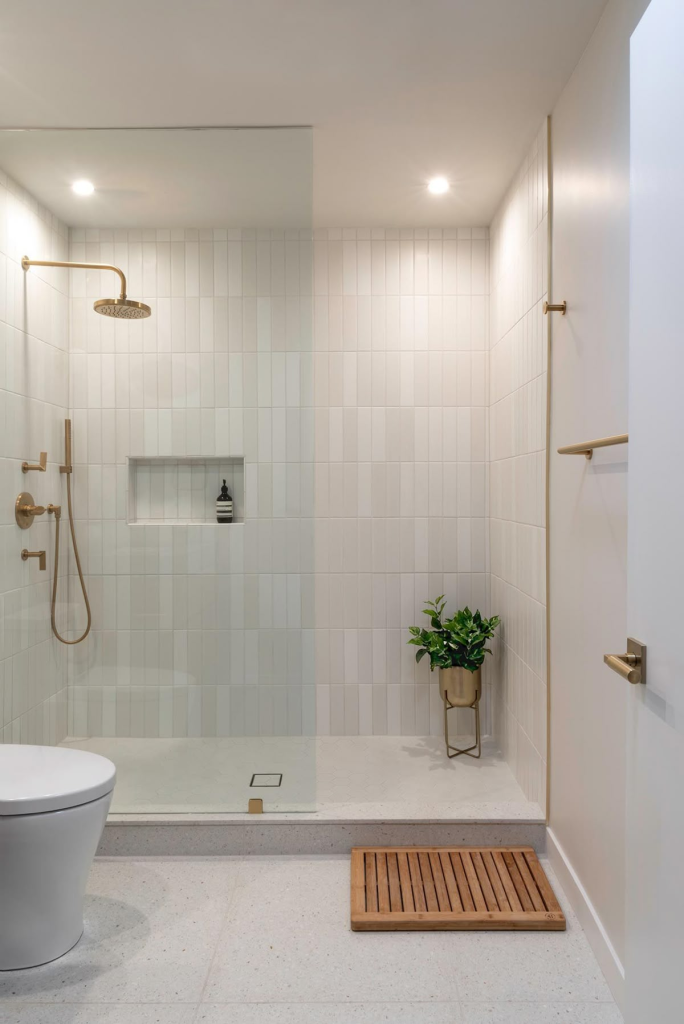
CREDIT: PINTEREST
Section 1: Pros and Cons of Installing a Basement Bathroom
Before diving into any remodeling project, it’s important to weigh the pros and cons. Installing a basement bathroom comes with many benefits, but it also has its challenges. Let’s break down the key points:
Pros of a Basement Bathroom:
- Added Convenience: Having a basement bathroom means you, your family, or guests won’t have to climb stairs every time nature calls. It’s especially handy during movie nights, gatherings, or if you have a basement bedroom or entertainment area.
- Great for In-Law Suites or Guests: A basement bathroom is essential if you’re setting up an in-law suite or a guest bedroom downstairs. It provides privacy and independence for anyone staying over – no more midnight trips upstairs.
- Increases Home Value: Extra bathrooms generally boost a home’s resale value. Finishing unused basement space with a bathroom can make your property more attractive to buyers. Many Northern Virginia buyers specifically look for finished basements with bathrooms, which means your investment can pay off when it’s time to sell.
- Maximizes Basement Potential: By adding a bathroom, you turn a basic basement into a livable floor. It transforms an underutilized storage or utility area into functional living space, making the whole house feel larger and more accommodating.
Cons of a Basement Bathroom:
- Project Cost: Adding a basement bathroom can be costly, depending on the complexity. If your basement doesn’t already have plumbing rough-ins, you might need extensive work like cutting into concrete for new drain lines. Budgeting is crucial – a basement bathroom is an investment that can range from moderate to significant expense.
- Requires Permits and Professionals: A basement bathroom installation isn’t a simple DIY job for most homeowners. It involves plumbing, electrical, and possibly structural modifications. You’ll need proper permits in Northern Virginia (yes, even for basement work) and licensed professionals to ensure everything is up to code. Navigating permits and inspections can be a hassle if you’re not experienced.
- Invasive Construction Work: Building a bathroom below grade often means cutting into the concrete slab to lay pipes, which is noisy and dusty work. If you have a finished basement that you’re renovating, demolition and plumbing could temporarily disrupt that space. Also, dealing with wastewater below the main sewer line could require special systems like ejector pumps (more on that later).
- Design Constraints: Basements have some limitations – low ceilings, location of existing pipes, and obstacles like beams or HVAC ductwork. You might have less flexibility in layout compared to an above-ground bathroom. Planning around these constraints can be tricky and sometimes leads to creative compromises in your bathroom design.
Chris’s Take: Chris Chapman of MGS Contracting Services notes that while the challenges are real, they can be managed with the right expertise.
“The key is working with a contractor who understands code, drainage, and the flow of the home. We make it painless.”
In other words, choosing an experienced remodeling team means the cons of adding a basement bathroom won’t seem so daunting – they’ll handle the tough parts while you enjoy the end result.
Section 2: What’s the Cost to Install a Basement Bathroom?
One of the first questions homeowners ask is, “How much will a basement bathroom cost?” The cost to install a basement bathroom can vary widely based on your specific situation. On average, you might be looking at a range of roughly $8,000 to $15,000 for a basic basement bathroom installation in Northern Virginia. However, the price can be lower or significantly higher, depending on factors like whether plumbing rough-ins are already in place, the quality of finishes you choose, and any special systems needed for wastewater.
Let’s break down some typical cost components for a basement bathroom project:
| Component | Average Cost |
| Rough Plumbing (Drain & Supply) | $1,000 – $10,000* |
| Electrical & Lighting | $500 – $2,500 |
| Vanity & Sink | $500 – $4,000 |
| Toilet | $200 – $600 |
| Shower/Tub | $2,000 – $8,500 |
| Permits & Inspections | $50 – $2,000 |
Note: The wide range in plumbing costs reflects different scenarios. If your basement was built with a plumbing rough-in (pre-installed drain lines for a future bathroom), you’re in luck – connecting new fixtures to existing stubs is much cheaper (closer to the lower end of the range). If not, a contractor may need to cut into the concrete slab to install new drainage lines and possibly a sewage ejector pump, which pushes costs toward the higher end.
Labor vs. Materials: The price of a basement bathroom also breaks down into labor (plumbers, electricians, carpenters, tile installers) and materials (pipes, wires, fixtures, finishes). In Northern Virginia, labor costs might be a bit higher than the national average due to the region’s cost of living, but you’re also getting licensed experts who ensure the work meets strict county codes. Materials can range from budget-friendly (basic fiberglass shower, standard tiles) to high-end (custom tile showers, luxury vanities). Deciding where to splurge and where to save is part of the planning process.
Half-Bath vs. Full Bath: If you’re on a tight budget, you might consider installing a half-bath (just a toilet and sink) instead of a full bath. A half-bath in the basement could cost significantly less since there’s no shower or tub to install. On the other hand, a full basement bathroom with a shower (or tub) will cost more but provides greater utility and home value. Think about your goals for the space: if it’s a guest suite or rental, a full bath is highly recommended.
DIY vs. Professional Installation: You might wonder if any parts of a basement bathroom project can be DIYed to save money. Some cosmetic aspects like painting or installing accessories can be done by handy homeowners (we’ll cover more on DIY in Section 7). However, plumbing and electrical work for a basement bathroom absolutely require professional expertise. Mistakes in those areas can be costly and dangerous. MGS Contracting Services prides itself on transparent pricing – we’ll walk you through the budget, line by line, so you understand where every dollar is going. We also work efficiently to minimize labor hours without cutting corners, which helps control the overall cost.
When planning your budget, always include a contingency (perhaps 10-15%) for unexpected issues. Especially in basements, once you start opening floors or walls, you might encounter surprises (like moving a load-bearing post, rerouting an HVAC duct, or addressing an unforeseen plumbing quirk). Being prepared budget-wise ensures your basement bathroom project stays on track even if hiccups arise.
Section 3: ROI — Is It Worth It?
With the costs outlined, the next big question is usually: “Is adding a basement bathroom worth it in terms of home value?” In many cases, the answer is a resounding yes. Home improvement experts and real estate agents often cite that basement bathrooms typically return around 70%–90% of their cost in increased home value. This means if you spend, say, $10,000 on a basement bathroom, your home’s resale value might go up by $7,000 to $9,000. That’s a strong return on investment, especially when you also consider the personal convenience and enjoyment you’ll get from the new bathroom.
In Northern Virginia’s competitive housing market, a finished basement with a bathroom can really set your home apart. Imagine two similar houses for sale in Fairfax, but one has a beautiful basement bathroom and the other doesn’t. The one with the extra bathroom will likely attract more buyers and higher offers. It’s not just about the dollar value, either — having that additional bathroom in the basement makes your home appealing for larger families and those looking for flexible living space (like a rentable area or a comfy guest suite).
It’s also worth noting that the ROI of a basement bathroom can be even higher when it’s part of finishing an entire basement or creating a usable apartment. For instance, if you add a basement bedroom plus a bathroom and make it a proper living suite, you’ve effectively increased your home’s functional square footage. Finished square footage in a home is extremely valuable in Northern Virginia. You might spend $30k-$50k to finish a basement with a bathroom, but the boost in home value could be on par with that investment (and meanwhile, you’ve gotten years of use out of the new space).
Real-Life Benefits: Beyond strict ROI numbers, think about the practical payback. One MGS Contracting Services client in Ashburn, for example, transformed their unfinished basement into an entertainment area with a wet bar and a full basement bathroom. Not only did their home’s value go up, but they’ve told us how it has improved their lifestyle: their teenagers hang out down there with friends without everyone trudging upstairs for the bathroom, and overnight guests enjoy hotel-like privacy. Another client added a basement bathroom alongside a new home gym, making workout sessions easier and more hygienic (no more sweaty trips through the house to shower).
These anecdotal successes underscore a key point: a basement bathroom brings both financial and lifestyle rewards. When you sell your home, you’re likely to recoup a large portion of the cost. Until then, you get to enjoy the daily convenience. As long as you plan the project wisely and execute it with a reputable contractor, a basement bathroom is absolutely worth it.
Section 4: Understanding Permits and Code Compliance
Installing a basement bathroom isn’t just a matter of picking fixtures and paint colors – there are important legal and safety considerations. In Northern Virginia (including Fairfax and Loudoun counties), any significant remodeling project, especially one adding a new bathroom, will require building permits and inspections. It might be tempting to skip the paperwork, but that’s a huge mistake. Let’s talk about what’s required and why it matters.
What Permits Are Needed? Generally, for a basement bathroom you will need:
- A building permit for the overall construction (framing walls, altering structure).
- A plumbing permit for installing pipes, drains, and fixtures.
- An electrical permit for new wiring, lighting, and fans.
- Possibly a mechanical permit if you need to add new ventilation (exhaust fan ducts) or heating/AC changes.
Each county in Northern Virginia might have slight differences in how permits are handled, but the basics are consistent. For example, Fairfax County and Loudoun County both require that any new bathroom (even in a basement) be reviewed for proper plumbing and electrical work. If your home is on a septic system (common in some parts of Loudoun or Prince William County), you’ll also need approval from the health department because adding a bathroom means more wastewater flow. The health department might need to verify that your septic system can handle the additional load of a new basement bathroom.
Code Compliance: Building code and plumbing code dictate a lot about how your basement bathroom must be built. This includes things like:
- Proper drainage slope for sewer lines (so waste flows correctly by gravity).
- Adequate venting of plumbing (every fixture’s drain needs a vent to prevent siphoning water out of traps; often, your basement bathroom will tie into the existing vent stack or require adding a vent pipe).
- Electrical safety: GFCI-protected outlets are required in bathrooms (to prevent shock near water), and dedicated circuits might be needed for the hair dryer and other appliances. Virginia codes typically call for a 20-amp circuit for bathroom outlets.
- Ceiling height and clearances: Code usually requires a minimum ceiling height (often around 7 feet) for finished areas. You need to ensure your finished bathroom ceiling meets this, even under any ductwork or beams. There are also clearance rules like how much space is required in front of toilets and sinks, and how far light fixtures must be from a shower or tub.
- Ventilation: If your basement bathroom has a shower or tub, code will require either an operable window or an exhaust fan vented to the outside to remove moisture. Most basements don’t have bathroom windows, so a powered exhaust fan is a must to pull out humidity and odors.
Skipping permits means you might run into big problems later. Unpermitted work can be flagged when you try to sell your house, leading to headaches or even having to tear out or redo the work. More importantly, permits come with inspections by county officials who ensure the work is safe and up to code. This is protection for you as a homeowner – an extra set of eyes to catch mistakes or hazards.
At MGS Contracting Services, we handle the permit process for you. Chris Chapman emphasizes:
“We take care of the permit paperwork so you don’t get buried in red tape.”
We’ll submit the plans, coordinate with county inspectors, and make sure everything we do for your basement bathroom meets or exceeds code. By doing it by the book, you’ll have peace of mind that your new bathroom is not only beautiful but also safe and legal.
Section 5: Common Challenges & Mistakes to Avoid
Even with careful planning, there are some common pitfalls when building a basement bathroom. Here are a few challenges and mistakes that homeowners (and less experienced contractors) should be mindful of — and how to avoid them:
- Improper Drainage Slope: One of the biggest challenges in a basement bathroom is getting the drainage right. All drain pipes need a downward slope (usually about 1/4 inch drop per foot for horizontal runs) so sewage flows out by gravity. If the slope is too shallow or – worse – reversed (creating an uphill section), you’re asking for clogs and sewage backups. Mistakes in setting the slope can happen if someone isn’t skilled in plumbing layout or if they’re tying into an existing line at the wrong angle. Always ensure your basement bathroom’s drain lines are carefully angled toward the sewer or septic connection. Professional plumbers will use levels and follow code requirements for the proper slope.
- Lack of Ventilation: Basements are prone to moisture as it is, and a bathroom adds even more humidity. A common mistake is neglecting ventilation. Every full bathroom needs an exhaust fan that vents outside (not just recirculating). Without proper venting, you could accumulate mold or mildew over time, and you might violate code. Plan for a good bathroom fan installation with ductwork leading outdoors. Additionally, consider overall basement ventilation; if your bathroom has no window (as most won’t), that fan is essential for removing steam and odors.
- Choosing the Wrong Pump System: If your basement’s main sewer line is above the level of the basement floor (common in older homes), you will need a solution to pump wastewater up to that line. There are two main options: a sewage ejector pit (installed in the floor) or an upflush (macerating) toilet system. A mistake here is choosing a system that isn’t adequate for your needs or installing it incorrectly. Ejector pumps require venting and proper sealing (to prevent odor), and they need an electrical connection. Macerating toilets are easier to install (less digging) but might not handle large volumes or multiple fixtures as well as a standard ejector system. Consult with your contractor about the best choice – skimping on this component can lead to nasty problems down the road.
- DIY Electrical Gone Wrong: It might be tempting to do some wiring yourself to save money, but bathroom electrical work has to be flawless. We’ve seen DIY attempts where outlets weren’t GFCI protected (major safety risk), or lighting was installed without proper insulation clearance, or a circuit was overloaded causing breakers to trip. Always use a licensed electrician for wiring a basement bathroom. This ensures circuits are safely installed, properly grounded, and can handle the load of hair dryers, curling irons, and other appliances people will use in that bathroom.
- Poor Waterproofing and Sealing: Basements are naturally damp, and bathrooms have water by nature. Failing to waterproof can lead to leaks and water damage. Common mistakes include not using a water-resistant backer board for tile in the shower, skipping a proper shower pan liner or membrane, or not sealing the gap where new plumbing comes up through the concrete slab. Make sure all the critical areas are waterproofed: around the shower/tub, the flooring (if it’s tile, use a waterproof membrane or sealing grout), and the joints where walls meet floors. Also, if you cut the slab and later patch it, ensure the patch is sealed so ground moisture can’t seep through cracks.
- Underestimating the Project: Perhaps the biggest mistake is underestimating what it takes to add a basement bathroom. People sometimes assume it’s like putting a bathroom on the first floor. In reality, it’s a more complex project due to the below-grade factors. This underestimation can lead to going over budget or getting stuck mid-project. The fix is simple: plan thoroughly and get professional input up front. Understand the full scope – from breaking concrete to running new pipes to finishing touches – so you budget time and money realistically.
Learn from the Pros: We at MGS Contracting Services have been called in to rescue many DIY or poorly executed basement projects. Chris mentions:
“We’ve been called in to fix plenty of DIY basement bathrooms gone sideways. Trust the pros from the start and you’ll save yourself a lot of stress.”
By anticipating these challenges and avoiding shortcuts, your project will go much smoother. Working with an experienced contractor means you have guidance to steer clear of common pitfalls, ensuring your basement bathroom is built to last.
Section 6: Step-by-Step Installation Process
Curious what actually goes into building a basement bathroom from scratch? Here’s a step-by-step overview of how a typical basement bathroom installation unfolds when you hire professionals like MGS Contracting Services:
- Planning & Design: Every successful project starts with careful planning. During this phase, you’ll work with your contractor to decide on the bathroom’s layout and design. Will it be a half-bath (toilet and sink), a 3/4 bath (with a shower), or a full bath (with a tub or tub/shower combo)? You’ll also choose the location in the basement that makes the most sense. Typically, placing the bathroom near existing plumbing lines (like below an upstairs bathroom or near where the main sewer line exits the house) can save money on plumbing. This is the time to pick out major fixtures too – vanity style, toilet type, shower design (tile walk-in, prefab stall, etc.). Consider door placement and privacy, especially if the basement will have multiple rooms or be used as a suite. A well-thought-out plan will address flow (so the bathroom door isn’t awkwardly placed), code requirements (ensuring space for everything), and your wish list for style and convenience. If accessibility or aging-in-place is a factor (perhaps for an elderly family member), design the layout with that in mind now (for example, plan for a wider door, a curbless shower, or blocking in walls for future grab bars).
- Wall Marking & Demolition: Once the design is finalized and permits are in hand, the work begins on-site. The team will mark out the floor and walls for where new walls will be built and where fixtures will go. If concrete cutting is required for new plumbing lines, this is when it happens. Don’t be alarmed – yes, a specialized saw or jackhammer will cut through the slab to create trenches for pipes. It’s loud and a bit messy, but professionals take precautions to minimize dust (like sealing off areas and using vacuum attachments). If your basement is already framed or partially finished, some demolition might be needed to open up walls or floors to run new lines. It’s all part of the preparation. The concrete sections that are removed will typically be re-poured later once pipes are in place. During this phase, you might also see materials being delivered – piping, lumber, drywall, etc., in preparation for the construction.
- Drainage Installation: With the floor open (if needed), plumbers will install the drainage pipes for the toilet, shower/tub, sink, etc. This is one of the most critical parts of a basement bathroom project. They’ll ensure the new waste lines slope correctly and tie into your home’s main drain line or sewage system. Two scenarios here:
- Gravity-fed drains: If your home’s sewer line is deep enough below the basement floor, drains can run via gravity into it (this is ideal because it’s simpler — flush and it goes out).
- Upflush or Ejector System: In many cases, especially in retrofits, the main sewer line is higher than the basement floor. For those, the plumber will install a sewage ejector pump system. This involves a basin (like a mini septic tank) set below the floor to collect wastewater, and a pump that grinds and forces it up into the main sewer line. Alternatively, in some setups, an upflush toilet (a special toilet with a built-in macerator pump) can be used to avoid breaking the floor, but those are typically better for half-baths or single-fixture additions. For a full basement bathroom with multiple fixtures, an ejector pit is more common.
- Gravity-fed drains: If your home’s sewer line is deep enough below the basement floor, drains can run via gravity into it (this is ideal because it’s simpler — flush and it goes out).
- Along with drainage pipes, the plumber will run vent pipes upward to join the existing vent stack (or create a new vent outlet if necessary). Venting is crucial to let sewer gases escape and to keep proper pressure in the lines so your sinks and toilet drain smoothly.
Once the drains and vents are laid out, an inspection is usually done (the county inspector will check that pipe sizes, slopes, venting, etc., meet code). After passing inspection, the trenches in the floor are backfilled with gravel and the concrete is patched over. You’ll hardly know it was opened up by the end. - Framing & Rough-Ins: Now the crew will build the walls for your new bathroom according to the plan. They’ll frame out any new partitions, as well as things like a shower curb or bathtub enclosure if those are part of the design. With walls framed, the plumber returns to do water supply line rough-ins – running hot and cold water lines to where the sink, toilet (cold water only), and shower/tub will be. Today, many plumbers use flexible PEX tubing, which is great for retrofits (fewer fittings and easier to run through joists and walls). Meanwhile, an electrician will rough-in the wiring: this includes running cables for outlets (which must be GFCI-protected), lighting, and an exhaust fan. They will tie the new electrical into your breaker panel, adding new circuits if needed (a bathroom usually requires at least one dedicated 20-amp circuit for outlets, plus separate circuits for lighting or heated floors, etc.). If the plan includes extending HVAC to the bathroom (to heat/cool the space) or running the duct for the exhaust fan, those mechanical rough-ins happen now too.
After rough plumbing and electrical are in place, there will be another round of inspections (framing inspection, plumbing pressure test, electrical rough-in inspection, etc.). Once those are approved, the project moves forward to the next phase. - Electrical Work (Safe and Bright): While much of the electrical was roughed-in during the framing stage, now is when it gets completed. Electricians will install the actual light fixtures, switches, and outlets. A common setup is to have overhead lighting (such as recessed lights or a central fixture) plus vanity lighting above the mirror for good task lighting. Because this is a basement, you might consider bright LED lights to keep the space feeling open and inviting. All outlets are connected to GFCI breakers or receptacles for safety. The exhaust fan is also wired up – some fans are simply on/off with the light, others might have separate switches or humidity sensors. If you opted for luxury touches like in-floor radiant heating mats, these will be connected and tested at this time as well. By the end of this step, the bathroom has power and is lit, but the walls are still mostly open and fixtures are not yet installed.
- Drywall & Flooring: With rough-ins done and inspections passed, the next step is to close up the walls and finish the interior surfaces. Mold-resistant drywall (often green board or purple board made for humid areas) is installed on the walls and ceiling of the bathroom. In the shower area or wherever tile will be applied, cement backer board (like Durock or HardieBacker) is used instead of drywall, since it can handle direct moisture. Once the wall boards are up, the seams are taped and mudded just like any drywall job, and the new walls are primed.
Now comes the flooring. Common choices for basement bathroom flooring include ceramic or porcelain tile (great for water resistance), luxury vinyl plank (waterproof varieties that can mimic wood and feel warmer underfoot), or even epoxy-coated concrete for a utilitarian look. Tile is a classic choice, so let’s say you go with a porcelain tile floor: the installers will first ensure the concrete slab is clean and level, possibly apply a crack-isolation membrane (to prevent small cracks in the slab from telegraphing into the tile), and then lay the tiles with mortar. After the tiles set, they’ll apply grout to seal the gaps. If you have a custom tile shower, the shower walls and floor will be done now too — this involves applying waterproofing membrane on the backer boards, creating a sloped shower pan (for draining), then laying tile and grout. It’s meticulous work to get all the tiles plumb and the slopes correct for drainage.
Finally, the walls get painted. It’s wise to use a paint formulated for high-humidity areas (many brands offer “bathroom” paint that resists mildew). Lighter colors can help the small space feel bigger and brighter, but it ultimately depends on your style. Now the bathroom really starts to take shape as a finished room. - Fixtures, Paint & Trim: Now for the finishing touches that bring everything together. The vanity and sink are installed and hooked up to the water supply and drain. The toilet is set in place, bolted down, and sealed (that first flush is always a satisfying moment!). If your bathroom includes a tub or a shower enclosure, the plumber will install the showerhead, faucet, and any glass doors or enclosures now. The mirror and any medicine cabinet go up, and accessories like towel bars and toilet paper holders are mounted. Electricians put in the cover plates for switches/outlets and make sure all lights and fans are working properly.
Trim work, such as baseboards around the floor and any door casings, is installed and painted. The last step is usually a bead of caulk along edges (like where the tub meets the tile, or where the sink meets the wall) to seal out water. The contractors will do a final walkthrough with you, checking that everything is operating correctly – no leaks, good water pressure, proper drainage, fan is venting, etc. Any paint touch-ups or small fixes are taken care of.
At this point, your new basement bathroom is ready to use! It should look and feel like an integral part of the home. As Chris Chapman puts it:
“We love using durable materials that match the upstairs aesthetic, so the basement bathroom feels like part of the home — not an afterthought.”
By the end of the process, you have a fully functional, attractive bathroom that seamlessly extends your home’s living space.
Section 7: DIY-Friendly Tasks vs. Leave-It-to-the-Pros
Adding a basement bathroom is a major project, and while professional help is highly recommended for most parts, there might be a few things you can handle yourself if you’re a DIY enthusiast. It’s all about knowing what you can do versus what should be left to licensed pros. Let’s break down some tasks:
You Can DIY:
- Design Concept & Planning: While you’ll likely work with a professional to finalize the plans, you can certainly start the process. Sketch out ideas for your basement bathroom layout and research fixtures or design features you like. Having a clear vision will help the contractors understand what you want.
- Cosmetic Touches (Painting & Trim): Painting the walls or installing baseboard trim can be DIY-friendly if you have some experience. Many homeowners prefer to do their own painting to save money and because it’s a task that doesn’t require special licenses. Just be sure to use mold-resistant bathroom paint and take your time to get clean lines. Installing trim or wainscoting is also doable for a handy person, especially in a small space like a bathroom.
- Installing Accessories: Things like towel bars, toilet paper holders, mirrors, and shelving can usually be installed with simple tools (a drill, level, screwdriver). These finishing touches can be a fun way to be hands-on with your project. By doing them yourself, you can also decide exact placements that work best for you.
- Flooring or Tiling (if experienced): This is a maybe. If — and only if — you have solid experience with tiling or laying flooring, you might consider tackling some of the finish work. For instance, an experienced DIYer could handle a simple tile backsplash or lay a vinyl plank floor. But remember, bathroom work has little margin for error because of water issues. A mis-sealed tile or an uneven floor can cause big problems. If you’re not fully confident, it’s wise to leave the tiling of the shower or floor to professionals.
Hire a Pro For:
- Plumbing and Concrete Work: Running new drain lines, setting a toilet flange, installing a shower pan, or moving supply lines — all of that should be done by a licensed plumber. Mistakes in plumbing can cause leaks or sewer gas issues that are expensive (and unpleasant) to fix. Likewise, if your project involves cutting into the concrete slab and creating trenches for pipes, professionals will handle it efficiently and correctly. They’ll also handle installing any sewage ejector pump or upflush system if needed.
- Electrical Wiring: Bathrooms mix water and electricity, so this is one area you do not want to DIY unless you’re actually a certified electrician. A pro will safely install wiring for outlets (with GFCI protection), lights, and fans, ensuring everything meets code. They’ll also make sure your home’s electrical panel can handle the additional load. The last thing you want is an unsafe wiring job that could lead to shocks or fire.
- Permitting & Inspections: Even if you’re handy, dealing with the county on permits and scheduling inspections can be a headache. A contractor will handle all the paperwork, drawings, and meetings with inspectors. If something doesn’t initially pass inspection, they’ll know how to address it. This alone is a huge stress-reliever.
- Shower/Tub Installation & Waterproofing: Setting a bathtub or constructing a tile shower involves a lot of know-how. Pros will make sure the shower pan is properly waterproofed (so you don’t get leaks into the concrete or framing). They will install backer boards, apply membranes, and do the tile work so it’s not only beautiful but watertight. Shower doors, especially heavy glass ones, are also tricky to install correctly without cracking — best left to the pros.
- Overall Project Management: Coordinating plumbers, electricians, inspections, deliveries, and all the timing is a skill in itself. A professional contractor will create a schedule and make sure each step happens in the right order. If you try to DIY a large chunk of the project, you essentially become the project manager. For many homeowners, that time could be better spent at work or with family rather than trying to manage a construction calendar.
In short, while there are a few areas where you can roll up your sleeves, a basement bathroom involves multiple trades and technical steps. Saving a little money by painting yourself can be fine, but trying to DIY the complex stuff can end up costing more in the long run if things go wrong. Many of our clients happily do the cosmetic final touches themselves, but rely on us for the heavy lifting. That kind of collaboration can work well and still give you a sense of personal accomplishment in the project.
Section 8: Why Choose MGS Contracting Services
If you’re considering adding a basement bathroom in Northern Virginia, you might be wondering who to trust with such an important project. Here’s why MGS Contracting Services stands out as the top choice for homeowners in the Fairfax and Loudoun County areas:
- Veteran-Owned and Local: MGS is a local Northern Virginia business rooted in the community. Owner Chris Chapman is a U.S. Marine veteran who brings discipline, integrity, and dedication to every project. We treat every client’s home with respect, as if it were our own. Being local means we understand the specific building codes and common construction styles in this area, whether you’re in a historic home in Alexandria or a newer build in Ashburn.
- Licensed, Insured, Experienced: We hold a Class A Virginia Contractor License, which is the highest level of licensing in the state. This means we’re qualified to handle projects of any size, including complex basement bathroom additions. Our team includes skilled tradespeople for every aspect of the job – plumbing, electrical, carpentry, tile work, you name it. We carry full liability insurance and workers’ comp, so you’re protected. Most importantly, we have extensive experience with bathrooms and basements. We’ve encountered and overcome the typical challenges, and we know how to do things right the first time.
- Hundreds of Successful Remodels: MGS Contracting Services has transformed countless homes across Northern Virginia. From small powder room updates to full-home renovations, we have a track record of excellent work. When it comes to basement bathrooms, we likely have done something very similar to what you’re envisioning. That experience helps us anticipate potential issues and handle them proactively. Our portfolio and customer testimonials speak volumes — we’re proud of the beautiful, functional spaces we create and the homeowners who love them.
- Personalized Design Guidance: We’re not just builders; we’re partners in making your vision come to life. Not sure how you want your basement bathroom to look? We provide design consultations to help you choose layouts, materials, and finishes that suit your taste and budget. Perhaps you want the basement bath to have a modern spa vibe, or maybe you prefer it matches the traditional style of the rest of your home. We’ll provide suggestions and samples (tiles, vanities, fixtures) and help you navigate decisions so you get a result you’ll love.
- Transparent Communication and Pricing: We believe that communication is key to a successful project. From the first phone call to the final walkthrough, you’ll know exactly what’s happening and when. Chris and the MGS team will keep you updated at every step. We also pride ourselves on transparent pricing. Our quotes are detailed and itemized — you’ll see where every dollar is going. If you request changes or upgrades along the way, we’ll let you know any cost implications immediately, so there are no surprises.
- Quality Craftsmanship & Warranty: At MGS, we don’t cut corners. We use quality materials and follow best practices for installation to ensure your basement bathroom stands the test of time. Our craftsmanship shows in the details — evenly spaced tiles, smoothly operating fixtures, and a clean finish throughout. We’re so confident in our work that we stand behind it with a warranty (ask us about the specifics for your project). If anything isn’t to your satisfaction, we make it right. Our goal is for you to be thrilled with your new space, not just on day one but for years to come.
Choosing MGS Contracting Services means choosing a team that truly cares about your home. We know a basement bathroom is a significant investment, and we’re committed to making the entire process as stress-free and rewarding as possible. From the moment you reach out to us, you’ll notice the MGS difference: professionalism, friendliness, and a genuine passion for remodeling done right.
Section 9: Basement Bathroom FAQs
You may still have a few questions on your mind. Here we answer some common questions about basement bathrooms, especially in the Northern Virginia context:
Q: Is a basement bathroom really worth the investment?
A: Yes — in most cases, it is worth it. A basement bathroom adds convenience and can significantly boost your home’s value. As discussed above, many homeowners see a high return on investment (often getting back 70–90% of what they put in when they sell). But even if you’re not selling anytime soon, the daily convenience of having that extra bathroom for family or guests is a huge benefit. And if you ever use the basement as a rental unit or in-law suite, a bathroom is practically a must-have that can even generate income (through higher rent, for example).
Q: Do I need a permit to build a bathroom in my basement?
A: Absolutely. Northern Virginia jurisdictions (Fairfax County, Loudoun County, etc.) require proper permits for adding a new bathroom. You’ll typically need building, plumbing, and electrical permits at minimum. Working without permits is not advised — it can lead to safety hazards, fines, and issues when you try to sell your home. The good news is, when you work with a contractor like MGS, we handle all the permitting and inspection scheduling for you. You don’t have to worry about the paperwork or the county; we’ve got it under control.
Q: How long does it take to install a basement bathroom?
A: The timeline can vary, but generally a basement bathroom project takes about 3 to 5 weeks from start to finish once construction begins. The duration depends on complexity and scope. For instance, a simple half-bath might be on the shorter end, whereas a full bathroom that’s part of a larger basement finishing job could be longer. Keep in mind, this timeframe includes waiting for inspections and any potential delays for things like back-ordered materials. A well-organized contractor will coordinate tasks so that there’s progress every week. At MGS, we also communicate the schedule clearly, so you know what will happen when.
Q: Can I add a basement bathroom in an older home?
A: Yes, you can add a basement bathroom in an older home, but there may be extra considerations. Older homes might have cast iron pipes or other outdated plumbing that need to be upgraded or carefully tied into. The basement floor might be thicker or use older construction methods, meaning cutting into it requires caution. Additionally, older homes on septic systems may have limitations on adding another bathroom, so you’d need to verify capacity with the health department. It’s definitely possible, and we’ve done it in many 1950s–1960s era homes in Northern VA, for example. The key is a thorough assessment up front. We’ll check your existing plumbing and infrastructure and come up with a plan that works with your home’s quirks.
Q: Will adding a basement bathroom disrupt my daily life?
A: There will be some disruption, but we aim to minimize it. All the work happens in the basement, so the rest of your house remains mostly untouched. You will hear noise (especially during the concrete cutting and framing stages) and there will be workers coming and going. We take precautions to keep the mess contained — sealing off the work area with plastic, covering stairs and pathways to avoid tracking dust, and cleaning up each day. Most of our clients continue living at home during the project with little issue. We also coordinate noisy or large deliveries at convenient times as much as possible. Communication is key: we let you know ahead of time if, say, the water will be shut off for a few hours or if there’s a day with heavy noise, so you can plan around it. In the end, a few weeks of mild inconvenience are usually well worth the long-term benefits of your new basement bathroom!
If you have any other questions about basement bathrooms or the remodeling process, feel free to reach out to MGS Contracting Services. We’re always happy to provide information and help you make the best decisions for your home.
Ready to Start Your Basement Bathroom Project?
Transforming an unused or underused basement area into a beautiful, functional space with a basement bathroom is one of the best upgrades you can make to your Northern Virginia home. It’s an investment that brings daily comfort, elevates your home’s value, and opens up new possibilities for living arrangements.
At MGS Contracting Services, we’ve helped many homeowners just like you turn their basement bathroom dreams into reality. From the first spark of an idea, through design and construction, to the final finishing touches, we’re here to make the process easy and stress-free. We handle the headaches (permits, codes, construction challenges) while you get to enjoy watching your vision come to life.
So, are you ready to take the next step? If you’re considering a basement bathroom project in the Northern Virginia area, let’s talk! We’d be happy to provide a free consultation and quote, walk you through what’s involved, and answer any questions specific to your home. There’s no obligation — just friendly experts who love helping homeowners enhance their spaces.
Don’t let that basement just sit there collecting dust and cobwebs. With a well-planned basement bathroom (and perhaps an overall basement finish), you can add an entire new level of comfort and utility to your home. Contact MGS Contracting Services today, and let’s explore how to make your basement bathroom vision a reality. Your future self (and your family, and your guests) will thank you for the added convenience and luxury right under your feet!