
The Laundry Room Sink: Small Feature, Big Payoff
If you have the room and plumbing access, include a sink in your laundry room – you won’t regret it. Homeowners who have one often say they can’t live without it, and those who don’t frequently tell us they wish they did. It’s truly a small feature that offers outsized convenience. Here’s why and what to consider when adding a sink as part of your laundry room specifications. Laundry Room
Why Homeowners Love Laundry Room Sinks
A laundry/utility sink is not just a second kitchen sink; it’s a multi-purpose workhorse: Laundry Room
- Stain Soaking & Pre-treating: Have a shirt with a stubborn stain or muddy sports uniform? Instead of using a bathroom sink (risking splashes of bleach on nice fixtures) or a kitchen sink (where you prep food), you can use the laundry sink to soak and scrub. It’s usually deeper and more rugged, perfect for messy jobs. You can fill it with water and detergent to pre-soak tough stains without hogging the washer. Many people use a soak in the sink as a step before a wash cycle for delicate or very dirty items.
Laundry Room - Pet Washing: Need to rinse off the small dog or the cat (good luck with that)? Laundry sinks, especially if they are deep or have a spray hose attachment, are great for bathing pets or cleaning pet items. We’ve installed special dog-wash stations at floor level, but even a standard utility sink is handy for washing out the dog bowl, cleaning the bird cage tray, or dumping a fish tank. One homeowner said the laundry sink was “paws down” the favorite feature for grooming her cocker spaniel – no more clogged tub drain with dog hair. Laundry Room
Laundry Room - Messy Cleanup Tasks: Paint brushes, mop water, potting soil containers, even frying pans from a fish fry you don’t want to wash in the kitchen – a laundry sink can handle it. It’s often a slop sink, meaning you don’t have to baby it. You can wash out the mop or empty a bucket of dirty water without worrying. This saves your nicer sinks from wear and tear and stains. Gardeners love laundry sinks for washing fresh-picked vegetables or arranging flowers (no worries if dirt goes down the drain when you have a proper strainer/trap setup). Laundry Room
Laundry Room - Everyday Convenience You Don’t Realize Until You Have It: This is a theme we hear: didn’t know how useful a laundry sink was until I had one. Suddenly, rinsing that one clothing item by hand is easy. Need to pour out the leftover ice from a cooler? Do it in the laundry sink. Kid gets sick on their sheets? Rinse them in the sink before the wash. It’s the “dirty work” zone that spares your other surfaces. In multi-story homes, having a sink on the same level as bedrooms (if laundry is upstairs) is great for quick cleanups without going to a bathroom. Laundry Room
Laundry Room
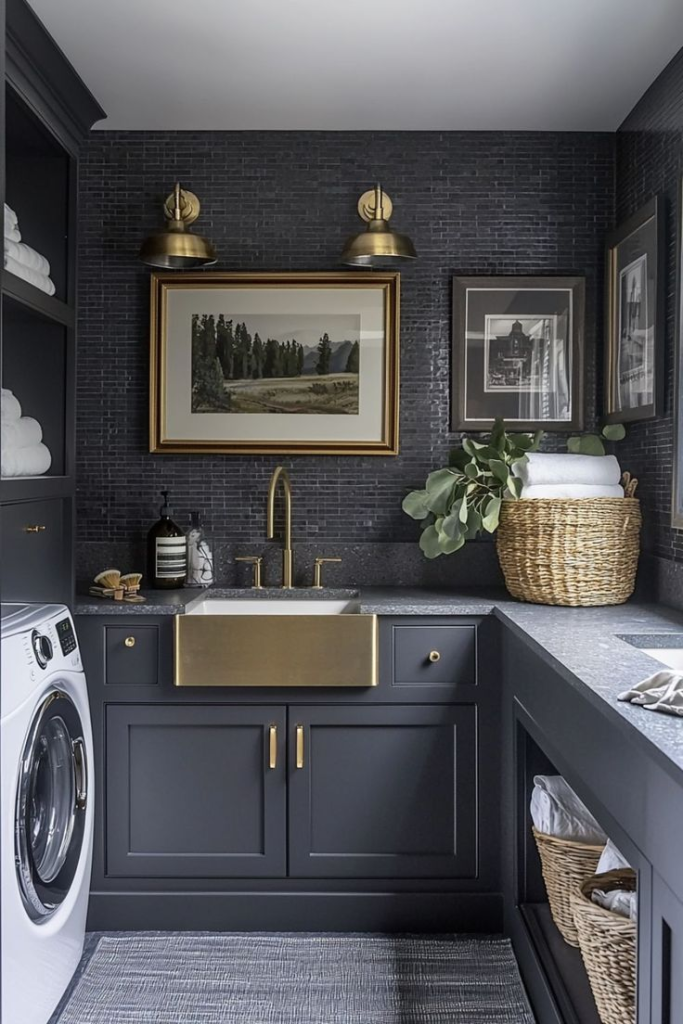
Simply put, a sink turns your laundry room into a mini utility hub. It expands the functionality beyond what the machines alone provide. No wonder homeowners rank laundry sinks as a highly desired feature – they routinely come up in surveys and design wishlists. At MGS, if there’s an easy way to tie a sink into the laundry design, we almost always recommend it.
CREDIT: PINTEREST
Sink Size, Placement & Plumbing Considerations
If you’re sold on including a sink, keep these specifications and tips in mind:
- Type of Sink: Common options are a deep utility sink (often made of plastic or stainless, very durable and deep), a standard kitchen-like sink (stainless or composite, drop-in or undermount), or even a small tub sink. If you have the space, we lean towards a deep laundry tub style – something like 12″+ depth and fairly wide (say 20″ or more). This way you can fit a bucket or soak a large sweater flat. Freestanding utility tubs on legs are economical but can look utilitarian; you can also inset a deep sink into a cabinet for a cleaner look. For a more upscale design, some choose a farmhouse-style sink or stainless utility sink that looks sleeker but still is rugged. Materials like polypropylene (plastic) are inexpensive and resist chemicals (great if you work with dyes or bleach), stainless steel can handle hot liquids and is easy to sanitize, and quartz composite sinks now come in colors if you want style.
- Placement: Ideally, the sink goes near your washer (for transferring soaked items easily) and near a countertop if you have one (for convenience of shifting items around). Often, the sink is at one end of a counter run or immediately next to the washer. Make sure you have some landing space next to the sink – at least one side with some counter to put things on. If your room is small, even 12″ of counter or a shelf next to the sink helps. Also consider height: standard sink in a base cabinet will be ~36″ high countertop. That’s fine for most uses, though if you are on the shorter side and chose a really deep sink, you might find it a stretch to reach the bottom – in which case a stepstool stored nearby could help, or opt for a slightly shallower sink.
- Faucet & Fixtures: Get a faucet with a sprayer if possible. Many laundry faucets are a single-handle design with pull-out sprayer, which is super useful for rinsing corners of the sink or spraying off muddy shoes. Some even have a threaded spout where you can attach a garden hose if needed (think washing the dog with warm water from inside – nice!). We suggest a tall gooseneck or a utility faucet that can pivot out of the way. Remember you might be filling buckets, so height clearance above sink matters. An old-school approach is a separate wall-mounted faucet above a utility tub – robust and out of the way. Modern approach is a countertop-mounted faucet similar to kitchen ones.
- Splash Zone & Surrounds: Plan for splashing. If the sink is against a wall, put a backsplash material that can handle water (tile, stainless sheet, even a good semi-gloss paint at minimum). If it’s under a window, ensure the window trim is sealed or use waterproof materials (e.g., PVC trim). Also, keep outlets a safe distance to the side of or above the sink to avoid water contact (usually one outlet for the washer and one for the dryer; these should be GFCI/AFCI protected per code when near a sink). Often we tile 18″ up the wall behind a laundry sink for easy wipe-down.
- Plumbing Considerations: Adding a sink will require hot and cold water supply lines and a drain connection. If your washer hookup is on the same wall, plumbing is likely already there (which makes it easier). We coordinate with plumbers to tap into those lines. The drain can sometimes go into the same waste line as the washer, but it must be trapped and vented properly to avoid siphoning or gurgling issues. So, some walls might need opening to run a vent or tie into an existing one – something to plan for. Also, ensure the sink drain has a filter or strainer if you’ll do messy stuff (like paint or lots of lint) to avoid clogs. Some utility sinks come with a built-in strainer bucket to catch lint (useful if you hand wash delicates and line-dry instead of using the machine spin).
- Size Appropriateness: If your laundry room is truly tiny (like a closet), you might not have space for even a small sink. But if you have at least, say, a 5-foot width and 2 extra feet of depth, a little bar sink could fit. We’ve squeezed corner sinks in some tight mudroom/laundry combos. Even a little sink is better than none when you need water access. For a comfortable experience, though, allocate at least 24″ of width for the sink area and ideally 15-18″ of counter on one side for soap and such.
In summary, factor a sink into your layout early on. It will need those plumbing rough-ins which are best done during build/remodel, not as an afterthought. Once it’s in, you’ll find myriad uses for it. Our clients often tell us the laundry sink ended up being one of their favorite additions – it’s the kind of practical feature that makes you wonder how you managed without it.
With the key elements of the room covered (appliances, layout, storage, sink), it’s time to consider behind-the-scenes specs – the construction details that ensure your laundry room is safe, quiet, and resilient. These might not be as exciting as a design trend, but they are arguably the most critical specifications of all.
Construction & Behind-the-Walls Specifications Homeowners Should Know
A beautiful laundry room is great, but it must also perform safely and stand up to heavy use. That’s where good construction practices come in. In this section, we’ll highlight some less-visible laundry room specifications – soundproofing, moisture protection, electrical and venting – that are essential for a worry-free, future-ready space. These are areas where MGS Contracting Services really emphasizes quality, because cutting corners here can lead to big problems later.
Soundproofing & Insulation
Washers and dryers can be noisy, especially during spin cycles or when the dryer’s running with buttons and zippers clanking around. If your laundry room is near living areas or bedrooms, you’ll want to contain that noise as much as possible.
- Wall & Floor Insulation: One way to dampen noise is to insulate the interior walls around the laundry room. Standard fiberglass batts or rockwool in the wall cavities will help absorb sound. We often do this for laundry rooms adjacent to bedrooms. It’s a relatively low-cost addition during construction that can make a noticeable difference. For an upstairs laundry, also consider insulating the floor joists below it. Not only does that help with airborne sound, but it can reduce some vibration transmission. There are sound-rated drywall and resilient channel techniques too – for extreme cases (like a home theater adjacent to laundry), but most homes won’t need to go that far.
- Solid Core Door: Another trick – use a solid core door for the laundry room instead of a hollow door. Solid doors block sound better. As we discussed, pocket doors leak more noise, so if noise is a top concern, stick with a solid swing door with weatherstripping. It’s akin to creating a sound lock.
- Anti-Vibration Measures: Beyond insulation, we physically reduce noise at the source by using anti-vibration pads under the washer feet, ensuring the machine is level (wobbling causes a lot of racket), and sometimes adding rubber grommets or dampers where the machines might touch cabinets. Some newer washers have quiet or “inverter” motors that are much smoother; worth considering if noise is a big issue – you might invest in a quieter model. We’ve had clients put their laundry near nurseries, and by combining all these measures (insulation, solid door, quiet appliances, etc.), they could run a load while the baby slept undisturbed.
Why go to these lengths? Because laundry noise travels more than expected if not mitigated. Think of the spin cycle vibrations that can resonate through wood framing, or the dryer buzz you hear two floors away. It can be a real annoyance. The goal of these laundry room specifications is to make the rest of your home as peaceful as if the laundry wasn’t even running.
Water Protection & Leak Prevention
Water is the big wildcard in any laundry room. You have incoming water lines under pressure, and you have waste water being spun and pumped. Leaks or overflows can cause serious damage if not prepared for. Here’s how to stay ahead:
- Floor Drain or Drain Pan: If your laundry is on an upper level or main floor (over finished space), strongly consider a floor drain or at least a drip pan under the washer. A floor drain is like insurance – rarely used, but when that washer decides to overflow or a hose bursts, it can save you thousands in water damage. In some locales or new builds, a floor drain might even be required by code for second-floor laundry. We install a waterproof pan under the washer connected to a drain line. This way, if the washer leaks, the water is directed to the pan and down the drain instead of into your flooring. Even on a slab or basement, a floor drain is nice to have to handle any water (plus you can hose down the floor if needed). MGS often advises this upgrade, because we’ve seen what even a small leak can do over time (warped hardwood, mold, stained ceilings below… not pretty).
- Automatic Shutoff Valves: Another high-tech helper are auto shutoff valves for the washer. These devices sense if water is flowing when it shouldn’t (some detect electrical current draw of the washer or have a moisture sensor on the floor) and automatically close the water supply valves. Basically, they turn the water off if the washer isn’t on, or if a hose bursts. We love recommending systems like the Watts IntelliFlow or simple leak sensors that connect to smart home systems. They aren’t too expensive considering the peace of mind. Real-world scenario: a client was on vacation when their old rubber washer hose split – the auto valve detected the flood and shut water off, saving their brand new hardwood floors. They walked into a house with maybe a cup of water on the floor instead of hundreds of gallons. That one feature saved them literally tens of thousands in potential repairs. MGS includes at least basic laundry leak sensors in many renos now.
- Quality Hoses & Connections: This is less glamorous, but use braided stainless steel hoses for your washer connections. The cheap rubber ones can rupture as they age (we’ve all heard horror stories). The cost difference is minor. Also ensure the drain hose is securely in the wall drain or utility sink – a dislodged drain hose can pump 20 gallons of water onto your floor in minutes. Part of our laundry room specifications checklist is verifying the drain is clamped or fixed so it can’t pop out due to vibration.
- Sealing & Waterproof Materials: For flooring, consider tile or waterproof vinyl in a laundry, especially on upper floors. If water does escape, tile floors with proper underlayment can contain small spills. We sometimes run a short 4” tile up the wall as a mini backsplash at the floor – so if a bit of water pools, the baseboard isn’t wood that’ll swell. Caulk the edges. Essentially, treat an upstairs laundry almost like a big shower in terms of planning for water – contain and direct any “oops” water to a safe path. This includes things like ensuring the door threshold has a slight bevel so water doesn’t immediately run out of the room.
All these measures are preventative. You hope to never need them, but if you do, they can be house-savers. As one of our senior project managers likes to say, “Plan for the worst, and your home will be at its best.” We extend that philosophy to laundry room design by making it as flood-proof as feasible.
Electrical, Gas & Venting Requirements
Last but certainly not least, the technical guts: your laundry’s power and ventilation. Improper setup here can be dangerous (fire hazards, etc.), so pay close attention to these specs:
- Electrical: Washers (in the US) run on standard 120V circuits, but dryers can be either 240V electric or gas (120V for the control/tumbler and gas for heat). An electric dryer draws a lot of power (typically 30 amps on a 240V circuit). Never use an extension cord for a dryer or washer – these appliances should be directly plugged into appropriate outlets. Extension cords can overheat and are not rated for continuous large loads; it’s a fire risk. So position outlets where cords will reach easily. Also, as of recent codes, laundry areas need GFCI/AFCI protected circuits (ground-fault and arc-fault interrupters) for safety – this often means a special breaker or outlet type, which an electrician will handle. If you’re doing a major remodel, expect to run a dedicated 120V circuit for the washer (20A typically) and a dedicated 240V for electric dryer (30A). If a gas dryer, you still need a 120V 15A for the dryer’s motor/timer.
- Gas Line (if applicable): If using a gas dryer, you’ll need a gas supply line run to the laundry area. This must be done by a professional to ensure no leaks. The line should have a shutoff valve that’s accessible (usually right behind the dryer within reach or in a cabinet next to it). Gas dryers are efficient but remember to budget the cost of running that gas line if it’s not already there. Also ensure proper ventilation for the gas exhaust (which is via the dryer vent, so treated similarly to electric in terms of venting path).
- Dryer Vent Length & Routing: Dryer venting is critical. A poor vent setup not only dries clothes slowly, but it’s a major fire hazard (lint buildup in a long, twisty vent can ignite from dryer heat). Keep the vent run as short and straight as possible. Many codes limit the equivalent length (with bends factored) to around 35 feet for a dryer, minus some length for each elbow. Our laundry room specifications always plan the dryer on an exterior wall or as close to one as we can to minimize vent distance. Use 4″ rigid metal duct for most of the run (not the flexible plastic or foil – those are only for short connections and even then, we prefer the semi-rigid metal flex). Every turn or elbow adds resistance; we keep them to a minimum and use long-sweep elbows if possible.
We also think about where that vent exits: it should go to an outdoor wall with a proper cap (with a damper to keep critters out). Avoid venting out through the roof if you can (gravity is not helping you there, and cleaning it is harder). If a roof vent is necessary, ensure the duct goes straight up and out with minimal horizontal runs. And absolutely no venting into attics or crawl spaces – you’d be surprised, we’ve seen DIY stuff like that which causes mold and fire hazards. - Vent Fire Safety: Dryer vents must be cleaned periodically. As part of design, making the vent run accessible (like in an attic or crawl) or having an inspection door can be helpful. We often install an indoor lint trap/filter box for long runs or booster fans if needed, but best to avoid needing those. One more thing: don’t push the dryer too far back crushing the vent – we sometimes install a recessed dryer vent box in the wall so the dryer can snug up without crimping the hose.
- Additional Ventilation (Room ventilation): If your laundry room is small and you frequently hang clothes to dry inside, consider an exhaust fan or at least the ability to open a window. The moisture from wet clothes and the heat from the dryer can make the room humid. A simple bathroom-style exhaust fan on a timer can help evacuate that humidity (especially if your dryer is in a closet or interior room). It’s not always needed, but for enclosed or un-air-conditioned spaces it’s worth thinking about.
Following these laundry room specifications for electrical and venting will ensure your laundry room operates efficiently and safely. We always say a laundry room is part appliance center, part plumbing hub, part utility zone – it really touches all the trades. So getting those technical details right is just as important as picking the perfect tile.
Now that we’ve covered the gamut from dreamy design features to the nitty-gritty construction must-haves, there’s one more angle to examine: making the laundry room accessible and convenient for everyone, regardless of age or mobility. Let’s explore some forward-thinking design considerations next.
Aging in Place & Accessibility Considerations
Whether you plan to stay in your home long-term or want to make it welcoming for all ages and abilities, it’s wise to incorporate universal design principles into your laundry room. Aging in place means designing a home to be livable as your physical needs change (or accommodating someone with disabilities). The laundry room, with its heavy lifting and bending, can be particularly challenging for older adults or wheelchair users if not planned right. Here are some laundry room specifications to ensure accessibility and ease of use for all:
- Doorways & Clearances: We already stressed wider doors for moving appliances, but it doubles for wheelchair access. Aim for 36″ wide doors which give a 34″ clear opening – enough for most mobility devices. Also maintain a clear floor space of 30″ x 48″ in front of appliances for someone in a wheelchair to approach head-on. In practice, this overlaps with the 48″ front clearance we mentioned for loading front-loaders – that spec benefits wheelchair users too. Also consider the path to the laundry room: no steps ideally, or provide a ramp if needed.
- Front-Loading Machines at the Right Height: For someone using a wheelchair, the controls and door of the washer/dryer should be reachable. ADA guidelines suggest the bottom of the door opening on front-load machines should be between 15″ and 36″ off the floor. Standard front-load on the ground meets that. Interestingly, pedestals that make it easier for standing persons might put the controls out of wheelchair reach (too high). So there’s a trade-off. One approach is to have machines on pedestals but also have a low counter or surface that a seated person can use for sorting/folding. Or skip pedestals to keep controls reachable and mitigate bending with a seated work area or grabber tools. It really depends on the user’s specific needs.
- Seated Work Options: Provide a knee space under a counter or a pull-out shelf where someone can sit and fold or treat clothes. For example, a desk-height counter segment (30″ high) with open space beneath could allow a chair or wheelchair to roll under. This could double as a sewing station or just a place to sit while doing tasks. Additionally, consider a wall-hung fold-down bench or chair so someone can sit while taking things out of the dryer if standing for long periods is an issue.
- Lever Handles & Easy Grips: Use lever-style faucet handles (much easier on arthritic hands than twist knobs). Same for the door handle to the room – a lever is simpler than a round knob. Cabinet handles should be chunky enough to grip. Avoid small fiddly latches. Pull-down rods or easy reach systems can be installed for high hanging rods so someone can lower them to reachable height (there are closet systems that do this with a swing-down mechanism).
- Lighting & Contrast: Aging eyes need better lighting. We make sure laundry rooms are very well lit, often with LED panels or multiple fixtures providing diffuse light (minimize glare though). Also, using contrasting colors (e.g., different color countertop edge vs. floor) helps with depth perception – reduces risk of tripping or losing sight of edges.
- Safety Features: Non-slip flooring is a must (textured tile or slip-resistant vinyl). Rounding corners on countertops can prevent hip injuries if someone shuffles or uses a walker. If the user might have balance issues, having a stool or small bench to sit on, and maybe even blocking out a space for it in the design, can be helpful.
- Appliance Controls: Some washers/dryers now come with smart features that can be controlled via phone or voice. For someone who can’t bend to see controls well, these can be a boon. Also, models with controls at the front (not rear) are important for reach. When selecting appliances with accessibility in mind, look for ones labeled ADA compliant; they meet certain height and usability criteria like mentioned above.
Why include these features even if you don’t need them right now? Because planning ahead can save money later. Installing blocking in walls now for future grab bars or adding the knee space in a cabinet run are easier done in initial construction. Plus, if reselling, a home with some universal design features can appeal to a broader market (e.g., an elderly buyer might love that your laundry is already set up for them).
At MGS, we often incorporate at least a couple of these ideas by default – it’s part of building “future-ready” spaces. For example, we might design the room so a lower cabinet could be removed to create knee space down the line, or just put one in now and make it a seating nook with a cushion that can later become wheelchair space. These laundry room specifications for accessibility ensure that as life changes, the laundry room remains usable and safe.
Now, having covered pretty much everything from trends to tech to aging, let’s wrap up by looking at common pitfalls and how to avoid them – essentially a quick checklist of mistakes we’ve seen and solutions we apply.
Common Laundry Room Design Mistakes (and How MGS Helps You Avoid Them)
Even with all the best intentions, there are a few pitfalls that can trip up a laundry room project. We’ve touched on many throughout this discussion. Let’s summarize some of the most common mistakes and how to sidestep them with smart laundry room specifications and good planning (with a little brag on how MGS Contracting Services guides clients around these traps):
- Designing Too Tightly: Mistake – trying to shoehorn too much into too small a space, leaving no elbow room. Symptoms include doors hitting appliances, washers crammed so tight you can’t even retrieve that sock that fell behind, and zero space to sort clothes. Our solution: We measure clearances obsessively and insist on those 1″, 6″, 4′ clearance rules we talked about. If a client wants to add one more cabinet but it’ll make the room feel cramped, we advise function over filler. We might use creative storage (like behind-the-door racks) instead of putting a cabinet where it blocks movement. When we hand over a design, we often have the client simulate it: “Here, open this pretend washer door – see, you have room to stand and bend.” It’s a little roleplay that can reveal if it’s truly comfortable. We avoid layouts that look good on paper but fail in practice.
- Prioritizing Looks Over Workflow: Mistake – focusing on pretty finishes and forgetting the flow. Example: gorgeous cabinets but they open the wrong way for how you move items, or trendy open shelving but nowhere to hide the not-so-pretty necessities. Our approach: Marry aesthetics with utility. We ensure that every design decision checks both boxes. Want that beautiful patterned tile floor? Great – we also make sure it’s not too slick and that the grout can handle potential spills. Eyeing a dramatic paint color? Fine – but we’ll suggest semi-gloss finish so it’s scrubbable. We work with interior designers or directly with homeowners to pick materials that look awesome and perform. We also use 3D renderings to visualize where everything goes so the client can “walk through” the workflow mentally. If something seems inconvenient, we catch it in the design phase.
- Forgetting Future Appliance Changes: Mistake – customizing spaces for current appliances and not expecting different ones. (A top loader now but maybe a front loader later; a vented dryer now but perhaps a heat-pump ventless in the future, etc.) Our foresight: We build in wiggle room as mentioned. Also, we run a neutral electrical and plumbing setup that can accommodate either gas or electric dryers (if feasible) – for instance, if you have gas now, we might still run a 240V outlet tucked away, or vice versa, to keep options open. If cabinets are built around a specific size, we leave adjustable fillers or panels that can be moved if needed. It’s like designing with a little contingency everywhere. It’s not hard or costly, it just requires thinking ahead.
- Underestimating Storage and Counter Needs: Mistake – “Oh, I thought 12 inches of counter would be enough” said no one ever after living with it. Or assuming two small cabinets would suffice when bulk buying supplies wasn’t considered. How we help: In the planning stage, we ask clients to list what they store and their shopping habits. If they tell me “I buy the Costco size detergent and also stock 5 different stain removers,” I know we need considerable shelf space at reachable height. We tend to overshoot a bit on storage (“build for the max you’ll have to store, not the minimum”). For counters, we mock up how a laundry basket or a typical folded stack fits. Seeing a realistic use-case on the plan can convince someone that, yes, that extra bit of counter is worth giving up maybe a little-used closet.
- Skipping Protective Construction Upgrades: Mistake – to save a bit of money, not adding that floor drain, not insulating, not upgrading the vent, etc., then paying for it later in repairs or inefficiency. Our stance: We are frank with clients about the risks. We share anecdotes (like the time we went to remodel a laundry and found mold everywhere because it had been venting into the attic, yikes). We highlight that spending a few hundred now on leak prevention or safe wiring is nothing compared to an insurance deductible on a flood or fire claim. We try to make these not feel optional. However, if budget is really tight, we’ll prioritize: e.g., at least install a washing machine pan even if a floor drain isn’t in budget, or at least use GFCI outlets even if we can’t rewire the whole panel. Some protection is better than none. But generally, our clients trust our emphasis on doing it right behind the walls so they can enjoy the pretty stuff worry-free.
To boil it down: many mistakes stem from either not putting yourself in the daily shoes of using the room, or trying to cut corners in the wrong places. By hiring pros like MGS (shameless plug), you benefit from our hindsight – we’ve seen what works and what fails, so we guide your project to avoid those common pitfalls.
And with that, we’re almost ready to wrap up our comprehensive journey through laundry-land. Let’s conclude with some final thoughts on why all this effort and attention to detail is worth it, and how MGS Contracting Services can help turn your laundry room into one of your favorite rooms in the house.
Final Thoughts: A Laundry Room That Works as Hard as You Do
Laundry may never be anyone’s favorite chore, but designing a laundry room that is efficient, comfortable, and yes – even attractive – can make this everyday task a whole lot better. The key takeaway from all these laundry room specifications and ideas is that laundry rooms deserve the same attention as kitchens or bathrooms when it comes to design and build. After all, you probably use your laundry room just as often!
Investing in a well-planned laundry area pays off in daily convenience and peace of mind. Think of how satisfying it will be to have a place for every detergent bottle, a counter where you can actually fold a full load without balancing it on top of the dryer, and a layout where you’re not banging your hip on the door every time. Not to mention the less visible perks: a quiet washer that doesn’t wake the baby, a floor drain that you’ll probably never need but that lets you sleep at night without fear of water damage, and proper ventilation so your dryer runs efficiently and safely. All these little things add up to a space that works as hard as you do.
The value of professional design + construction coordination in achieving this cannot be overstated. A laundry room seems simple – it’s basically just appliances and some shelves, right? – until you try to juggle the clearances, the plumbing, the venting, the storage, and the aesthetics all at once. That’s where a knowledgeable contractor comes in. At MGS Contracting Services, we approach laundry rooms with a blend of:
- Practical expertise: We know the code requirements, the optimal dimensions, the best materials for longevity. We’ve installed countless washers, run miles of vent pipe, and fixed previous mistakes made by others. That experience is baked into our planning. We won’t let you put a dryer in a spot that won’t vent properly, for example, because we know the implications. We ensure your laundry room specifications meet all safety and performance standards so you don’t have to worry.
- Builder foresight: We think ahead to future needs and “what-ifs,” as we discussed. We build in extra support, extra outlets, extra smarts where it could matter down the road. Our team coordinates all the trades – electrical, plumbing, carpentry – so that nothing is overlooked. Ever seen a beautiful cabinet installation only to find out the outlet for the dryer was forgotten? We coordinate everything in our project management so your result is turnkey and hassle-free.
- Homeowner empathy: Perhaps most importantly, we listen to how you do laundry. Every household has its quirks – maybe you air-dry half your clothes, or you do marathon laundry on weekends, or you need the room child-proofed, or it doubles as a mudroom for your golden retriever. We factor all that in. Our goal isn’t to impose a design, but to create one that genuinely improves your daily life. As we often say, the best-designed room is the one you don’t have to think about – it just works. You’ve got enough on your plate; let the laundry room ease your load (pun intended).
By now, you’ve seen how detailed and thoughtful a laundry room project can be. We hope this guide has armed you with knowledge and inspiration. If reading this has your wheels turning about your own laundry space – whether it’s a full renovation, a modest upgrade, or a brand new home build – we’d be excited to help you make it a reality.
Invite homeowners to schedule a consultation: Ready to banish the dingy, inefficient laundry days of old? Reach out to MGS Contracting Services for a personalized consultation. We’ll assess your current setup, discuss your wish-list (go ahead, dream a little – we love a design challenge!), and walk you through how we can transform your laundry room into a star performer.
Remember, a great laundry room isn’t a luxury reserved for magazine spreads – it’s an attainable upgrade that delivers real value and convenience. Let’s work together to design a functional, future-ready laundry room tailored to your needs.
With MGS as your partner, you’ll soon wonder how you ever lived without a laundry room that truly works for you. After all, life’s too short for subpar laundry quarters. Let’s make your laundry room the clean, organized, efficient heart of your home that it deserves to be.
Happy laundering!