
Every spring, homeowners start circling the same task on the calendar: reseal deck boards, clean the grill, put the patio furniture out, and get ready for outdoor season. It sounds responsible. It sounds proactive. It sounds like exactly what a careful homeowner should do. But the deeper you dig, the more obvious it becomes that the automatic urge to reseal deck surfaces every single year is not always smart maintenance. Recent reporting in The Spruce, informed by input from professionals at Yardzen, Cabot, and ArDan Construction, came to the same core conclusion: yearly recoating is usually unnecessary after the initial protection period, and in some cases, trying to reseal deck wood too often can actually create new problems instead of preventing them.
For MGS Contracting Services, this topic fits naturally into the company’s wheelhouse. Chris Chapman, the owner of MGS, says on the company’s official site that he served in the Marines, founded MGS to channel a lifelong passion for hands-on building, and operates from Leesburg while serving homeowners across Loudoun and Fairfax counties. MGS also publishes deck-specific guidance and says on its own deck pages that it has built many decks across Loudoun and Fairfax and approaches deck work with an emphasis on transparency, homeowner education, and long-term performance.
That is the right frame for this entire conversation. Deck maintenance is not about doing more. It is about doing the right work, in the right season, with the right product, for the right reason. If you only remember one idea from this article, let it be this: do not reseal deck boards because the calendar says April, do not reseal deck surfaces because your neighbor did, and do not reseal deck wood simply because “more protection” sounds better. Ask what the deck is made of, what finish is already on it, how it is exposed to sun and moisture, and whether the wood is actually telling you it is time.
So let’s set the record straight in a contractor-friendly, homeowner-readable way. We are going to talk about what sealing actually does, why it helps, why it can go wrong, how often most homeowners should reseal deck areas in Northern Virginia, how to test whether your finish is still working, how to choose the right stain or sealer, the best weather window for the job, and the line between a perfectly reasonable DIY project and the moment it makes more sense to bring in a pro.
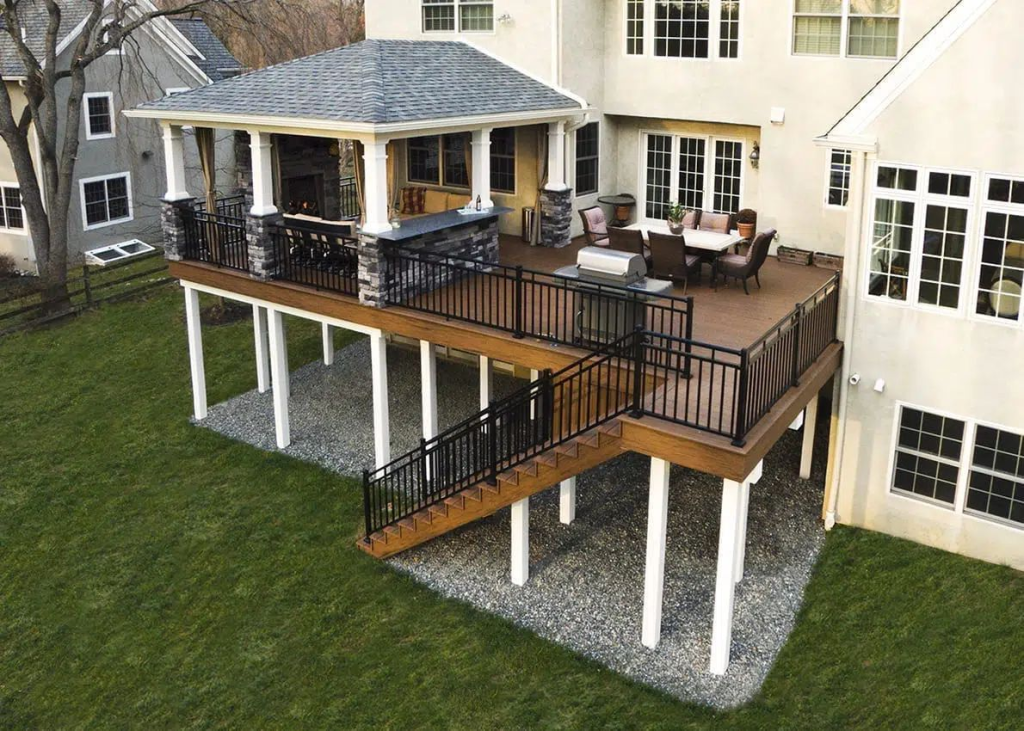
CREDIT: KEYSTONE
Why Homeowners Think They Should Reseal Deck Every Spring
The idea that you should reseal deck boards every year did not appear out of nowhere. Wood decks live a hard life. The USDA Forest Products Laboratory describes weathering as a slow degradation driven by moisture, sunlight, heat and cold, abrasion, chemicals, and biological agents. In plain English, that means your deck is getting blasted by rain, baked by UV, scraped by furniture, sanded by foot traffic, and challenged by whatever pollen, mildew, leaf debris, and humidity your yard can throw at it. When homeowners hear all of that, it feels logical to reseal deck surfaces as often as possible.
And to be fair, the instinct behind regular maintenance is not wrong. Wood is hygroscopic, which means it takes on and releases moisture from the surrounding environment. USDA materials on wood durability and biodeterioration explain that decay fungi need moisture, oxygen, and suitable temperatures to grow, and that managing moisture is central to keeping wood in service longer. So yes, there is a real reason to reseal deck wood at appropriate intervals: the finish helps reduce water intrusion, slows weathering, and gives the surface more of a fighting chance against a cycle of soaking, drying, expanding, shrinking, and eventually splitting.
When you reseal deck boards with an exterior product designed for decking, you are usually trying to accomplish three things at once. First, you want moisture resistance, so rain and humidity are less likely to sink straight into the grain. Second, you want UV resistance, because sun exposure breaks down wood fibers and fades color. Third, you want wear resistance, because a deck is a living part of the house, not a decorative shelf. Sherwin-Williams, Cabot, and Behr all frame exterior deck stains and sealers around that same basic idea: protection from water, sun, and daily use.
This is also where homeowners can get tripped up by language. Many people say “seal” when what they really mean is stain, and many modern products combine stain and sealer in one system. Sherwin-Williams notes that high-quality exterior stains are meant to protect and beautify wood, while Cabot and Behr market stain-and-sealer products specifically for moisture and UV resistance. So when people talk about whether to reseal deck surfaces, they are often really asking whether to recoat the deck with a penetrating stain, a semi-transparent stain-and-sealer, a solid-color stain, or another protective finish that sits somewhere between raw wood and paint.
That distinction matters because not every finish behaves the same way, not every wood species absorbs the same way, and not every deck should be treated like the same deck. A homeowner with a pressure-treated pine deck in full sun may need to reseal deck boards on a very different schedule than a homeowner with a partially covered redwood deck, and both of them have a completely different maintenance reality than someone standing on a composite deck that the manufacturer says does not need seasonal sealing or staining at all.
What Actually Happens When You Reseal Deck Wood At The Right Time
When you reseal deck wood at the right time, the result is usually boring in the best possible way. Water beads instead of soaking in. The grain looks healthy instead of thirsty. The boards stay less prone to fuzzing, splintering, and checking. The color holds better. And because the finish is doing its job, the deck itself is not forced to absorb the full abuse of every passing season. Cabot’s maintenance guidance says a simple rule of thumb is that if the coating is still repelling water, it is still performing; if it is not, the deck may need attention.
That moisture barrier is not magic, and it is not permanent, but it is hugely important. Once wood repeatedly wets and dries, it moves. Board ends can split. Surface fibers can roughen. Fastener areas can begin to loosen their clean, tight appearance. And if trapped moisture starts feeding fungal activity over time, the problem moves from cosmetic to structural. That is why professionals do not talk about the decision to reseal deck boards as a purely aesthetic issue. It is a maintenance issue tied directly to service life. USDA research on wood protection puts moisture management at the center of durability, and MGS’s own deck maintenance article makes the same practical point for Northern Virginia homeowners: routine upkeep prevents small issues from becoming expensive ones.
UV protection is the second piece most homeowners underestimate. Water damage feels obvious, because you can imagine rot. UV damage feels cosmetic, because people mostly think of fading. But sunlight does more than bleach a color. USDA literature on wood weathering points to ultraviolet exposure as a major driver of surface degradation, and manufacturers repeatedly highlight UV-blocking pigments as part of why exterior stains last longer than simple water repellents. Behr says its semi-transparent waterproofing systems protect against the sun’s harmful rays, while Ready Seal explains that pigments are a major part of UV protection. In other words, when you reseal deck boards with the right chemistry, you are protecting both appearance and surface integrity.
The third benefit is simple everyday resilience. Foot traffic, chairs dragging, potted plants, dropped tongs from the grill, wet dog paws, and kids sprinting in and out of the house all wear a deck down. The exposed top surface gets the brunt of that abuse. The finish will never make wood indestructible, but it can lower how quickly the surface becomes rough, faded, or uneven. That is why to reseal deck surfaces at the right moment is smart. You are not trying to create an immortal deck. You are trying to make normal life harder on the finish than on the wood itself.
This is also why penetrating deck systems are often preferred over paint-like films for many wood decks. Sherwin-Williams explains that deck sealers and stains protect wood while still allowing moisture to pass through more readily than a continuous paint film, which reduces the likelihood of blistering and peeling. That is a crucial concept. A deck should be protected, but it also needs a finish that fits how a horizontal exterior surface lives. When homeowners decide to reseal deck boards, they are usually better off thinking in terms of breathable, exterior-grade deck coatings instead of thick, furniture-like finishes that belong indoors.
Why It Can Be A Mistake To Reseal Deck Boards Every Year
Here is the short answer homeowners usually come looking for: no, you do not usually need to reseal deck boards every single year, and in many cases you should not. The recent Spruce reporting is clear on that point. After the early protection phase, many decks do better on a longer cycle, with two to three years being a common benchmark for average conditions. Cabot’s technical guidance lines up with that broader idea by distinguishing between clear finishes that wear faster and pigmented finishes that can go longer before reapplication.
The first reason yearly recoating can backfire is buildup. When homeowners reseal deck surfaces simply because it has been twelve months, they often add finish before the previous coat has worn or before the wood is ready to accept more material. Cabot specifically warns that certain products can flake and peel when over-applied. Sherwin-Williams also warns that surfaces with poor prep or poor adhesion are likely to peel. A deck that starts out looking “extra protected” can quickly shift into the uglier reality of film buildup, patchiness, and a finish that fails at the top layer instead of sinking properly into the wood.
The second reason yearly recoating can be a mistake is trapped moisture. When people reseal deck wood too aggressively, especially with the wrong kind of coating or over unready wood, the finish can interfere with how the deck dries. Cabot’s moisture-control bulletin explains that peeling, flaking, blistering, fungus growth, and related failures are often symptoms of excessive moisture. Sherwin-Williams likewise points out that trapped moisture beneath a continuous film can drive adhesion failure. If moisture gets in from below, from the board ends, from fastener penetrations, from sprinklers, or from incomplete prep, a too-heavy recoat does not solve the water problem. Sometimes it hides it just long enough for it to get worse.
The third reason yearly recoating can go sideways is that it makes homeowners feel productive while skipping the more important work. A lot of deck failures are not really “coating calendar” failures. They are prep failures, drainage failures, air-circulation failures, and inspection failures. Low decks with poor airflow, decks near sprinklers, decks with leaf litter packed between boards, and decks with hidden mildew under planters can all suffer even if you dutifully reseal deck boards every spring. Cabot’s technical bulletin specifically warns that low or skirted decks can hold excessive moisture because of poor air circulation, and MGS’s own deck-cleaning guidance for Virginia emphasizes that moisture beneath the deck is a major hidden threat.
There is another uncomfortable truth here too: some people keep trying to reseal deck surfaces because the last application failed early, and they assume the answer is to apply even more product. But a sticky, blotchy, or flaking surface is often a sign of excess stain, poor prep, direct-sun application, or recoating too soon. Sherwin-Williams says excess stain can create uneven drying or a sticky surface, and Behr gives the same warning about overapplication causing tackiness and poor absorption. The answer is usually not “more.” The answer is to figure out why the previous attempt did not bond, absorb, or cure the way it should have.
Now, does that mean no deck ever needs yearly attention? No. If you use a very clear finish with limited pigment, Cabot says reapplication can be needed as often as six months to one year on decks. A heavily exposed deck in punishing sun, with full weather exposure and constant use, may also need inspection much sooner than a more sheltered deck. So the right takeaway is not “never reseal deck boards every year.” The right takeaway is “do not make yearly recoating your default without looking at the finish type, the exposure, and the actual condition of the wood.”
How Often To Reseal Deck Surfaces In Northern Virginia
For most wood decks, a much more honest answer is this: inspect every year, but do not automatically reseal deck boards every year. Many pros and product makers converge around a two- to three-year recoat cycle for average-use wood decks, with earlier attention for harsher exposure and later attention when the coating is still performing well. The Spruce article cites a post-installation coat, another early coat in the following year, and then less frequent maintenance after that. Cabot’s technical guidance also says pigmented deck stains generally need inspection and reapplication on longer cycles than clear finishes.
But there is an important nuance hiding inside the “first year” advice, and it matters a lot if you have pressure-treated lumber. Several manufacturers warn that freshly treated lumber may not accept a finish immediately. Cabot says freshly treated wood may need to dry until the treatment wears down enough for stain to penetrate, and Sherwin-Williams says the old rule of simply waiting for the green tone to fade is outdated. Ready Seal says new pressure-treated lumber may need at least a month of dry time and often more depending on humidity and location. So if you are building a new deck and planning to reseal deck surfaces quickly, the water test matters more than the calendar.
Finish type changes the schedule too. This is where one-size-fits-all advice really falls apart. If you reseal deck boards with a clear finish, you should expect shorter service life because there is less pigment standing between the wood and the sun. Cabot’s bulletin says clear finishes on decks often need reapplication in six months to one year, while pigmented finishes commonly run two to four years, and solid-color decking stains should be inspected every two to three years. That means a homeowner who says “I have to reseal deck wood every year” may be accurately describing a clear product in brutal exposure, while another homeowner saying “I only reseal deck boards every three years” may be accurately describing a semi-transparent or solid system that still beads water and looks good.
Material changes the schedule even more. Pressure-treated pine, cedar, and redwood generally need periodic recoat attention if you want them protected and looking their best. MGS’s own deck-material guide says pressure-treated wood can crack and splinter without regular upkeep and sealing, and that neglected redwood can dry out and splinter over time without periodic recoat protection. Hardwoods such as ipe may remain structurally durable even without routine sealing for rot prevention, though owners often oil them for color retention. Composite is the outlier: Trex markets composite specifically as low-maintenance and says it does not need seasonal painting, sealing, or staining. So before you decide when to reseal deck surfaces, make sure your deck is actually the kind of deck that benefits from sealing in the first place.
Location matters too, and this is where Northern Virginia homeowners need to stop borrowing advice from random climates online. Virginia’s official state climate summary describes the state as humid, with very warm summers and moderately cold winters. The Virginia Climate Center’s Dulles climatology page adds that precipitation tends to be higher in summer than in winter and that daily conditions can swing notably around monthly averages. Put simply, homes in Loudoun and Fairfax do not live in a gentle, unchanging environment. They live through humid summers, wet periods, sun exposure, and a seasonal cycle that forces wood to expand, contract, and dry unevenly. That is exactly why MGS’s deck content keeps returning to climate-aware maintenance for Northern Virginia homeowners.
Exposure around the house matters just as much as the broader region. A deck in full southern or western sun may need you to reseal deck boards sooner than the same boards on the shaded side of the house. Decks around pools or in the line of sprinkler spray can stay wetter. Decks low to the ground can suffer airflow problems below. Decks that host constant entertaining, pets, and furniture movement simply wear faster. That means even inside one neighborhood, two homeowners may need to reseal deck surfaces on very different schedules even if they bought the same product in the same month.
So what is the practical answer for a typical wood deck in Leesburg, Ashburn, Sterling, Reston, Herndon, or nearby Northern Virginia communities? Inspect every spring. Be prepared that many decks will need you to reseal deck areas every two to three years. Expect sooner maintenance for clear finishes, punishing sun, heavy wear, or water-prone conditions. Expect longer performance when the coating still beads water, the wood still looks healthy, and the product you used was designed for longer service life. That is the kind of answer homeowners can actually use.
How To Know When To Reseal Deck Boards And Which Product To Use
If you want the single easiest test before you reseal deck boards, use water. Cabot, Lowe’s, This Old House, and the recent Spruce reporting all point to some version of the same bead test. Sprinkle or pour a small amount of water on a clean, dry section of deck and watch what happens. If the water beads and sits on the surface, the existing finish is still doing meaningful work. If the water darkens the wood quickly and soaks in, it is a sign the protection is fading and it may be time to reseal deck surfaces. This is why good contractors say do not seal by calendar; seal by condition.
The visual clues matter too. Homeowners usually know they need to reseal deck wood when the boards begin to look flat, dry, or thirsty. Common signs include fading, graying, roughness under bare feet, splintering, visible wear in high-traffic lanes, and water no longer beading. Those signs do not all mean the deck is structurally failing, but they do mean the finish is not carrying its share of the load anymore. If you ignore those signs for long enough, the maintenance discussion can shift from “Should I reseal deck boards this season?” to “Why am I replacing boards that should have lasted longer?”
Over-maintenance has signs too, and they are just as important. If a deck feels tacky, looks muddy, shows peeling or flaking, or has shiny patches sitting on top of the grain rather than blended into it, you may have a coating problem rather than an unprotected-wood problem. Sherwin-Williams warns that excess stain can leave a sticky surface, Behr warns against overapplying because it can prevent proper absorption and create tackiness, and Cabot warns over-application can contribute to flaking and peeling. When homeowners see those symptoms and reflexively try to reseal deck surfaces again, they usually deepen the problem rather than fix it.
Choosing the right product starts with honesty about what you care about most. If your top priority is preserving natural grain visibility, a transparent or semi-transparent penetrating product may be the better fit, but those lighter or clearer systems can need earlier maintenance because there is less pigment doing UV work. If your top priority is sun defense and longer color hold, more pigmented systems often make more sense. Sherwin-Williams says the choice between solid color and semi-transparent depends on the look you want, while Cabot and Behr both frame their stain-and-sealer categories around balancing moisture protection, UV resistance, and the amount of natural wood grain you want to show. Before you reseal deck boards, make sure you are solving for both appearance and exposure, not just one.
There is also a category mistake many homeowners make with new wood. They assume the right product will compensate for a deck that is not ready. It will not. Cabot says mill glaze on new cedar or treated lumber can close the grain and repel stain, Behr and Ready Seal both emphasize proper prep and open pores, and Sherwin-Williams says wood must be dry before staining. So if you are trying to reseal deck surfaces on new or relatively fresh lumber, your real first question is not “Which can should I buy?” It is “Will this wood actually absorb what I put on it?”
When To Reseal Deck Coatings And How To Apply Them
Timing is not a side issue. Timing is the job. Sherwin-Williams says to plan around moderate temperatures, generally in the 50 to 90 degree Fahrenheit range, with no rain in the forecast for at least 24 hours. Cabot similarly recommends application when air and surface temperatures are roughly 50 to 90 and when rain is not expected soon, while Behr product sheets repeatedly require the surface to dry at least 24 hours after cleaning before coating. That means if you want to reseal deck boards successfully, a random hot Saturday at noon or a cloudy day that turns stormy by dinner is not “good enough.” It is often the entire reason a job fails.
Time of day matters too. The recent Spruce reporting and Sherwin-Williams application guidance both caution against blazing midday sun because a hot surface can cause finish to dry too fast, reducing absorption and increasing the risk of blotchy or short-lived results. Early morning can be tricky if dew is still present. Evening can be risky if surface moisture returns before the coating has set. If you want to reseal deck surfaces the way a pro would, think mid-morning after things have dried off or later afternoon once the surface is out of harsh direct sun. That is not fussy. That is just respecting how chemistry behaves outdoors.
Preparation is where good intentions go to die. Sherwin-Williams says surfaces should be clean, dry, and free of dust, dirt, grease, and mildew before staining, because dirty surfaces interfere with bonding and can lead to peeling. Cabot and Behr take the same approach, recommending cleaner or stripper systems where needed to remove contaminants, old coatings, and mill glaze. So before you reseal deck boards, sweep thoroughly, clear debris from between boards, deal with mildew, and remove loose or failing finish. The best product in the world cannot bond to pollen, grime, and wishful thinking.
Drying time is just as important as washing. Multiple product guides call for at least 24 hours of dry time after cleaning, and often longer when humidity remains high. Ready Seal goes further and says professionals can verify dry conditions with a moisture meter, recommending wood moisture at 12 percent or less before maintenance application. That is a very contractor-grade habit, but it explains a lot. Homeowners often think they need to reseal deck wood because the last job wore out quickly, when the more likely story is that they coated damp boards and never gave the finish a fair chance to penetrate or cure properly.
Then comes sanding, and yes, it matters more than people want it to. Sherwin-Williams says sanding smooths rough spots and helps stain absorb more evenly. Cabot says new wood may need light sanding to address mill glaze, and Behr Pro recommends 60- to 80-grit paper for deck sanding, while Sherwin-Williams points to 120-grit for stubborn areas when prepping exterior wood. The exact grit can vary by the surface condition and product system, but the principle is consistent: if you want to reseal deck boards well, you need open, clean, receptive wood. A quick pass that removes loose fibers and evens out rough patches often makes the difference between a finish that sinks in and a finish that sits there looking resentful.
Application technique is the part most DIYers underestimate. Work in manageable sections. Follow the grain. Maintain a wet edge. Back-brush if you spray. Avoid puddles. Wipe excess where the product instructions call for it. Sherwin-Williams says wiping up excess helps avoid sticky, uneven drying, and Behr says to back-brush and remove excess to eliminate puddling and distribute stain evenly. This is where trying to reseal deck surfaces “fast” often becomes trying to fix lap marks later. The better mindset is steady, even, and boring. The deck will reward that approach more than it will reward speed.
After application, leave the deck alone long enough to cure. Sherwin-Williams says many deck stains need at least 24 hours to cure fully, with some oil-based systems taking up to 72 hours, and other Sherwin guidance puts normal use back in the 24- to 48-hour window depending on temperature and humidity. That means if you reseal deck boards on Saturday morning and host ten people on Saturday night, you are essentially testing how fast you can mar your own finish. Give the coating a fighting chance to harden, settle, and become the protective layer you paid for.
When To Reseal Deck Areas Yourself And When To Call MGS
There are absolutely times when it is reasonable to reseal deck boards yourself. If the deck is structurally sound, the existing finish is not peeling badly, the bead test says protection is failing, the boards are easy to clean and prep, and you are comfortable following product directions carefully, a DIY maintenance coat can be a smart weekend project. The key is that your job is really a maintenance job, not a restoration job. When you need to reseal deck surfaces that are fundamentally healthy, DIY can make perfect sense.
Where DIY becomes risky is when the project stops being about simple recoat timing and starts being about diagnosis. If you have widespread peeling, tackiness, thick buildup, gray splintering across large areas, soft spots, moisture trapped under the deck, unstable boards, or uncertainty about whether you are even working with pressure-treated wood, hardwood, or composite, it is wise to pause before you reseal deck boards again. MGS’s own public deck guidance repeatedly emphasizes inspection, maintenance, and careful planning, and its under-deck article specifically flags scenarios where hidden conditions call for a professional. In those situations, the smartest money you spend may be on clarity, not on another gallon of finish.
For homeowners in Leesburg and across Loudoun and Fairfax, that is where MGS Contracting Services can fit into the picture. The company describes itself as a veteran-founded, transparency-focused remodeling contractor serving Northern Virginia, and its public deck pages show that deck design, deck building, and deck maintenance are already part of the homeowner education it provides. If you are not sure whether to reseal deck surfaces this season, not sure why the previous coating failed, or not sure whether you are looking at a maintenance issue or the beginning of a repair issue, bringing in a contractor who understands local deck conditions can save both money and frustration.
So, is it really necessary to reseal deck boards every year? Usually, no. Sometimes, especially with clear finishes or punishing exposure, maybe. But for most wood decks, the better answer is not yearly by default. It is inspect yearly, test yearly, clean yearly, and reseal deck areas when the finish has stopped doing its job. A well-maintained deck is not the deck that gets the most attention. It is the deck that gets the right attention at the right time. And if you want the MGS version of the takeaway, it is simple: protect the wood, respect the product, trust the condition of the deck more than the date on the calendar, and when the situation is beyond a simple maintenance coat, call someone who knows how to read what the deck is really telling you.