
Summer has a way of making you look at your home differently. The days run longer. The evenings feel softer. You find yourself wanting to be outside, not because you planned anything big, but because the season makes simple moments feel like a reward: kids playing until the streetlights come on, friends lingering after a meal, and that rare quiet morning when a cup of coffee tastes better because you’re breathing fresh air.
And then you step into the backyard and… it doesn’t match the picture in your head.
Maybe the patio is too small for your table, so everyone crowds into one corner. Maybe there’s no shade, so the space is unusable from late morning to early evening. Maybe the yard slopes in a way that turns every rainfall into puddles or mud. Or maybe your outdoor setup just feels temporary and chaotic: a random stack of chairs, an old grill, and a yard that looks “fine” from the kitchen window but doesn’t invite you to actually live in it. Summer Renovation Ideas
That mismatch is exactly why Summer Renovation Ideas matter. Summer Renovation Ideas aren’t just about making things look nicer for one party. Summer Renovation Ideas are about taking square footage you already own and designing it so it supports your real life. Summer Renovation Ideas are about flow, comfort, and the kind of “easy” that makes you use your backyard on a Tuesday, not just on a holiday weekend.
Backyard renovations aren’t only about aesthetics. They’re about intentional design and construction that supports how you live. This is where a design-build contractor can make a big difference: not just building features, but coordinating the entire plan so the whole yard works together. Summer Renovation Ideas
At MGS Contracting Services, Chris Chapman (a Marine Corps veteran and the owner of the company) built the business around consistent craftsmanship and a process that keeps homeowners informed at every step. His wife Danielle supports the customer service side so you know what to expect as decisions are made and the work moves forward. MGS also notes it is a Class A Virginia contractor and highlights involvement with industry organizations such as the National Association of Home Builders and the Northern Virginia Building Industry Association. Summer Renovation Ideas
This blog will walk through smart, practical ways to transform your backyard into a space you actually use, day after day and season after season. We’ll talk design choices, material options, common mistakes, safety, maintenance, and the permitting realities that apply in places like Leesburg and surrounding Loudoun County communities (and often in similar form across nearby jurisdictions). Summer Renovation Ideas
CREDIT: PINTEREST
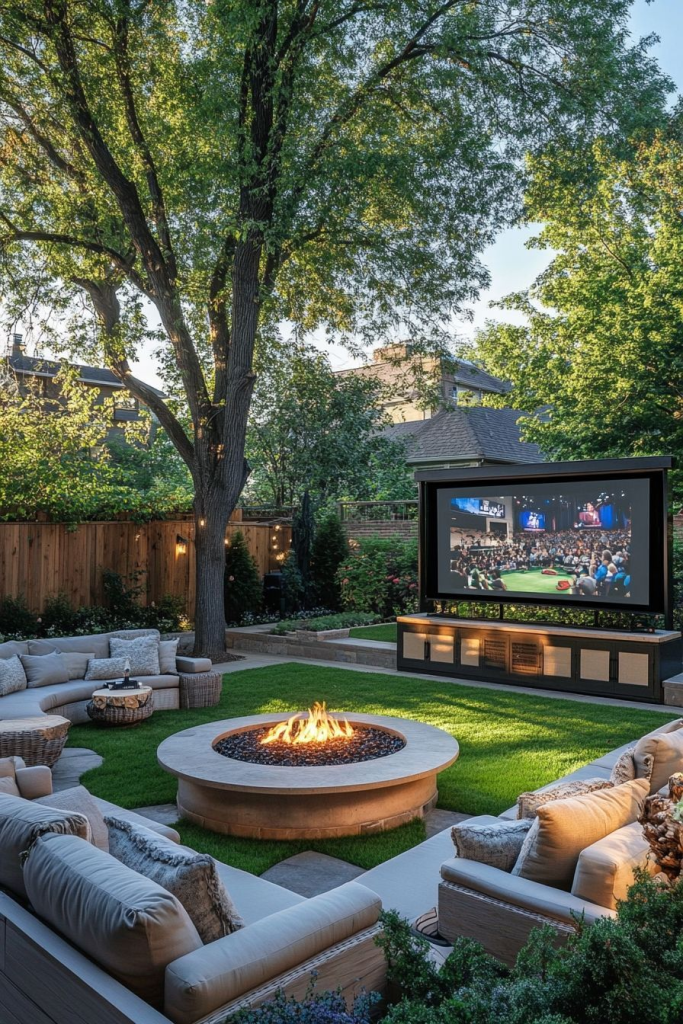
Create An Outdoor Living Room That Feels Like Part Of Your Home
If you take nothing else from this article, take this: if an outdoor space isn’t comfortable, it won’t get used. It doesn’t matter how pretty it is. If the seating is flimsy, the sun is brutal, or there’s nowhere to set down a drink, people will drift back inside. Summer Renovation Ideas
This is why so many Summer Renovation Ideas begin with an outdoor living room. Summer Renovation Ideas that work long-term treat the patio or deck like a real room, with structure and layers. Summer Renovation Ideas that feel “done” have a foundation you can trust, comfort you actually want to sit on, and a focal point that makes the space feel intentional. Summer Renovation Ideas should also solve the practical issues: moving water away from the house, controlling heat, and creating circulation so the space doesn’t feel cramped or awkward. Summer Renovation Ideas
Start with the foundation, because everything else depends on it. Summer Renovation Ideas
A foundation is not just “a surface.” It’s a system that manages weight, water, and movement. In Loudoun County, decks require both a building permit and a zoning permit, and the county emphasizes that inspections are required by law to confirm a deck is built in accordance with the structural and safety provisions of the Virginia Uniform Statewide Building Code and the approved drawings. Summer Renovation Ideas
When homeowners weigh pavers vs. stamped concrete vs. decking, here’s how to think like a contractor instead of like a mood board. Summer Renovation Ideas
Pavers can be a high-performing choice because they are modular and repair-friendly. If drainage is a recurring problem, permeable pavement options can reduce ponding by allowing stormwater to infiltrate through the surface rather than running off the way it does on traditional impermeable pavement. The U.S. Environmental Protection Agency describes permeable pavements as stormwater controls that allow infiltration and lists porous asphalt, pervious concrete, and permeable interlocking concrete pavement as common types. Summer Renovation Ideas
Stamped concrete can look clean and architectural, but it’s less forgiving if settlement or cracking occurs. If you love the look, focus your decision on base preparation and drainage planning, not just on the pattern. A slab that holds water at the house edge is not a “patio problem,” it’s a long-term durability problem.
Decking, including composite decking, gives you an elevated, living-room-like surface and a texture that often feels good underfoot. But it still requires proper structural design and permitting. Loudoun County’s deck guidance notes, for example, that minimum footing depth is 24 inches and footings must bear on solid soil.
That “footing depth” detail connects to a broader local reality: Loudoun County publishes structural design criteria for permit applications and lists a frost depth of 24 inches. In practical terms, footings generally need to extend below frost depth to reduce the risk of frost heave and seasonal movement that can shift patios, steps, and deck supports over time. Summer Renovation Ideas
From a value standpoint, decks also tend to perform relatively well compared with many discretionary upgrades. In Zonda’s 2025 Cost vs. Value report, a wood deck addition was estimated to recoup about 94.9% of its cost at resale on average, and a composite deck addition about 88.5% nationally. Those are national averages, not a guarantee for any specific neighborhood, but they are a useful reminder that you can choose outdoor features that are enjoyable now and still financially sensible later. Summer Renovation Ideas
Now build the comfort layer. Summer Renovation Ideas
Comfort is where homeowners often overspend in the wrong places or underspend and regret it. A more balanced approach is to design for use first: Summer Renovation Ideas
Seating that matches your habits. If you host dinner parties, a dining zone matters. If you host casual hangouts, deep seating matters. If you do both, think hybrid: a dining table that seats the core group, plus lounge seating that invites people to stay. Summer Renovation Ideas
Soft goods with a storage plan. Outdoor rugs, cushions, and throws absolutely change the feel of the space, but they also need protection from storms and humidity. Built-in storage benches or a simple storage wall are not glamorous, but they can be one of the most effective Summer Renovation Ideas because they keep the space ready to use instead of constantly needing cleanup. Summer Renovation Ideas
Add structure and shade, and be honest about what you need. Summer Renovation Ideas
Pergolas are great for filtered light and an architectural look. They can be paired with retractable canopies, adjustable louvers, or plantings to refine shade over time. Covered roofs provide more reliable protection and often make the space usable regardless of mid-day sun, but they can change structural requirements and the permit scope. Loudoun’s deck permitting information also suggests that more complex structures (such as those involving roofs or screened porches) typically require more than the simplest “typical detail” approach.
If insects are what ruin your evenings, screens can be transformative. The EPA also notes that removing standing water helps discourage mosquito habitats, which ties directly into how you plan grading, planters, and water features. Summer Renovation Ideas
Now choose a focal point so the space feels like a destination. Summer Renovation Ideas
Fireplaces and fire pits are a favorite, but they must be planned around safety and local rules. NFPA guidance suggests a minimum distance of 10 feet from anything that can burn as a baseline recommendation for fire pits, while also noting that local authorities can require greater clearances based on conditions.
In Loudoun County, open burning is prohibited May 1 through September 30, and the county provides recommendations for permanent fire pits, including keeping a fire pit at least 15 feet from any structure or combustible material, limiting fire pit diameter, and using a wire mesh cover to control sparks.
If your focal point is a grill, remember that the NFPA advises placing grills well away from the home, deck railings, and out from under eaves and overhanging branches. Summer Renovation Ideas
When an outdoor living room is planned with comfort, safety, and the realities of your yard, it stops being a “nice idea” and becomes the space your family naturally migrates to. That is the real point of Summer Renovation Ideas: the best ones don’t just photograph well, they hold up on everyday nights when you want to step outside and breathe. Summer Renovation Ideas
Design A Tranquil Garden That Doesn’t Become A Maintenance Headache
A beautiful garden can absolutely be the emotional centerpiece of your backyard. The problem is that many gardens are designed for the first month, not for the first five years. Summer Renovation Ideas
If you’ve ever planted a bunch of things, felt like a landscaping genius, and then watched the whole area turn into a weedy, overgrown tangle by mid-summer, you’ve experienced the difference between “plants in the ground” and an actual garden plan. Summer Renovation Ideas
This is where Summer Renovation Ideas start to shine when they include the landscape as a system. Summer Renovation Ideas that include gardens shouldn’t create an endless maintenance obligation. Summer Renovation Ideas should give you a space that feels alive, seasonal, and calming, without requiring you to become a part-time groundskeeper. Summer Renovation Ideas that work long-term are built around right plant, right place, and a layout that makes maintenance simpler. Summer Renovation Ideas
Think of a tranquil garden as having four roles: structure, color, movement, and pause.
Structure is your backbone: small trees and larger shrubs that define the garden year-round. Color is your seasonal joy: perennials that bloom in waves. Movement is what makes the space feel natural: grasses and layered plantings. Pause is what makes it usable: a bench, a swing, or a small seating nook.
A pollinator-friendly approach is often a practical approach, because it encourages diversity and long bloom seasons. Blandy Experimental Farm (the State Arboretum of Virginia at the University of Virginia) recommends using a variety of native plants that bloom at different times, ensuring nectar and pollen are available from early spring to late fall.
Native plants can also support local ecosystems when selected and placed thoughtfully. Virginia Cooperative Extension’s Gardener Handbook frames the use of native plants as “conservation in action” and emphasizes that native plants help meet the needs of native animals and provide habitat.
Choosing natives does not mean your garden has to look wild or messy. The Extension text specifically notes that home garden design can be as formal or as natural as desired so long as plant needs are met.
If you want help selecting natives for “right plants, right places,” the Virginia Native Plant Society’s regional guides include conservation landscaping tips, guidance for different site conditions (like dry shade or wet shade), and notes on invasive non-native plants and native alternatives.
Here’s a simple contractor-friendly framework for building a garden that stays manageable:
First, map sun and shade. Where is full sun? Where is part shade? Where is shade all day? Don’t guess. Track it for a weekend. Many homeowners “overestimate” shade, which is one reason plants fail.
Second, map moisture. Where does water naturally collect after rain? Where dries fast? This helps you avoid planting thirsty plants in dry zones or putting moisture-loving plants where they’ll struggle.
Third, build beds with edges. Clean edges are not just visual. They reduce lawn encroachment and make weeding and mulch refreshes easier. Edges can be stone, steel, or even a simple spade-cut line if you want a natural look.
Fourth, plant in clusters. Blandy’s pollinator guidance suggests clustering plants in groups of three or more because it helps pollinators locate them, and clustered mass plantings also look more intentional than “one of everything.”
Fifth, add pathways that make access easy. Stepping stones, gravel, or pavers are not just pretty. They are how you maintain the beds without compacting soil or trampling plants.
Now talk irrigation, because water strategy is often the hidden lever of maintenance.
The Department of Energy notes that water-efficient landscape approaches using native and climate-appropriate plants can reduce irrigation water use and require less time and money to maintain.
If you do choose irrigation, modern controls can prevent overwatering. EPA WaterSense labels weather-based irrigation controllers (which tailor schedules using local weather and landscape conditions) and soil moisture-based controllers (which prevent irrigation when water isn’t needed).
Here’s the contractor insight that keeps this section meaty: the most important landscaping decision might not be which plants you pick. It might be how you handle water across the entire yard.
Poor drainage turns gardens into muddy problems, makes patios settle, and invites mosquitoes. Better drainage is one of the least glamorous Summer Renovation Ideas, but it’s one of the most valuable because it protects every other investment.
Install An Outdoor Kitchen That Actually Functions For Real Life
If your guests always end up in the kitchen, you already know the truth: food is the social anchor of most gatherings.
Outdoor kitchens can be a true lifestyle upgrade, but only if they’re designed for the way you really cook. Many outdoor kitchens fail because they’re designed like a showroom: a grill, a tiny counter, and a fridge crammed into a corner. They look impressive, but they feel cramped when you’re actually prepping food for a group.
The best Summer Renovation Ideas for outdoor kitchens start with a question you can answer honestly: what do you want to avoid inside?
If you hate running in and out for tongs, plates, and drinks, you need storage and a prep zone.
If you hate the smell of grilled food lingering in the house, you need the cooking zone positioned so smoke moves away from doors and windows.
If you hate trash piling up and insects showing up, you need thoughtful waste handling.
If you hate making a dozen trips for ice and beverages, you want refrigeration.
This is where Summer Renovation Ideas get very practical. Summer Renovation Ideas for outdoor kitchens aren’t about copying a photo. Summer Renovation Ideas are about workflow: cooking, prepping, serving, and cleaning. Summer Renovation Ideas should reduce friction, not add it. Summer Renovation Ideas also need to respect safety and code requirements because you’re combining heat, gas, and electricity in the open air.
Think in zones.
Cooking zone: grill, smoker, side burner, maybe a pizza oven. Plan a clear hot zone around it.
Prep zone: enough counter space to season, assemble, and plate without juggling trays.
Storage zone: weatherproof cabinets, drawers, utensil storage, and a real trash plan.
Cold zone: beverage fridge, and possibly a second small fridge for ingredients if the kitchen is far away.
Utility zone: water, power, and sometimes gas. This is where professional planning matters most.
For electrical safety outdoors, GFCI protection is a major line of defense. The Electrical Safety Foundation International explains that GFCIs shut off power quickly when they detect dangerous leakage current and notes that the National Electrical Code requires GFCIs in locations including outdoors. Loudoun County’s building codes page also lists the National Electric Code as part of the code set referenced for permit compliance.
Now add structure and comfort. If you build an outdoor kitchen but it bakes in the sun, you won’t use it as often as you think. Shade structures, covers, and fans can turn outdoor cooking from a special-occasion activity into a normal habit.
Also build in safety from the start. The NFPA advises placing grills well away from the home, deck railings, and out from under eaves and overhanging branches, and keeping children and pets away from the grilling area.
A design detail that often gets missed: keep the cook facing the gathering area if possible, but not so close that kids can drift into the hot zone. This reduces the “I’m stuck at the grill alone” feeling and keeps the energy social while staying safer.
If you want to keep the project budget-friendly, consider phasing. You can build the patio base, run utilities, and set the layout first. Then add cabinetry and appliances later. Phasing is one of the most underrated Summer Renovation Ideas because it helps homeowners avoid doing work twice and allows upgrades over time without tearing everything apart again.
Add Water And Fire Features For Atmosphere, Sound, And Year-Round Use
When homeowners say they want their backyard to feel like a retreat, what they usually mean is this: they want the space to change how it feels to be at home. They want calm. They want comfort. They want that sense that the yard isn’t just outside, it’s an experience.
Water and fire features do that because they add sensory layers: sound, motion, glow, warmth. Done well, they can make a yard feel more private and more intentional even if the footprint is the same.
Water features first.
Water features can add an acoustic buffer, meaning the sound of water can help soften the constant background noise that makes relaxing outside harder. But water features must be selected and placed with total honesty about maintenance, especially in summer.
Low investment options include birdbaths or small circulating fountains. They give movement and invite wildlife without requiring a major build.
Mid-range options include wall fountains or basin features that integrate into a patio or garden wall. These often offer that custom feel without the complexity of full pond systems.
High-end options include koi ponds, waterfalls, or spa-style concepts.
Whatever you choose, treat water safety as part of the design. The CDC states that drowning is the leading cause of death for children ages 1–4 in the United States and emphasizes that drowning can happen quickly and quietly anywhere there is water.
Even if you’re not building a pool, the mindset matters. If you create a pond, basin, or water feature deep enough to pose risk, plan for barriers, visibility, and supervision. The CPSC provides drowning prevention resources that emphasize barriers and other safety strategies to reduce risk around residential water hazards.
Now fire features.
Fire features are usually the emotional favorite because people picture s’mores, cozy conversations, and evenings that stretch later because it’s simply comfortable.
But in Loudoun County, fire features intersect with real regulations. Loudoun County’s open burning regulations state that open burning is prohibited May 1 through September 30 and provide specific recommendations for fire pits, including distance from structures and combustion control measures.
NFPA guidance also suggests a 10-foot minimum from anything that can burn as a baseline recommendation for fire pits.
So how do you make a fire feature feel worth it without creating risk?
Place it where it supports the gathering flow, not where it looks cool from one angle. Keep it central enough to be a destination, but far enough to respect clearances and avoid heat stress.
Design the surface around it. Non-flammable surfaces like pavers and stone help define a safe zone and reduce the chance of sparks landing in dry mulch.
Match the feature to your lifestyle. If you rarely host, a smaller feature may be enough. If you want shoulder-season use and a strong focal point, a built-in fireplace with seating can anchor the outdoor living room.
This is why Summer Renovation Ideas for fire and water features shouldn’t be treated as accessories. Summer Renovation Ideas should treat them as part of the overall layout, with rules, safety, and daily use in mind. Summer Renovation Ideas that plan these features properly create a yard that feels elevated without feeling stressful.
Build Kid-Friendly Zones That Don’t Take Over The Entire Yard
A backyard can be family-friendly without looking like a daycare exploded. The goal is not to eliminate play. The goal is to design play so it fits into the yard’s overall plan.
This is where zoning becomes your best friend.
Instead of dropping a random playset in the middle of the yard, design a play zone with boundaries and a surface that fits the activity level. Place it where adults can supervise from where they naturally sit: the outdoor living room, the dining table, or the kitchen serving area.
Now let’s talk surfacing. Falls happen. Surfaces matter. The CPSC’s Public Playground Safety Handbook provides guidance for public playground safety including surfacing reference information. It includes, for example, a table that lists minimum depths for loose-fill materials when installed and when compressed, and relates these to critical heights for fall protection.
You’re not required to design your backyard like a public playground, but using safety guidance helps you make smarter decisions. If your yard includes swings, climbing elements, or elevated play features, treat the ground surface and surrounding clearance area as a serious part of the project.
Now bring adults back into the plan.
Storage keeps the yard calm. If outdoor toys have a place to go, your patio stays usable and your lawn stays open.
Shade keeps the play zone usable. If the play zone is roasting from noon to five, no one enjoys being out there. Trees, shade sails, pergolas, and partial covers can all help, depending on your yard and your budget.
One of the best Summer Renovation Ideas for families is flexibility. Kids grow. What works for toddlers becomes irrelevant for teens. A multi-use zone with an open lawn area plus a defined corner for play equipment can evolve over time without requiring a total redesign.
You can also design sightlines intentionally: keep kids visible, but separate them from hot zones like grills and fire features. That’s not about rules; it’s about designing the yard so everyone can relax.
Use Lighting To Turn Your Backyard Into A Night-Time Destination
Lighting is the most underrated backyard upgrade because it doesn’t show up in daytime photos the way a new patio does. But at night, lighting is what transforms a yard from daytime only into a real extension of your home.
Good lighting does three jobs: it helps you see, it helps you feel safe, and it creates atmosphere.
The best lighting plans layer light, the same way you layer light indoors:
Path and step lighting for safety.
Accent lighting to highlight trees, architecture, and garden focal points.
Ambient lighting to make people linger: string lights, lantern-style fixtures, warm overhead lighting under a cover.
Energy efficiency matters because it affects how often you actually use the lights. The U.S. Department of Energy explains that residential LEDs use at least 75% less energy and can last up to 25 times longer than incandescent lighting.
Electrical safety matters too because outdoor environments bring water, humidity, and weather. ESFI notes that GFCIs should be used in areas where water may come into contact with electrical products and that the National Electrical Code requires GFCIs in outdoor locations.
From a design-build perspective, integrate lighting early. It’s easier to run conduit and plan fixture placement when you’re already building a patio, creating steps, or adding structures. When lighting is bolted on at the end, it often looks like an afterthought and costs more in the long run.
Most homeowners underestimate how much lighting changes use. When you can see the steps, when the trees glow softly, and when the seating area feels inviting, people stay outside longer and the yard becomes a real part of daily life.
This is why Summer Renovation Ideas should include lighting from the beginning. Summer Renovation Ideas that include lighting feel finished. Summer Renovation Ideas that skip lighting often feel incomplete, even if everything else is beautiful. Summer Renovation Ideas that layer safety and atmosphere are the ones that make homeowners say, “We use this space all the time now.”
Plan Your Backyard Renovation Like A Contractor, Not Like A Social Media Board
Most people don’t regret renovating their backyard. They regret the way they planned it.
They start with a pretty picture. They buy a few items. They do one project. Then they realize the patio is too small. Or the lighting doesn’t reach the steps. Or the grill smoke blows directly into the seating area. Or they forgot about drainage and now everything puddles and settles.
Planning is the difference between a yard that looks good and a yard that works.
In Loudoun County, planning also means understanding permits and inspections. For instance, the county states that a building permit and zoning permit is required for all decks and outlines inspection stages such as footing inspection, framing inspection, and final inspection.
One more planning detail that protects homeowners (and budgets): call before you dig. Loudoun County’s deck guidance reminds applicants to call “Miss Utility” before excavating so underground utility lines can be located and marked. Even when a backyard project feels “simple,” new footings, drainage work, irrigation lines, and electrical conduit often involve digging in places where utilities may exist.
Planning also means understanding local fire regulations if a fire feature is part of your vision. Loudoun County’s open burning regulations include seasonal restrictions and specific recommendations for fire pits.
So how do you plan in a way that sets you up for success?
Start with how you want to use the space, not what you want it to look like.
Ask: Do we host dinners or mostly casual hangs? Do we want quiet mornings or late-night gathering space? Do we need kid play space daily or occasionally? Do we grill for convenience or as a hobby? Do we want privacy from neighbors? Do we want fewer bugs, less mud, and less maintenance?
Then prioritize. Most backyards can’t do everything perfectly all at once without an enormous budget. But most can do two or three things extremely well.
Next, think in layers: Site work and drainage. Hardscape foundation (patio, deck, paths). Structures (shade, covers, screens). Utilities (lighting, outlets, water, gas). Finishes (furniture, storage, planters).
If you approach it this way, each layer supports the next. If you jump straight to furniture and décor, you get a yard that looks styled and still feels temporary.
This is where a contractor-led plan saves money. When you design the master plan first, you avoid doing work twice.
MGS emphasizes a process designed to fulfill homeowners rather than put pressure on them, starting with the homeowner’s vision and then executing efficiently with a focus on craftsmanship. If you’re investing in Summer Renovation Ideas, that kind of steady planning and execution is what turns “ideas” into a finished space you trust.
Now, to make this actionable, here’s a scroll-friendly recap you can save as a checklist. Each line is a prompt you can use to plan, prioritize, or phase your project.
- Pick one main purpose for your backyard and design everything else to support it.
Start with drainage and grading so every other improvement lasts longer.
Choose a patio or deck size based on how many people you host, not how much space you think you have.
Add at least one shaded zone so the yard stays usable even on hot afternoons.
Use permeable paving options when runoff and pooling water are constant problems. - Create a comfort layer with real seating and side tables so the space gets used daily.
Build storage into the design so cushions, toys, and tools don’t create clutter.
Design your outdoor living room like an indoor room with a focal point and clear circulation.
Use lighting to make steps, paths, and edges safer at night.
Choose LED fixtures for efficiency and longer service life. - Plan electrical outlets early and use GFCI protection where water can be present.
- Keep grills and heat sources well away from the home and overhangs.
- Confirm Loudoun County open burning rules before installing a fire feature.
- For fire pits, follow clearance guidance and local enforcement expectations, not just inspiration photos.
- Consider phasing an outdoor kitchen by running utilities first, then upgrading appliances later.
Give yourself enough prep counter space, not just a big grill.
Include a real trash plan outdoors so pests and smells don’t ruin gatherings. - Use native plants matched to your site conditions to reduce maintenance and support wildlife.
Plant for a longer season by choosing blooms from spring through fall.
Cluster plants in groups so beds look intentional and pollinators can find them easily. - Build a seating pause point in the garden so it becomes a destination.
Use defined pathways so gardens are easier to maintain and enjoy.
Add water features for sound and calm, but plan safety if children will be present. - Remove standing water where possible to reduce mosquito habitat.
- Design a play zone that’s visible from adult seating so supervision feels effortless.
Use safer surfacing depths under active play equipment and maintain them over time. - Keep hot zones (grills, fire features) separated from kid zones.
Add at least one quiet corner for adults even in family-focused yards.
Use privacy plantings or screens to make the space feel like a retreat.
Think about wind direction when placing grills, fireplaces, and seating. - Choose materials that stay comfortable underfoot in summer sun.
Add outdoor rugs and soft furnishings, but include protected storage to prevent mildew.
Use a covered structure when you want reliable all-day use. - Confirm deck permitting and inspection requirements before starting construction.
- Design steps and transitions with lighting so guests feel safe.
Layer lighting like indoors: safety, accent, and ambient.
Use accent lighting to highlight trees and architectural details.
Use path lighting to reduce trip hazards.
Use ambient lighting to encourage people to linger. - Prioritize low-maintenance finishes where weather exposure is highest.
Choose hardware and fasteners that resist corrosion in outdoor conditions.
Treat the backyard as a complete system: drainage, structure, comfort, and function. - Make sure your layout supports how people move during gatherings.
Keep the best seating close to the best views.
Use planting beds to soften hardscape edges and reduce heat feel. - Choose water-efficient landscaping approaches to reduce water use and maintenance.
Use smart irrigation controllers rather than fixed schedules when possible. - Use mulch or ground cover to suppress weeds and protect soil.
Avoid invasive plants and use native alternatives where possible. - Add a small herb garden near the kitchen for convenience.
Create a serving ledge or bar top for easy entertaining.
Plan for shade at the dining table so meals are comfortable.
Use fans in covered areas to improve comfort.
Include storage for firewood or propane so the yard stays tidy. - Keep electrical safety in mind anywhere water and power share space.
- Integrate a cleanup plan, even if it’s just a hose bib and a durable prep surface.
Add seating variety: dining, lounging, and perching.
Consider built-in benches to maximize seating without clutter.
Use planters to create subtle separation between zones. - Choose plants that look good even when not blooming.
Plan for fall color as part of the garden strategy.
Include winter structure so the yard doesn’t feel dead half the year. - Build your project in phases if budget is tight, but design the master plan upfront.
Long-term value comes from intentional layout more than trendy finishes.
A contractor-led plan can prevent expensive redo work later.
Use the permitting process as a safeguard for safety and durability, not just paperwork. - Make the space easy to use on ordinary days, because that’s when value is created.
Design for comfort first, because comfort is what turns a yard into a lifestyle.
When you step back, all of these ideas have one thing in common: they prioritize real-life use. That’s what makes a backyard renovation feel worth it. Not because it impressed someone once, but because it improved your day-to-day.
MGS Contracting Services notes it serves Leesburg and nearby communities across Loudoun County and Fairfax County. If you’re ready to take your backyard from “we should do something out here” to “we’re out here all the time,” the best next step is to plan around your life first, then build with a team that can coordinate design, permitting, and construction with care.